Work Shoe Suitability Checker
Are your current work shoes causing fatigue or pain? Use this tool to evaluate if your footwear meets the structural requirements recommended by podiatrists for standing on concrete, tile, or industrial flooring.
Your Work Environment
Foot Health & Symptoms
Risk Assessment
Low RiskWhy This Matters
Recommended Actions
Note: This tool provides general guidance based on common biomechanical principles. If you have pre-existing conditions like diabetes, bunions, or chronic pain, consult a qualified podiatrist in Ireland for a gait analysis.
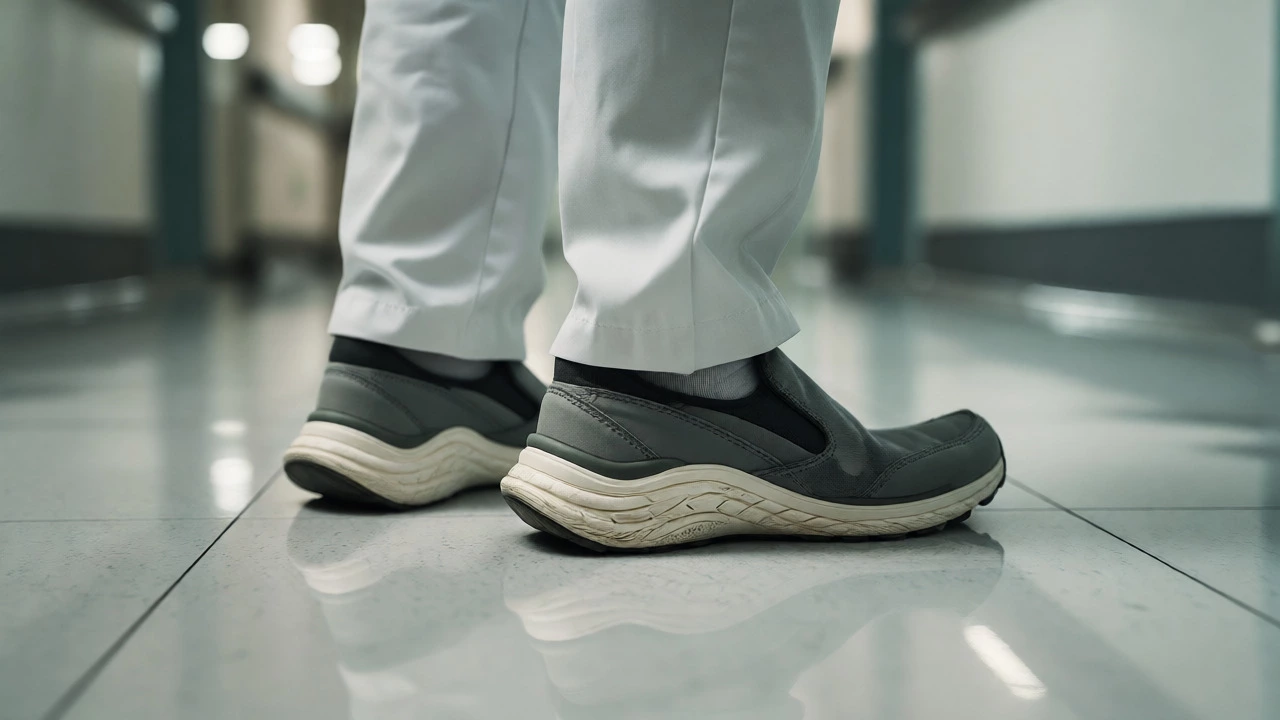
You see them everywhere. On the shop floors of Amazon fulfillment centres in Dublin, behind the counters in supermarkets across Cork, and walking the corridors of hospitals in Galway. Skechers are ubiquitous in the Irish workforce. They promise cloud-like comfort, slip-on convenience, and a price point that doesn't break the bank. But if you ask a podiatrist in Ireland why they often hesitate to recommend these shoes for long shifts, you’ll get a different story than the marketing brochures suggest. It’s not that Skechers are "bad" shoes for everyone. For a quick trip to Tesco or a stroll along the Cliffs of Moher, they’re fine. But for eight to twelve hours on hard industrial flooring? The lack of structural support becomes a serious liability.
The Illusion of Comfort vs. Structural Integrity
Here is the core problem: softness does not equal support. Many workers confuse the immediate sensation of plush cushioning with long-term biomechanical stability. When you step into a pair of Skechers Go Walks or similar models, your foot sinks into memory foam. It feels great for the first hour. But by hour six, that same foam has compressed. Your arch, which needs a firm platform to push off from, is now sinking into a mushy void.
In Ireland, where many service jobs require standing on concrete or tile for extended periods, this compression leads to fatigue. Podiatrists refer to this as "instability." Without a rigid midsole, your foot muscles have to work overtime just to keep your ankle stable. This overworks the intrinsic muscles of the foot, leading to cramps, tendonitis, and eventually, chronic pain. Think of it like trying to run on sand versus running on a track. Both feel different initially, but one leaves you exhausted while the other propels you forward.
Arch Support: The Missing Link
Most standard Skechers models feature minimal to no built-in arch support. They rely on the natural contour of the foot and the compressibility of the foam. For people with neutral feet, this might pass muster. But what about those with flat feet (pes planus) or high arches (pes cavus)? These are common conditions in the general population.
| Feature | Standard Skechers | Podiatrist Recommended |
|---|---|---|
| Midsole Material | Memory Foam / Soft EVA | Dense Polyurethane / TPU Shanks |
| Heel Counter | Soft / Flexible | Rigid / Reinforced |
| Arch Profile | Minimal / Generic | Contoured / Customizable |
| Lifespan | 3-6 months (heavy use) | 9-18 months (heavy use) |
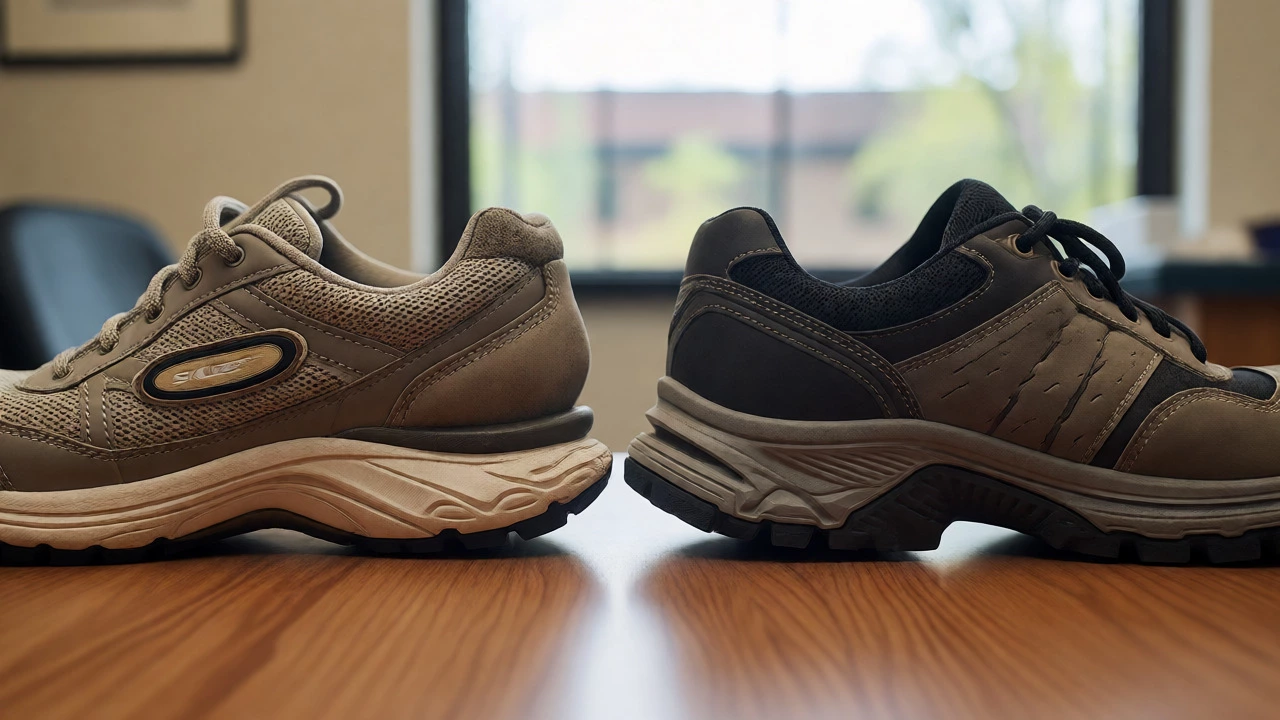
A rigid heel counter is crucial. It cups the back of your foot, preventing excessive rolling inward (pronation) or outward (supination). Skechers often have soft heels that collapse under weight. In a workplace setting, especially in healthcare or retail, this instability can trigger plantar fasciitis-a painful inflammation of the tissue connecting your heel to your toes. If you’ve ever felt that sharp, stabbing pain in your heel when you take your first steps in the morning, you know exactly what we mean.
The Durability Factor in the Irish Market
Let’s talk money. In Ireland, the cost of living is high. You want your work shoes to last. Skechers are cheaper upfront, often costing between €40 and €70 at retailers like Brown Thomas or online via ASOS. A dedicated work shoe from brands like Dansko, Birkenstock, or specialized safety boot manufacturers might cost €100 to €150. Sounds steep, right?
But look at the lifespan. Because Skechers use softer foams, they degrade quickly under heavy load. In a busy pub in Temple Bar or a warehouse in Rathcoole, a pair of Skechers might lose their supportive properties within three months. Once the foam dies, the shoe is effectively dead. You’re buying new pairs every quarter. Compare that to a quality work shoe with a dense polyurethane sole and a leather upper. That shoe maintains its structure for a year or more. Over two years, the "expensive" shoe is actually cheaper because you bought fewer pairs.
Furthermore, consider the resale value and sustainability. Leather uppers can be polished and repaired. Memory foam cannot. In an era where Irish consumers are increasingly mindful of waste, throwing away plastic-heavy sneakers every few months isn’t ideal.
Hygiene and Breathability Concerns
Ireland’s climate is damp. We live with humidity and rain for much of the year. While Skechers offer breathability through mesh uppers, the interior lining often traps moisture due to the non-breathable nature of certain synthetic foams. If you’re wearing them all day without socks (common with slip-ons), sweat accumulates.
This creates a breeding ground for bacteria and fungi. Athlete’s foot isn’t just an annoyance; it’s a workplace hazard. Podiatrists frequently see cases of fungal infections linked to poorly ventilated, closed-toe casual shoes worn for too long. Dedicated work shoes often feature antimicrobial linings and better ventilation channels designed specifically for long-duration wear.
When Are Skechers Actually Okay?
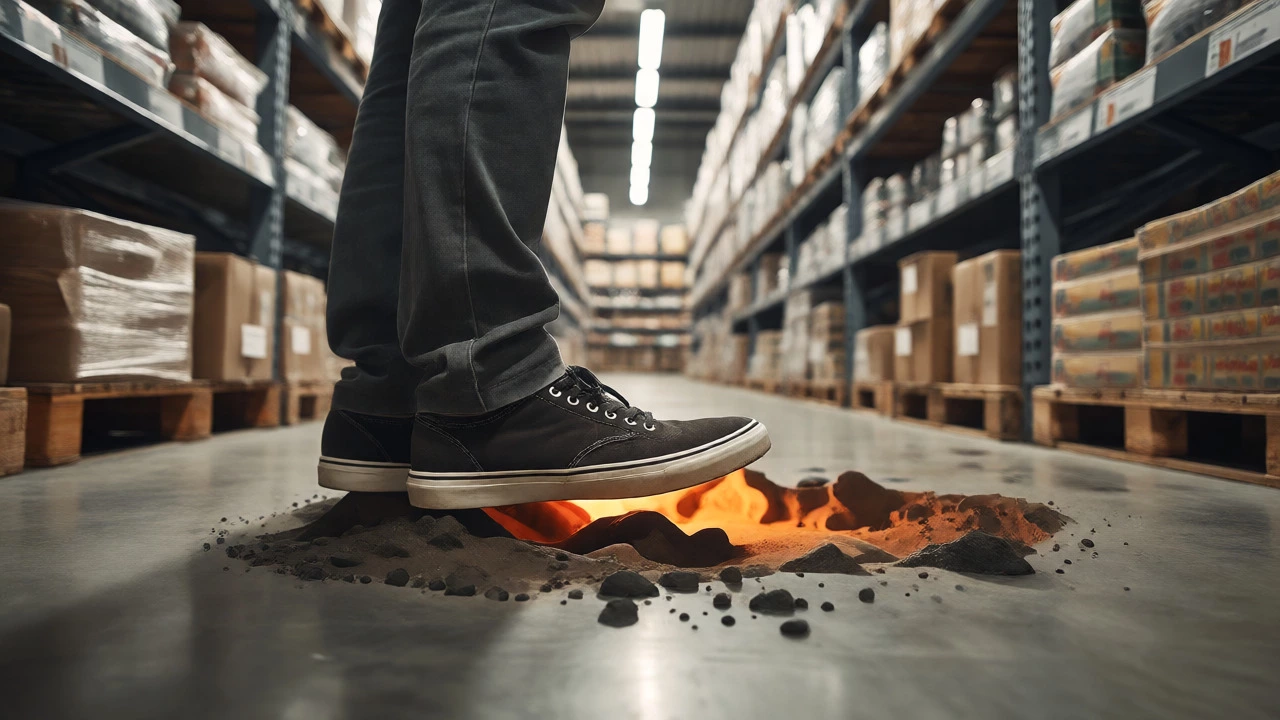
We aren’t saying never buy Skechers. Context matters. If you work in an office with carpeted floors and sit most of the day, Skechers are excellent. They are lightweight and easy to slip on and off. They are also great for recovery days-when you come home from a shift in stiff safety boots and need something soft for the evening.
However, if your job involves:
- Standing on concrete or hard tile for 6+ hours.
- Walking significant distances (e.g., postal delivery, nursing).
- Lifting heavy objects (requiring stable footing).
- Managing existing foot conditions like bunions or diabetes.
...then you should listen to your podiatrist. Look for shoes with a removable insole so you can insert custom orthotics. Look for a wide toe box that doesn’t squeeze your toes together. And prioritize structure over squishiness.
Local Advice: What to Ask Your Dublin Podiatrist
If you are based in Dublin, Cork, or Limerick, visit a local clinic for a gait analysis. Don’t just guess what you need. A professional will watch how you walk and tell you if you over-pronate. They might recommend specific brands available in Ireland that balance style with support.
Many Irish physiotherapists and podiatrists collaborate with local shoe fitters who understand the specific demands of Irish workplaces-from the wet outdoors of construction sites to the sterile indoors of hospital wards. Bring your current Skechers to the appointment. Show them the wear pattern on the sole. If the inner edge is worn down significantly, it confirms your foot is collapsing inward, and the shoe isn’t stopping it.
Do all Skechers have bad arch support?
Not all. Some higher-end Skechers lines, particularly those marketed for walking or work, include slightly more structured midsoles. However, compared to dedicated orthopedic or safety footwear, they still generally lack the rigid shank and deep heel cup required for prolonged standing on hard surfaces. Always check the specific model's specifications.
Can I fix my Skechers with insoles?
You can improve them by removing the factory insole and adding a high-quality orthotic. This adds some arch support. However, it won't fix the issue of a soft, flexible heel counter or a midsole that bends too easily. It helps, but it doesn't turn a casual sneaker into a true work shoe.
Why do nurses love Skechers if podiatrists dislike them?
Nurses often choose them for the ease of slipping them on and off during short breaks and the initial comfort. However, many nurses switch to supportive clogs or athletic work shoes after experiencing foot pain later in their careers. The popularity stems from convenience and low cost, not necessarily long-term biomechanical health.
Are there good alternatives to Skechers available in Ireland?
Yes. Brands like Hoka, Brooks, and Dansko are widely available in Irish sporting goods stores and pharmacies. For safety requirements, brands like Blundstone or specialized Irish distributors of European safety boots offer styles that combine protection with ergonomic design suitable for our damp climate.
How often should I replace my work shoes?
For full-time workers on hard floors, expect to replace supportive work shoes every 6 to 12 months. If you notice visible creasing in the midsole, uneven wear patterns, or increased foot pain, replace them sooner. The foam loses its rebound capability long before the outsole wears through.