
Summer Layering Advisor
Should You Wear a Hoodie Today?
Balance temperature, comfort, and environment
Verdict: -
-Please enter your details to see the recommendation.
While a 90-degree day is practically unheard of in the Emerald Isle, when these extreme spikes happen, they often clash with the local biological clock. Most of us are conditioned for dampness and wind, not oppressive heat. The hoodie becomes a portable safety blanket. For some, it's not about the temperature outside, but about controlling the temperature *against* their skin. Have you ever felt that sudden chill the moment you step into a heavily air-conditioned shop in Dundrum Town Centre? That's where the hoodie saves the day.
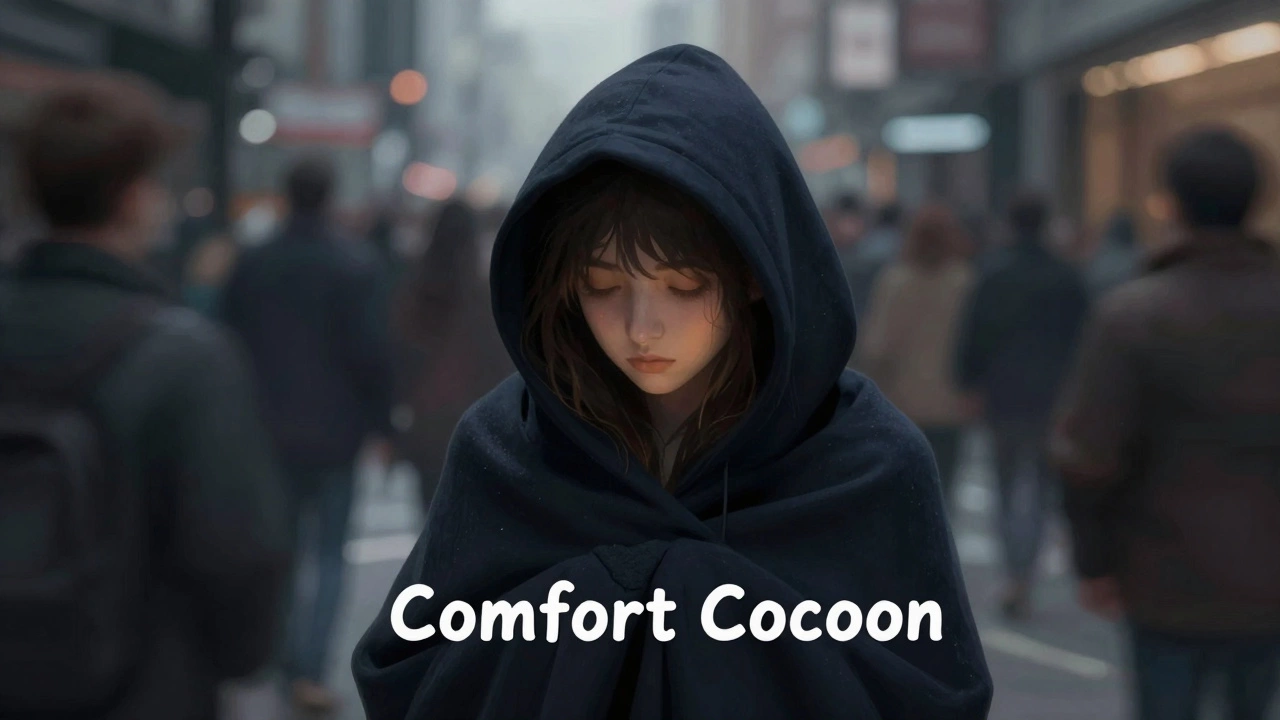
The Psychology of the 'Comfort Cocoon'
For a lot of people, a hoodie isn't just a piece of clothing; it's a psychological shield. This is especially true for those who experience social anxiety or sensory processing issues. A heavy fabric acts as a form of gentle pressure, similar to a weighted blanket, which can lower cortisol levels and make a crowded environment like a packed Croke Park match feel more manageable. When you're wrapped in a Hoodie, you create a private boundary between yourself and the rest of the world.
Then there is the 'security' aspect. An oversized hood allows a person to physically withdraw from the world. If you're feeling overwhelmed by the noise of a busy Dublin afternoon, pulling up the hood narrows your field of vision and dampens sound, providing an instant sense of calm. It's less about fighting the heat and more about managing a mental state.
The Battle Against the 'Irish Breeze'
Anyone who has spent five minutes in Galway knows that the weather can change four times in a single hour. You might start your morning in a t-shirt, but by lunchtime, a brisk wind is whipping off the Atlantic. The Microclimate created by a hoodie is incredibly versatile. It protects against the sudden drop in temperature that often accompanies a summer cloud cover.
Many people choose oversized hoodies because they allow for airflow. A tight-fitting shirt clings to the skin and traps sweat, whereas a loose, cotton-blend hoodie can actually act as a buffer, preventing the sun from hitting the skin directly. This is a common tactic used by people with sun sensitivity or those trying to avoid the dreaded 'farmer's tan' during a weekend trip to the Cliffs of Moher.
| Material | Breathability | Sun Protection | Psychological Comfort |
|---|---|---|---|
| Light Linen | High | Low | Low |
| 100% Cotton Hoodie | Medium | High | Very High |
| Synthetic Polyester | Low | Medium | Medium |
| Merino Wool | High | High | High |
Hiding the 'Summer Struggle'
Let's be honest: heat and humidity do weird things to our appearance. From unexpected breakouts to sweat patches that appear the second you leave the house, the summer months can be stressful. A hoodie is the ultimate camouflage. It hides the sweat marks on a back or stomach and covers up a lack of confidence in one's summer body. In a culture where modesty is often preferred over showing too much skin, the hoodie is a safe bet.
For teenagers and young adults in Ireland, the hoodie is practically a uniform. Whether they are hanging out in Eyre Square or walking the shores of Copanaki, the aesthetic of the 'streetwear' look often overrides the logic of the thermometer. Brands like Nike or Adidas have popularized the oversized silhouette, making it a fashion statement that transcends the weather. When the look is this ingrained in the identity of a generation, a few extra degrees of heat aren't enough to make them switch to a tank top.
Skin Protection and Health Factors
It sounds counterintuitive, but wearing a hoodie can be a health decision. For people with Photosensitivity or certain autoimmune conditions, direct exposure to UV rays is painful or dangerous. Instead of spending twenty minutes applying sunscreen to every inch of their arms, some find it easier to simply cover up. The thick weave of a cotton hoodie provides a physical barrier that is often more reliable than chemical blockers.
Additionally, there's the issue of the 'summer cold.' In Ireland, the transition from a scorching outdoor temperature to a freezing air-conditioned office or bus can shock the immune system. Wearing a layer helps maintain a steady core temperature, preventing that annoying scratchy throat that often hits during a heatwave. It's all about thermal regulation in a world of extreme temperature swings.

Practical Tips for Summer Layering
If you can't give up your hoodie but are struggling with the heat, there are ways to make it work. First, look for 'French Terry' fabrics. These are thinner than traditional fleece-lined hoodies but still provide that cozy feel without the insulating heat of a winter garment. Second, opt for lighter colors-white, pale grey, or mint-to reflect sunlight rather than absorb it.
- Choose Natural Fibers: Stick to 100% cotton. Polyester is essentially plastic and will trap heat, making you feel like you're in a sauna.
- The 'Shoulder Drape': Instead of wearing the hoodie, tie it around your waist or drape it over your shoulders. It's there for when the cloud bursts, but doesn't overheat you while the sun is out.
- Combine with Breathable Bottoms: Pair your hoodie with lightweight linen trousers or a breezy skirt. This balances the thermal load and keeps you from overheating.
The Cultural Shift in Irish Fashion
We are seeing a move toward 'comfort-first' clothing across the country. The rigid boundaries of 'seasonal dressing' are fading. People are prioritizing how they feel in their clothes over how the weather dictates they should dress. Whether it's a student in Trinity College or a professional in the Silicon Docks, the priority has shifted to mental well-being and physical ease.
This shift is why we see the hoodie persisting even when the sun is blazing. It's an admission that comfort is subjective. For some, comfort is the feeling of a cool breeze on the skin; for others, it's the feeling of being cocooned in a soft, familiar fabric. Neither is wrong; they just have different internal thermostats.
Is it actually healthy to wear a hoodie in high heat?
Generally, it's better to wear breathable fabrics to avoid heatstroke. However, for those with sun sensitivity or those in air-conditioned environments, a light cotton hoodie can protect the skin from UV rays and prevent sudden temperature drops. The key is to stay hydrated and choose natural fibers over synthetics.
What is the best fabric for a summer hoodie?
Look for 100% organic cotton or French Terry. These fabrics breathe better than polyester blends and allow moisture to evaporate from the skin, which helps keep you cooler than a heavy fleece-lined option.
Why do people with anxiety prefer hoodies in summer?
Hoodies provide a sense of security and a physical barrier between the wearer and a chaotic environment. The pressure of the fabric and the ability to hide within the hood can reduce sensory overload and provide a feeling of safety in crowded public spaces.
Does wearing a hoodie actually protect against the sun?
Yes, physical coverage is one of the most effective ways to block UV rays. A thick cotton hoodie provides a significant physical barrier, although it doesn't replace the need for sunscreen on exposed areas like the face and hands.
How do I style a hoodie for a warm Irish day?
Try pairing a light-colored, oversized hoodie with linen shorts or a flowing summer dress. This mixes the cozy aesthetic with breathable elements, making the outfit practical for the varying temperatures typical of the Irish coast.