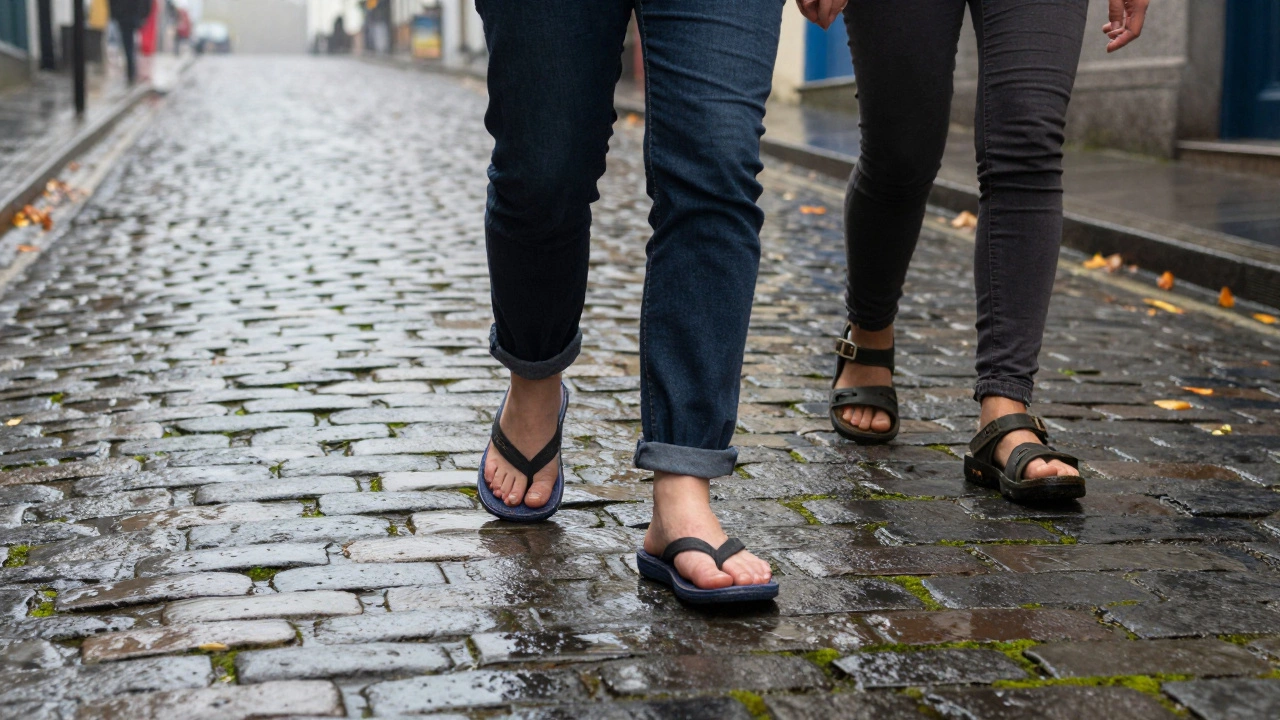
Every spring in Ireland, the same thing happens. The rain stops for a few days, the sun cracks through the clouds over Dublin’s Phoenix Park, and suddenly, everyone’s wearing flip-flops. At the DART stations. On the trails of the Wicklow Way. Even outside the pharmacy on Grafton Street. But if you’ve ever walked into a podiatrist’s office in Cork, Galway, or Limerick with a pair of thongs on your feet, you’ve probably seen the look. The sigh. The quiet, resigned shake of the head. It’s not about fashion. It’s about what happens to your feet when you wear them in Ireland’s climate - and why podiatrists here see more damage from flip-flops than from any other shoe.
Flip-Flops vs. Irish Grounds
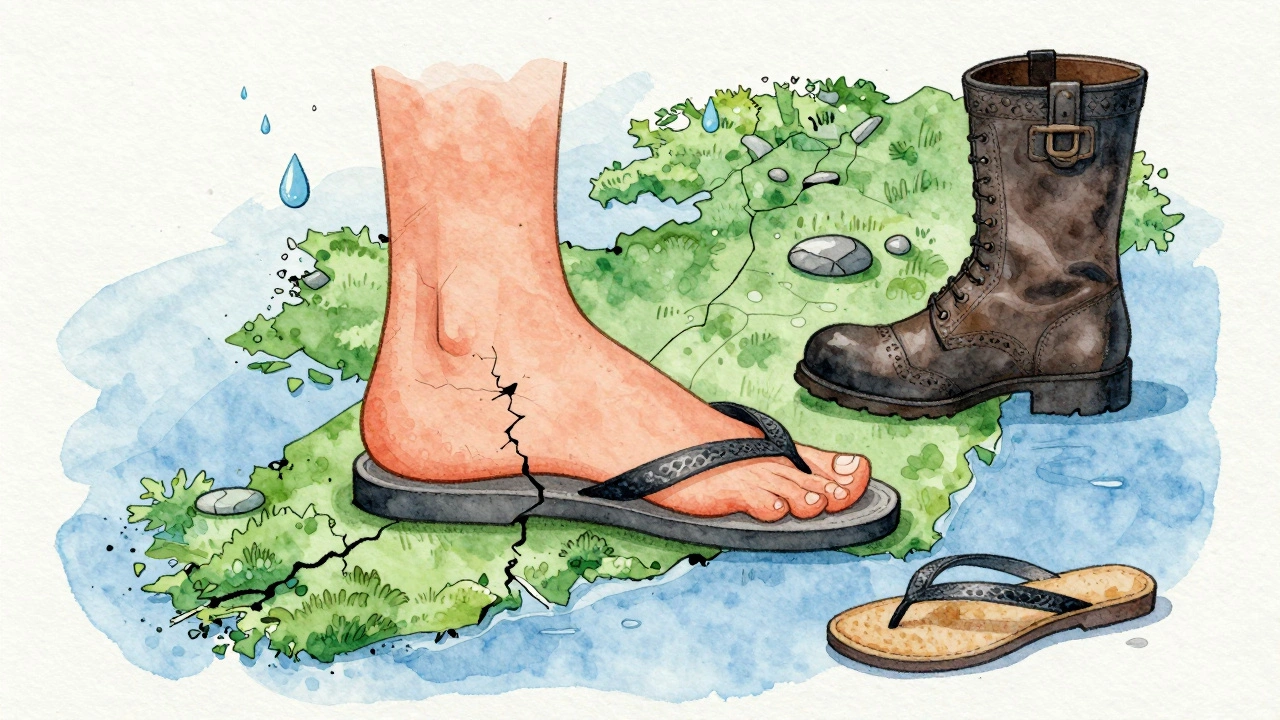
Ireland isn’t just rainy. It’s damp. Constantly. Even on a ‘sunny’ day, the ground stays wet. Puddles cling to pavements in Belfast, moss grows between cobblestones in Kilkenny, and the trails around Killarney are slick with mud and algae. Flip-flops don’t grip. They slide. They don’t protect. They expose. And when you’re walking on uneven, wet surfaces - which is every day in Ireland - your foot has to work harder to stay balanced. That means your arches overwork. Your toes claw at the strap. Your heel slaps the ground with every step. Over time, that leads to plantar fasciitis, tendonitis, and even stress fractures.
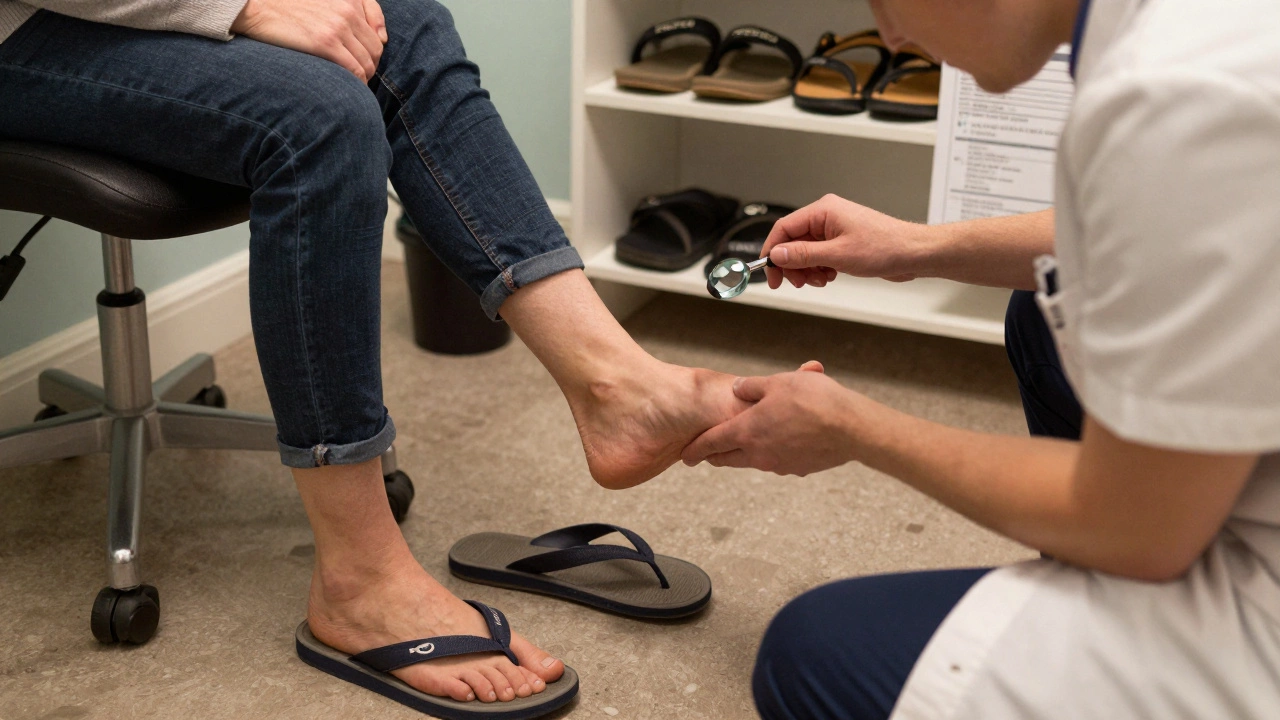
One podiatrist in Clonmel told me about a 42-year-old teacher who came in with heel pain so bad she couldn’t stand during morning assembly. She’d worn flip-flops to school every day for six weeks because, she said, ‘It was warm enough.’ She’d never had foot pain before. After three months of orthotics and physiotherapy, she switched to a pair of waterproof, supportive sandals from Clarks - the same brand that’s been stocked in Irish shoe stores since the 1970s. She’s back on her feet. And she still wears flip-flops - only on holiday in Spain.
Why Irish Feet Are Different
Most people think foot problems from flip-flops are the same everywhere. But Irish feet face unique stress. Many of us walk on stone, brick, and uneven pavement more than we do on flat sidewalks. The Irish housing stock - from terraced homes in Dublin 8 to cottages in Donegal - often has thresholds, steps, and slopes that weren’t built for flat-soled footwear. And because of our weather, we’re often walking barefoot indoors after coming in from the rain. That means your feet get cold, then hot, then wet, then dry - all in one day. Flip-flops don’t insulate. They don’t wick moisture. They just make your feet sweat and then chill.
Studies from Trinity College Dublin’s biomechanics lab show that flip-flop wearers in Ireland have 37% more ankle instability during wet conditions than those wearing closed-back sandals. That’s not just uncomfortable - it’s dangerous. Falls on wet steps are one of the top reasons for emergency visits to Irish hospitals in spring and autumn. The HSE reports over 1,200 foot-related injuries annually linked to improper footwear, and flip-flops are consistently in the top three causes.
The Irish Footwear Tradition
For generations, Irish people have worn sturdy, supportive shoes. Think of the Dr. Martens worn by farmers in Mayo, the waterproof Bally boots on Dublin commuters, or the lace-up Geox shoes in Galway cafes. These aren’t just fashion choices - they’re survival gear. Ireland’s weather doesn’t give you a choice. You need grip. You need support. You need something that stays on your foot when you’re sprinting for the bus in Limerick or walking the Cliffs of Moher in a sudden downpour.
Even our traditional footwear - like the Irish brogue - was designed with thick soles and stitching to handle boggy ground. Flip-flops are the opposite. They’re lightweight, disposable, and made for dry, flat beaches. And Ireland doesn’t have many of those. The only real beach where flip-flops make sense is in Doolin or Bundoran - and even then, most locals wear water shoes or reef sandals.
What Podiatrists Actually Recommend
Podiatrists in Ireland don’t hate flip-flops because they’re cheap or ugly. They hate them because they’re the wrong tool for the job. When you need to walk on wet, uneven surfaces for hours - which most of us do, whether commuting, gardening, or walking the kids to school - you need something that supports your arch, cushions your heel, and grips the ground.
Here’s what they actually suggest for Irish conditions:
- Water-resistant sandals with heel cups - brands like Teva or Chaco are common in Irish pharmacies and outdoor shops like Mountain Equipment Co-op in Dublin.
- Arch-supporting flip-flops - yes, they exist. Superfeet makes flip-flops with built-in orthotic footbeds. They cost €45, but they last two years, unlike the €10 ones you buy at Dunnes Stores that fall apart after three weeks.
- Indoor/outdoor shoes - many Irish families now keep a pair of slip-on shoes with rubber soles by the back door. Brands like Clarks and Ecco make models that look like loafers but grip like hiking shoes.
One podiatrist in Waterford told me about a woman who came in with chronic heel pain. She worked as a waitress in a pub in Kinsale. She wore flip-flops to walk from her car to the pub every morning. She switched to a pair of Clarks Unstructured sandals with cushioned soles. Within six weeks, her pain dropped by 80%. She said, ‘I didn’t think a sandal could feel like a boot.’
The Bigger Picture
It’s not just about your feet. It’s about your life. In Ireland, we’re a walking culture. We walk to the shop. We walk the dog. We walk the kids to school. We walk the trails on weekends. We walk through the rain, the wind, the sleet, and the occasional surprise sunshine. Your shoes aren’t an accessory - they’re your foundation.
Flip-flops might feel easy. They’re cheap. They’re quick. But they’re not sustainable. Not for your feet. Not for your back. Not for your balance. And in a country where the ground is always wet and the weather never stays predictable, that’s a risk no one should take.
Next time you see someone in flip-flops walking down the street in Galway, don’t judge. But do ask yourself: if you were walking from the bus stop to your house in the rain, would you really want your feet sliding around in plastic straps? Or would you rather have something that holds on - just like your boots do when the wind picks up on the Wild Atlantic Way?
What You Can Do Today
You don’t need to buy a new pair of shoes for every season. But you do need to stop treating flip-flops like everyday footwear in Ireland. Here’s a simple plan:
- Check your current flip-flops. If the strap is loose, the sole is flat, or the grip is worn - toss them. They’re not just worn out - they’re dangerous.
- Replace them with one pair of supportive sandals for wet weather. Look for ‘arch support’ and ‘non-slip sole’ on the label.
- Keep a pair of indoor/outdoor shoes by your door. You don’t need to walk through your house in socks.
- Visit a podiatrist if you’ve had heel, arch, or toe pain for more than two weeks. Don’t wait until it’s unbearable.
Ireland doesn’t need more flip-flops. It needs more people who know how to protect their feet - not just for fashion, but for function. Your feet carry you through every season, every storm, every walk to the corner shop. They deserve better than plastic straps and thin foam.