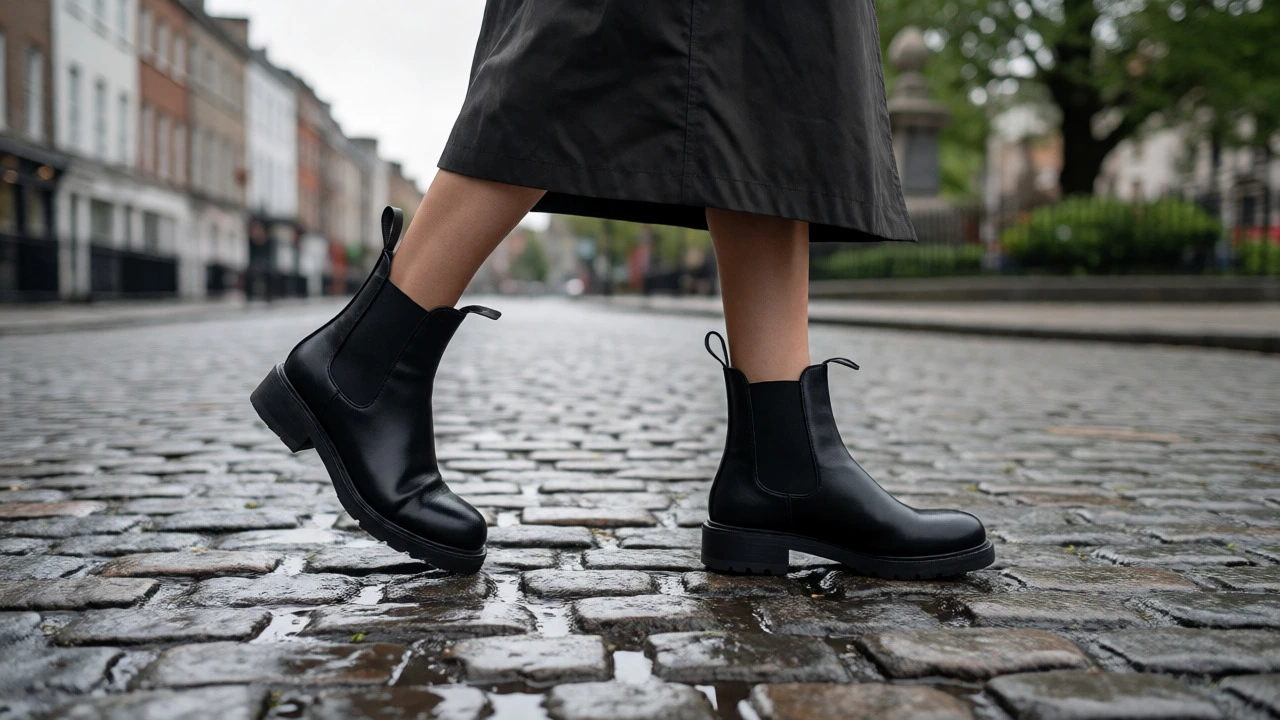
Chelsea Boot Comfort Diagnostic
Experiencing pain or discomfort in your new Chelsea boots? Answer these questions to find out why and how to fix it.
You’re walking down Grafton Street in Dublin, the rain has just stopped, and your new pair of Chelsea boots is looking sharp. But halfway to St. Stephen’s Green, a sharp pinch hits your little toe, or worse, a blister forms on your heel. You stop, shift your weight, and wonder: why do these stylish shoes feel like medieval torture devices? If you’ve ever asked yourself, "why do Chelsea boots hurt my feet?" you are not alone. This is a surprisingly common complaint among women across Ireland, from the cobblestones of Cork to the damp pavements of Galway.
The problem isn’t usually that your feet are "wrong." It’s often a mismatch between the boot’s rigid design and the realities of Irish terrain and weather. Chelsea boots are defined by their lack of laces and their elastic side panels. While this makes them easy to slip on, it also means they offer zero adjustability once they are on your foot. Unlike a lace-up boot where you can loosen the tongue over high arches, a Chelsea boot squeezes everything equally. In Ireland, where we walk significant distances on uneven historic streets and deal with persistent dampness, this lack of adjustment becomes a major source of pain.
The Anatomy of Pain: Why the Design Fails Us
To fix the pain, you have to understand the mechanics. Chelsea boots rely on a tight fit around the instep (the top of your foot) to stay up. For many women, especially those with higher arches or wider forefeet, this creates immediate pressure points. The elastic gussets-the stretchy panels on the sides-are meant to expand, but they rarely expand enough to accommodate swelling feet after a long day out.
Consider the typical Irish commute. You might take the Luas tram in Dublin or walk along the banks of the River Liffey. These surfaces are hard and unforgiving. Standard leather soles, common in cheaper fashion boots sold in stores like Brown Thomas or Penneys, have minimal shock absorption. Every step sends a jolt up through your metatarsals. If you have plantar fasciitis-a condition affecting the thick band of tissue running across the bottom of your foot-this impact is amplified. The pain often starts as a dull ache in the heel and spreads to the ball of the foot.
| Symptom Location | Likely Cause | Ireland-Specific Context | Quick Fix |
|---|---|---|---|
| Little Toe / Outer Edge | Narrow last shape pinning the foot | Wide feet common; narrow European sizing prevalent in Irish retail | Stretching service at local cobbler |
| Heel Slippage & Blisters | Boot too loose vertically; wet socks | Damp climate causes skin softening (maceration) | Anti-slip heel grips + wool blend socks |
| Ball of Foot Burning | Thin sole + high impact walking | Cobblestones in cities like Kilkenny or Waterford | Insert cushioned gel insoles |
| Instep Pressure | Elastic panel too tight for high arches | Prolonged standing (e.g., pub crawls, festivals) | Wear thicker socks to stretch gently |
The Irish Climate Factor: Moisture and Friction
We live in a country where it rains more than 150 days a year. This isn’t just an inconvenience; it’s a factor in foot health. When your feet get slightly damp inside a non-breathable synthetic boot, friction increases exponentially. Skin that is moist is softer and more prone to tearing, leading to blisters much faster than in dry conditions. Many women buy cheap faux-leather boots because they look good on Instagram, only to find their feet soaking up sweat or rainwater by lunchtime.
In contrast, genuine leather boots breathe better, but they require maintenance. If you’re walking through the damp grass in Phoenix Park or navigating the slick tiles of a shopping centre in Dundrum, moisture control is key. Wearing cotton socks is a rookie mistake here. Cotton holds water against the skin. Switch to merino wool blends, which are widely available in Ireland and wick moisture away even when wet. Brands like Smartwool or local Irish producers offer excellent options that keep feet dry and reduce the heat buildup that leads to swelling.
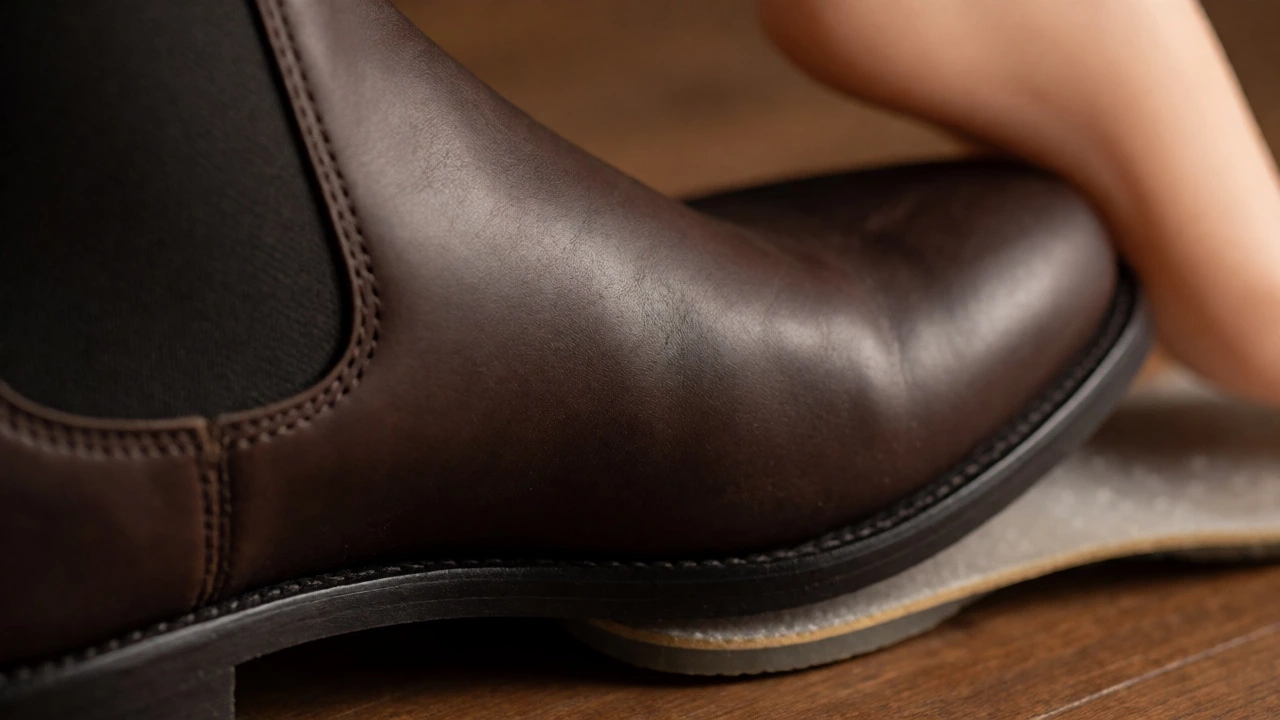
Fitting Mistakes That Ruin Comfort
Most people buy boots based on length alone. They measure their foot, see they are a size 6, and buy a size 6. But Chelsea boots fail because of width and volume, not just length. Your foot swells throughout the day due to gravity and activity. By 5 PM, your foot is larger than it was at 9 AM. If you buy a boot that fits perfectly in the morning, it will be painful by evening.
Here is a practical rule of thumb for buying boots in Ireland: try them on in the afternoon. Bring the thickest sock you plan to wear with them. Walk around the shop for at least five minutes. If there is any pinching on the little toe or the pinky toe joint, put them back. There is no such thing as "they’ll stretch into shape" for the critical areas without causing pain first. The leather upper might stretch slightly, but the sole and internal structure won’t change enough to relieve bone-on-bone pressure.
Another common error is ignoring the arch. Flat-soled Chelsea boots provide no support. If you have flat feet (pes planus), which affects a significant portion of the population, your arch collapses inward when you stand. This twists the ankle and strains the knee and hip. Without proper arch support, the entire kinetic chain suffers. This is why you might feel knee pain after wearing boots all day, even if your feet don’t hurt immediately.
How to Make Them Work: Practical Fixes
If you already own a pair that hurts, don’t bin them yet. You can modify them. First, invest in quality insoles. Don’t use the thin foam ones that come in the box. Go to a pharmacy or a specialist podiatry clinic in your city-Dublin, Cork, and Belfast all have reputable providers-and ask for semi-rigid orthotic inserts. These add cushioning and correct alignment. Look for brands like Superfeet or custom-made options from local Irish podiatrists.
Second, tackle the stiffness. New leather boots are rigid. You can accelerate the break-in process. Stuff the toes with newspaper overnight to gently widen the toe box. Use a leather conditioner to soften the upper material. Some women use a hairdryer method: wear thick socks, put the boots on, warm the tight spots with a hairdryer for 30 seconds, then wiggle your toes while the leather cools. Be careful not to burn the leather, but this technique works wonders for stubborn elastic panels.
Third, consider the heel height. Most Chelsea boots have a small block heel, typically 2-3 cm. This is actually beneficial compared to completely flat shoes because it reduces strain on the Achilles tendon. However, if the heel is too steep or the platform is unstable, it shifts your weight forward onto the balls of your feet. Check the angle. If you feel like you’re tiptoeing, the heel is too high for your calf flexibility. Stretching your calves daily can help, but sometimes the shoe geometry just doesn’t match your anatomy.
When to See a Professional
Sometimes, the pain isn’t about the boot-it’s about your foot structure. Bunions (hallux valgus) are increasingly common in women, exacerbated by narrow footwear. If you have a bunion, the tight front of a Chelsea boot will grind against the protruding bone. No amount of stretching will fully solve this if the deformity is advanced. Similarly, neuromas (such as Morton’s neuroma), which cause burning pain between the third and fourth toes, are aggravated by the narrow toe boxes of fashion boots.
If you experience numbness, tingling, or shooting pains, consult a podiatrist. In Ireland, you can access public health services via the HSE, though waiting lists can be long. Private clinics in major towns offer quicker appointments. A professional can assess whether you need custom orthotics or if you should switch to a different style of boot entirely, such as a lace-up combat boot which offers adjustable width.
Alternatives for the Irish Walker
If Chelsea boots simply don’t work for your foot shape, look for alternatives that suit the Irish lifestyle. Lace-up hiking-style boots, like those from Keen or Merrell, offer superior adjustability. They allow you to tighten the ankle and loosen the forefoot independently. Another option is a pull-on boot with a zipper. The zipper provides easier entry and exit, reducing the stress on the elastic panels, while still offering the sleek look of a Chelsea boot.
For urban environments, consider boots with Vibram soles. These rubber compounds provide excellent grip on wet Irish pavement and absorb shock better than traditional leather soles. You can find these features in brands popular in Ireland like Ecco or Clarks, which often design for wider feet and prioritize comfort technology.
Should I size up in Chelsea boots?
Generally, no. Sizing up can make the heel slip excessively, causing blisters. Instead, look for a brand with a wider last (width). If you must size up, use heel grips and insoles to fill the extra space. Always prioritize width fit over length.
How do I waterproof my boots for Irish winters?
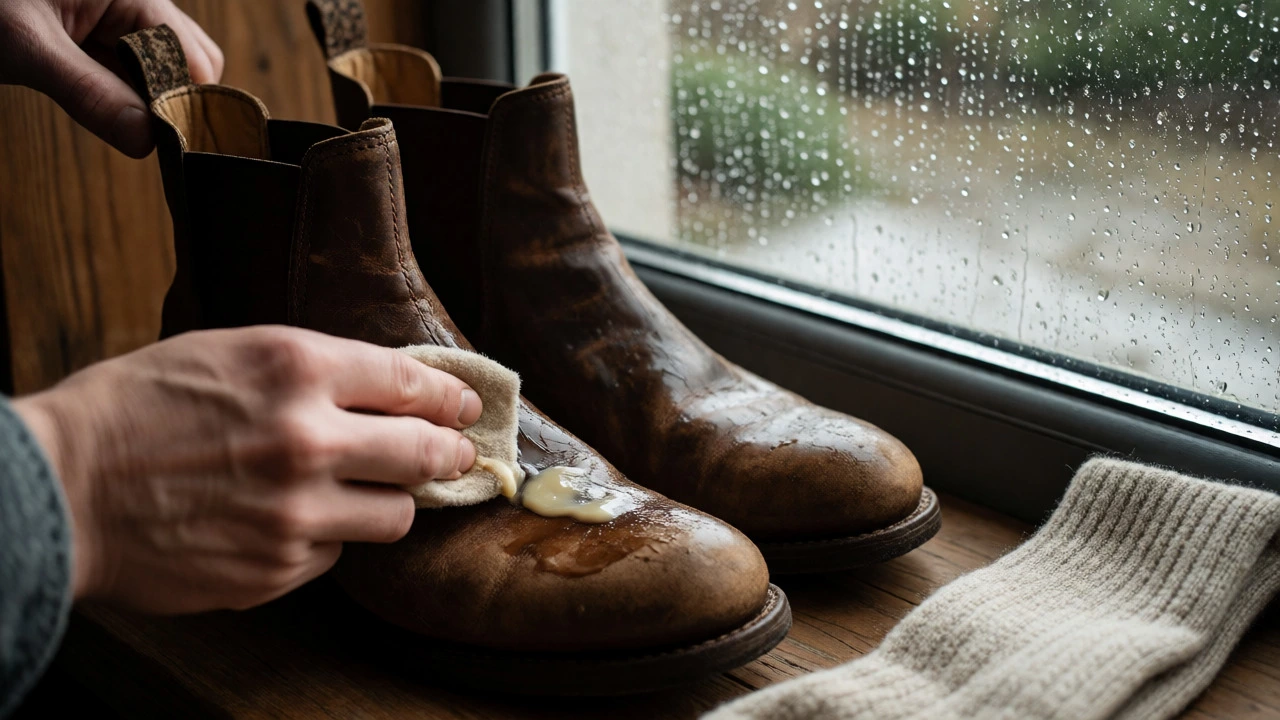
Use a wax-based waterproofing cream specifically designed for leather. Apply it every few weeks during the wet season (November to March). Avoid silicone sprays on suede unless specified, as they can darken the color. Ensure seams are sealed properly, as water often enters through stitching holes.
Can I wear Chelsea boots with wide feet?
Yes, but choose wisely. Look for brands labeled 'wide' or 'E-width'. Avoid pointed-toe styles; opt for almond or round toes. Brands like ECCO and Clarks often have specific wide-fit models available in Irish retailers.
Why does my heel slip in new boots?
Some initial slippage is normal until the leather molds to your heel. However, excessive slipping indicates the boot is too large or the counter (back part) is too soft. Use adhesive heel liners or double-sided fashion tape temporarily. If it persists, the boot may not be right for your heel shape.
Are expensive boots worth it for comfort?
Often, yes. Higher-priced boots typically use full-grain leather, which breathes better and molds to your foot over time, rather than splitting or synthetic materials. They also tend to have better shanks and heel counters, providing structural support that prevents fatigue during long walks in cities like Dublin or Cork.