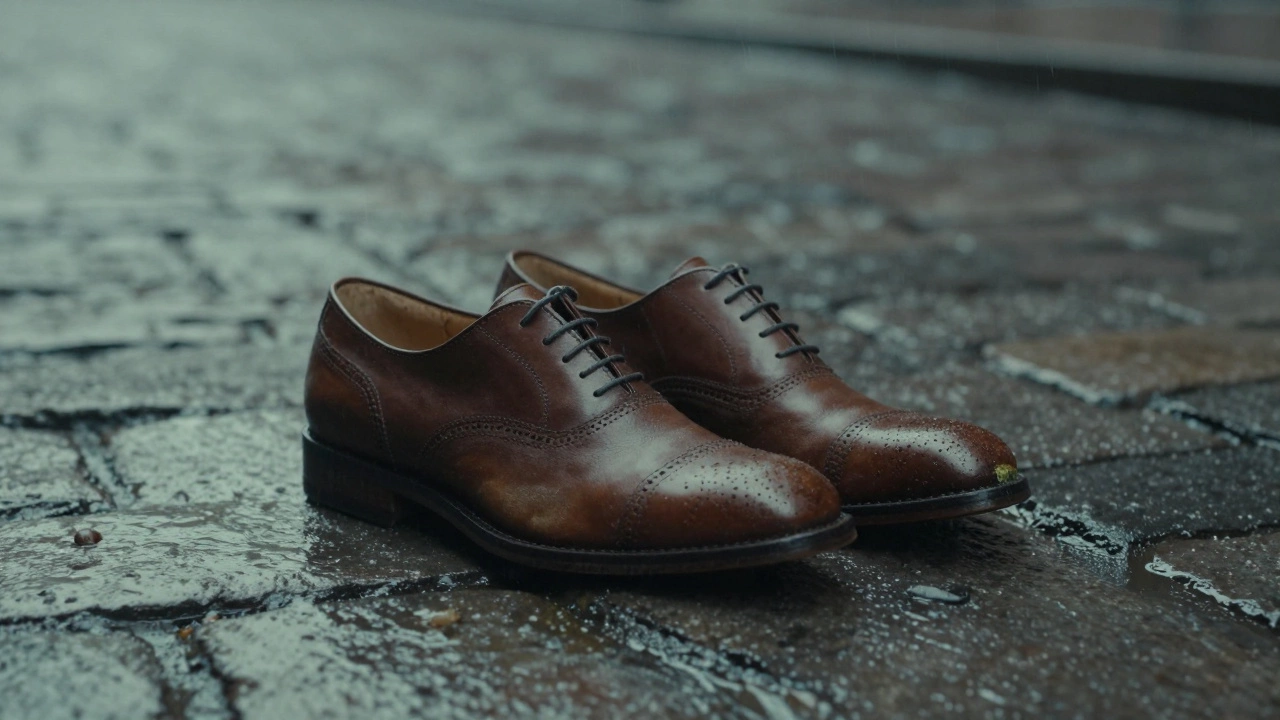
Leather Shoe Condition Checker for Ireland
How Well Are Your Leather Shoes Holding Up?
Based on Ireland's damp climate and typical wear patterns, this tool helps you assess whether your leather shoes need repair or replacement.
Why This Matters in Ireland's Climate
Key Factor Irish climate accelerates leather degradation through moisture, mold, and temperature fluctuations.
Your shoes aren't just wearing out—they're losing structural integrity from constant exposure to rain, humidity, and temperature changes. When multiple signs appear, your footwear is no longer providing proper support and could lead to:
- Foot pain (plantar fasciitis, stress fractures)
- Posture issues (knee pain, hip strain, back problems)
- Increased injury risk (ankle twists from uneven soles)
Leather shoes in Ireland don’t just wear out-they weather. The damp, unpredictable climate here doesn’t just make your socks soggy; it slowly breaks down the glue, softens the soles, and invites mold into the creases where your foot meets the ground. You’ve worn those brown brogues to work in Dublin, to the pub in Galway, and through every rainy Monday in Cork. But when do you finally say goodbye? It’s not about how many years you’ve had them. It’s about what they’re doing to your feet, your posture, and your wallet.
Signs Your Leather Shoes Are Done in Ireland’s Climate
Irish rain isn’t just water-it’s salt, grime, and cold rolled into one. If your leather shoes have started to smell like a damp cellar even after airing them out, that’s not just odor. That’s leather shoes breaking down from within. Mold thrives in the humidity, especially if you’ve been wearing them without proper drying. A quick test: take them off after a long walk in the rain. If the insole feels spongy or leaves a dark stain on your socks, the leather’s absorbed too much moisture and lost its structure.
Look at the sole. If it’s cracked, peeling, or separating from the upper, especially around the ball of the foot or heel, you’re not just walking-you’re risking a twisted ankle. Many Irish walkers don’t realize that the rubber outsoles on quality brogues from Clarks or Allen Edmonds can last 3-5 years if cared for. But if you’ve been walking the cobblestones of Kilkenny or the wet pavements of Belfast every day, that timeline shrinks to 18-24 months.
Check the heel. If it’s worn down unevenly-say, the inside edge is flat while the outside still has tread-you’re overpronating. That’s not just a shoe problem. That’s a posture issue. In Ireland, where so many walk on slanted streets and uneven stone paths, uneven heel wear is a red flag. Your body compensates. Over time, that leads to knee pain, hip strain, even lower back issues.
Repair vs. Replace: The Irish Way
Before you toss them, ask yourself: can this be fixed? Ireland still has skilled cobblers who know how to work with full-grain leather. In Dublin, Shoe Care Centre on Grafton Street has been resoling brogues since the 1970s. In Limerick, McGinley’s Shoe Repair will re-peg a sole for €35 and add a rubber cap to protect against winter slush. That’s cheaper than buying new, and it keeps your shoes alive.
But not all shoes are worth saving. If the leather upper is split along the seam, or if the vamp (the front part over your toes) has stretched out like a worn-out glove, no amount of stitching will bring back the shape. Leather that’s become brittle from years of damp and cold won’t flex anymore-it’ll crack. And once that happens, the shoe loses its support. No cobbler can fix structural failure.
Think of it this way: if you’ve had the same pair for more than five years and they’ve been resoled twice, you’re past the point of diminishing returns. A new pair of Irish-made leather shoes from Shoe Warehouse or Claddagh Shoes will cost €150-€250. But if you’ve worn them daily, that’s less than €30 a year. That’s better value than replacing them every two years with cheap imports that fall apart in six months.
Seasonal Wear and Tear in Ireland
Leather shoes in Ireland aren’t meant for all seasons. Many people wear the same pair year-round, but that’s a mistake. Winter demands waterproofing. Spring brings mud from fields and puddles from broken drains. Summer? It’s not dry-it’s damp. The key is rotation. If you have two pairs, alternate them. Let each pair sit for 24-48 hours to dry fully. Use cedar shoe trees. They absorb moisture and hold shape better than plastic.
Don’t use a hairdryer. It shrinks leather. Don’t leave them by the radiator. It cracks the sole. And don’t ignore the conditioner. A good leather balm like Obenauf’s or Saphir Medaille d’Or should go on every six weeks during winter. Apply it after cleaning with a damp cloth and letting them dry naturally. This keeps the leather supple. Without it, your shoes become brittle, like old parchment in a damp attic.
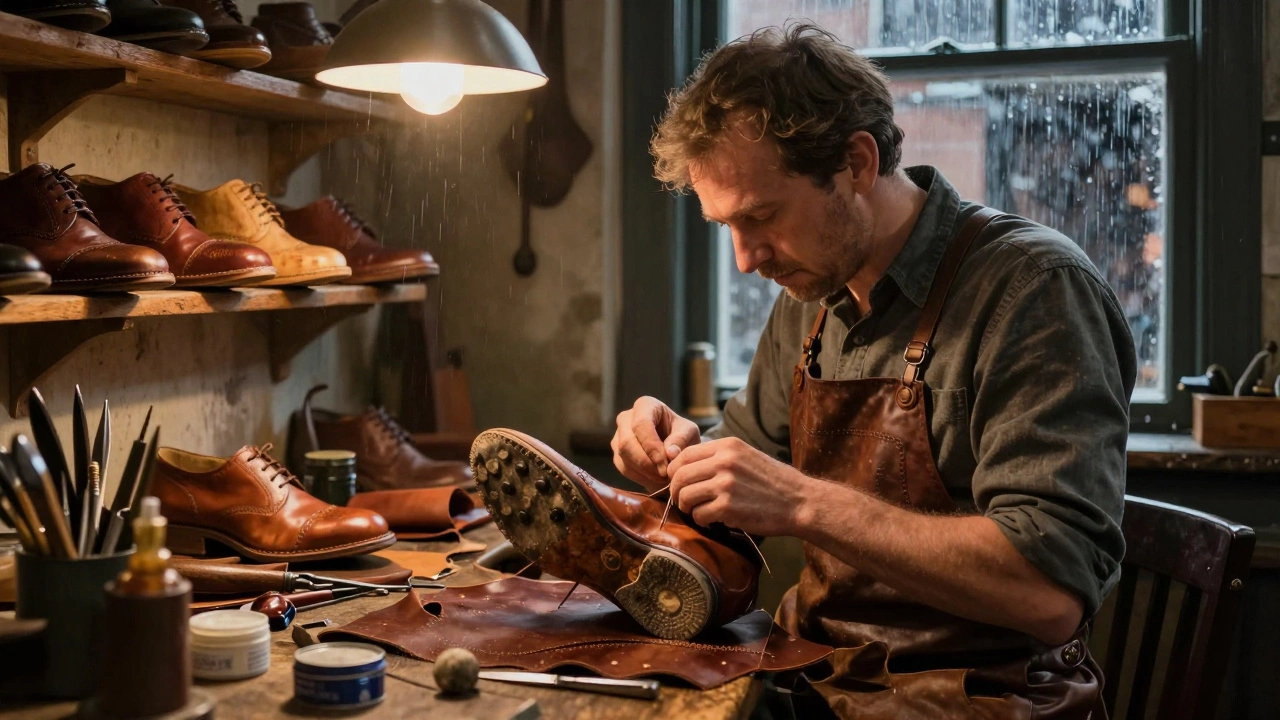
What Happens When You Keep Wearing Damaged Shoes?
It’s not just about comfort. It’s about health. In Ireland, where walking is part of daily life-whether it’s the 20-minute stroll to the supermarket in Bray or the hike up Howth Head-your shoes are your foundation. Worn-out soles change your gait. You start walking on the outside of your foot to avoid the uneven heel. That puts pressure on your ankles. Over months, that leads to plantar fasciitis. Or worse, a stress fracture.
Studies from Trinity College Dublin’s biomechanics lab show that people wearing shoes with worn soles have a 37% higher chance of developing chronic foot pain within 18 months. That’s not a small number. It’s a public health issue. And it’s avoidable.
Also, consider this: wet, broken shoes make you colder. Leather that’s lost its natural oils can’t trap heat. In Galway, where winter wind cuts through the streets, cold feet mean cold legs. Cold legs mean you’re less likely to walk. And less walking means less circulation. That’s not just uncomfortable-it’s unhealthy.
When to Buy New: A Practical Guide for Ireland
Here’s a simple checklist for deciding when to replace your leather shoes:
- The sole is visibly worn down by more than 3mm at the heel or ball of the foot
- There’s a visible crease or split in the leather that won’t smooth out, even after conditioning
- The shoe no longer holds its shape when you take out the insole
- You’ve had them for over five years and they’ve been resoled twice
- You feel pain in your feet, knees, or lower back after walking for just 30 minutes
- The smell lingers even after drying, cleaning, and airing out for 48 hours
If three or more of these apply, it’s time. Don’t wait for the sole to fall off. That’s when you risk injury.
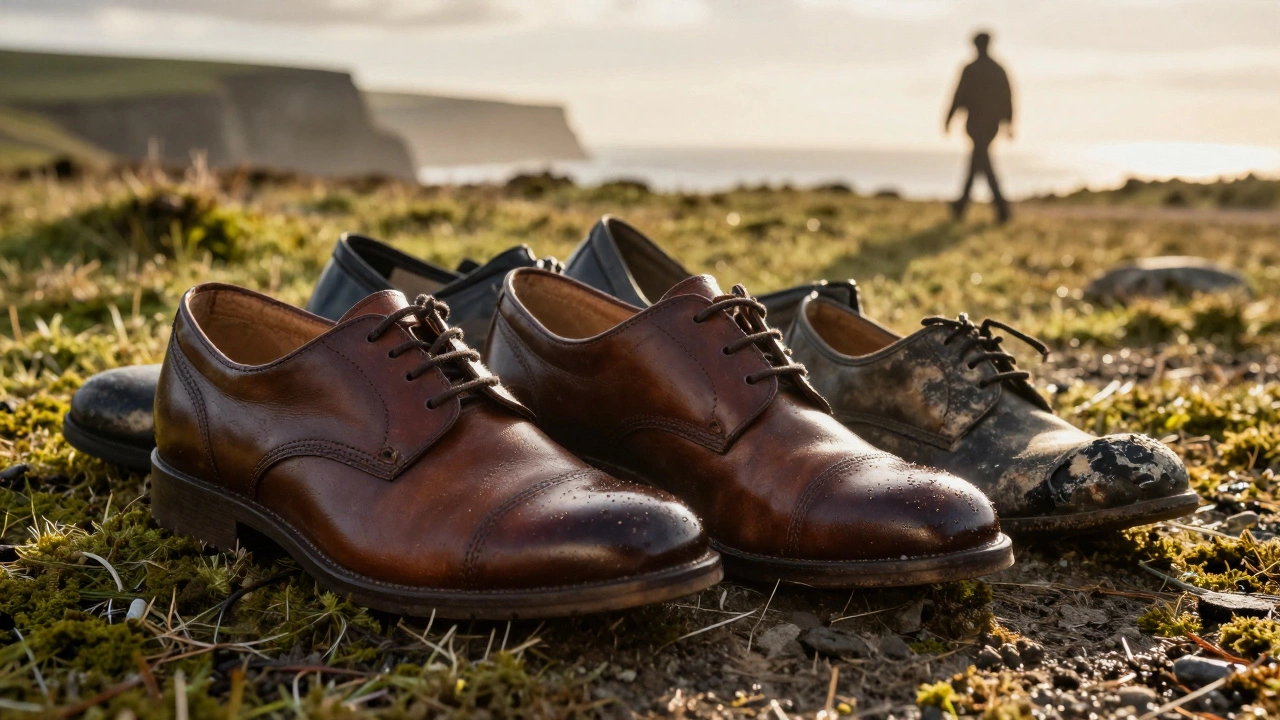
What to Look for in New Leather Shoes in Ireland
When you’re ready to replace them, choose wisely. Look for shoes with:
- Goodyear welt construction-this means the sole is stitched, not glued, and can be resoled multiple times
- Leather insoles-they breathe better than foam and last longer
- A rubber outsole with good tread-essential for Ireland’s wet pavements and muddy lanes
- Water-resistant treatment-check if it’s been treated with a wax or oil finish
Brands like Clarks, Allen Edmonds, and Irish-made Shoe Warehouse offer these features. Avoid cheap imports from online retailers that claim “full leather” but use bonded leather or thin synthetics underneath. You’ll pay less upfront, but you’ll replace them twice as often.
And don’t forget to get fitted. Feet change with age. Many people in Ireland still wear the same size they did in their 20s. Visit a local cobbler or a reputable shoe store like Clarks on O’Connell Street or John Lewis in Dundrum. They’ll measure your feet and check for width, arch support, and toe room. That’s worth the time.
What to Do With Old Leather Shoes
Don’t just throw them in the bin. Leather is biodegradable, but the glue and synthetic soles aren’t. In Ireland, some local councils-like Dublin City Council-have textile recycling bins at civic amenity sites. Take your old shoes there. Others can be donated to St. Vincent de Paul shops if they’re still wearable. Even broken ones can be stripped for leather and reused by artisans.
Some Dublin-based designers, like Re:Shoe, take old brogues and turn them into bags or belts. It’s a small movement, but it’s growing. Supporting local circular fashion keeps leather out of landfills and honors the craft behind the shoe.
Leather shoes in Ireland aren’t just footwear. They’re companions through rain, wind, and quiet walks along the Wild Atlantic Way. When they’re done, it’s not just about replacing them-it’s about respecting what they’ve carried you through.