Leather Shoe Care Checker
Select the things you've done or used on your leather shoes:
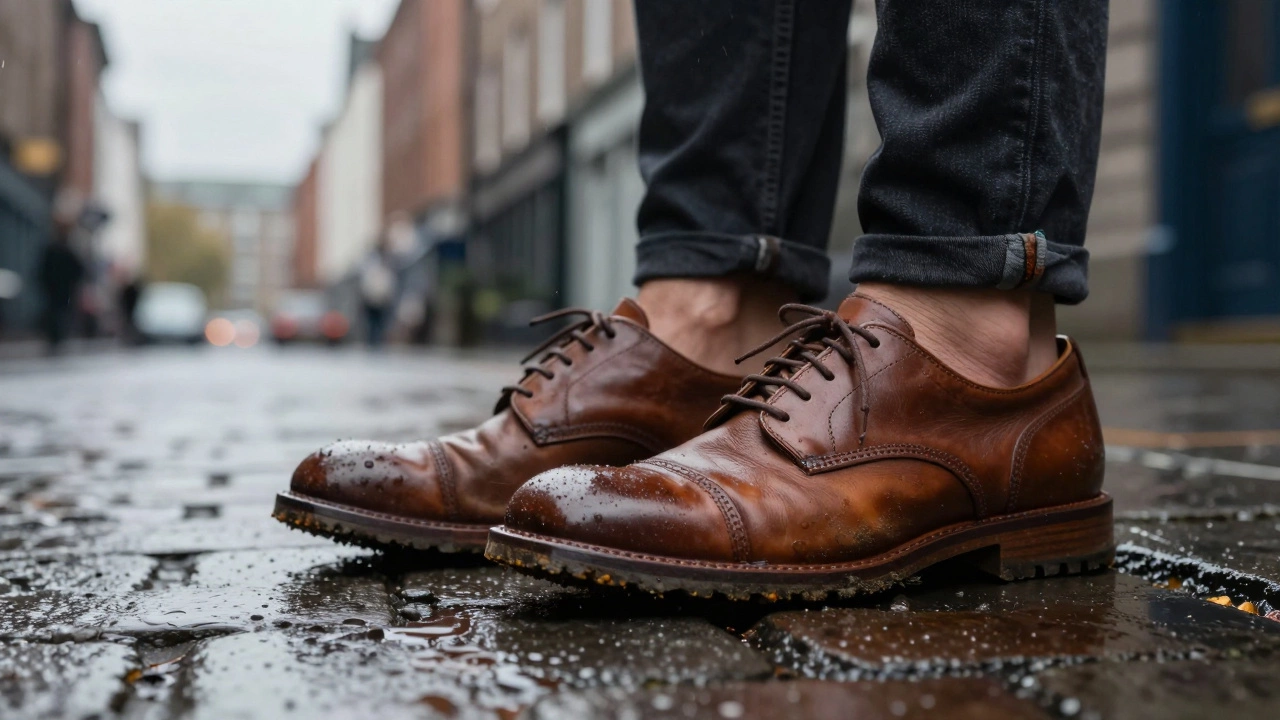
Check all that apply to see how well you're caring for your footwearLiving in Ireland means your footwear faces a unique set of challenges. We don’t just deal with rain; we deal with relentless dampness, salt from winter gritting on our streets, and sudden shifts from sunshine to sleet. If you’ve ever walked through a puddle in Temple Bar or braved the wind on the Cliffs of Moher, you know that keeping leather shoes looking sharp is a battle against the elements. But here’s the thing: most people ruin their favourite pair of boots or oxfords not by wearing them, but by trying to "fix" them with the wrong products. Before you reach for that bottle in the cupboard, let’s talk about what should definitely stay away from your leather.
The Water Myth: Why Hosing Down Your Shoes Is a Bad Idea
It sounds counterintuitive, doesn’t it? You want to protect your shoes from water, so why not use water to clean them? The problem is that leather is porous. It breathes. When you soak leather-whether by washing it in a sink or hosing it down outside-you strip away its natural oils. In Ireland, where humidity is high year-round, wet leather takes forever to dry properly. If you leave soaked shoes near a radiator or under a heater (a common mistake during those chilly November evenings), the heat will cause the leather to shrink, crack, and become brittle. Think of it like skin: if you leave your hands in hot water too long, they get pruney and damaged. Same principle applies to your calfskin or suede.
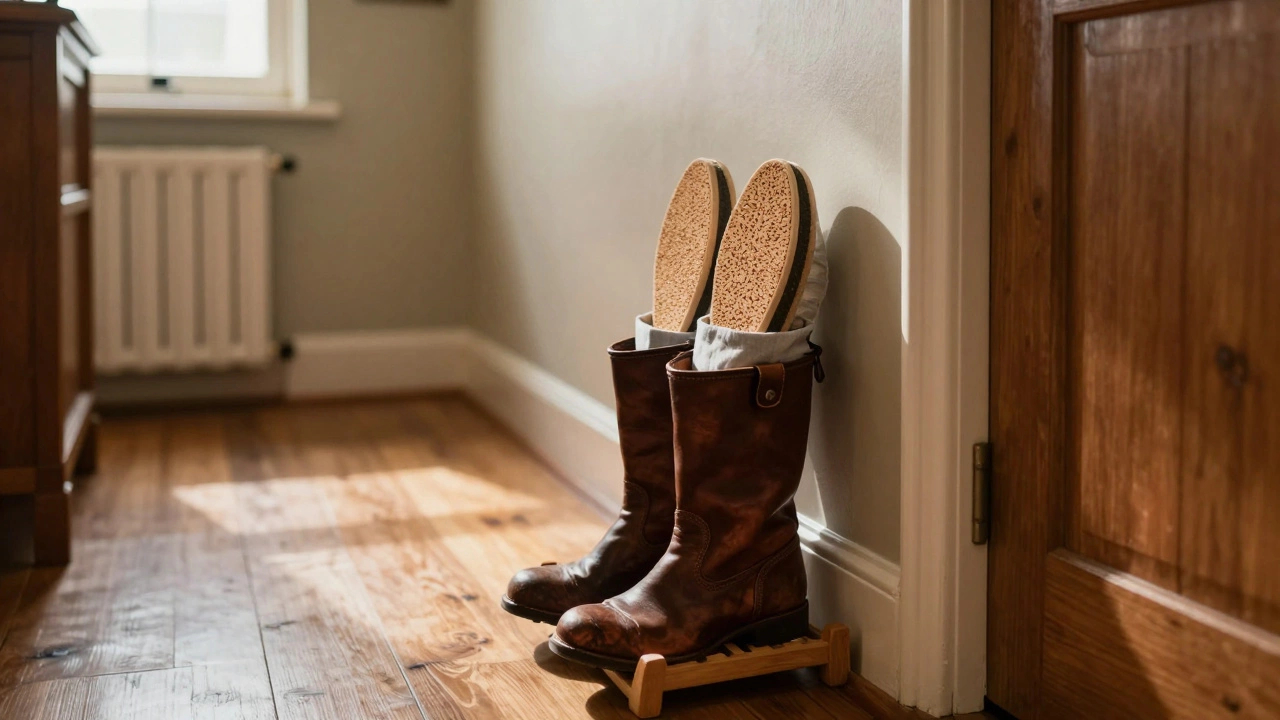
Instead of soaking, always wipe off mud and dirt with a damp cloth. Let them air dry at room temperature, ideally stuffed with newspaper to absorb moisture from the inside. This keeps the shape intact without stressing the material.
Harsh Chemicals and Household Cleaners
We all have a drawer full of cleaning sprays. Bleach, multi-surface cleaners, even strong soap solutions might seem like quick fixes for scuffed leather. They are not. These products contain alkalis and acids that break down the tannins in leather. Tanning is the process that turns raw hide into durable leather, and harsh chemicals reverse this work. You might see the stain disappear instantly, but within weeks, the area will look faded, stiff, and prone to cracking.
In Dublin, many of us walk on pavement treated with de-icing salts in winter. Salt stains can be stubborn, but scrubbing them with household bleach will only make matters worse. Use a dedicated leather cleaner instead. Brands like Saphir, widely available in stores across Grafton Street or online via Irish retailers, offer pH-balanced formulas designed specifically for leather maintenance. Stick to these rather than risking your investment with generic supermarket cleaners.
Silicone-Based Sprays and "Quick Shine" Products
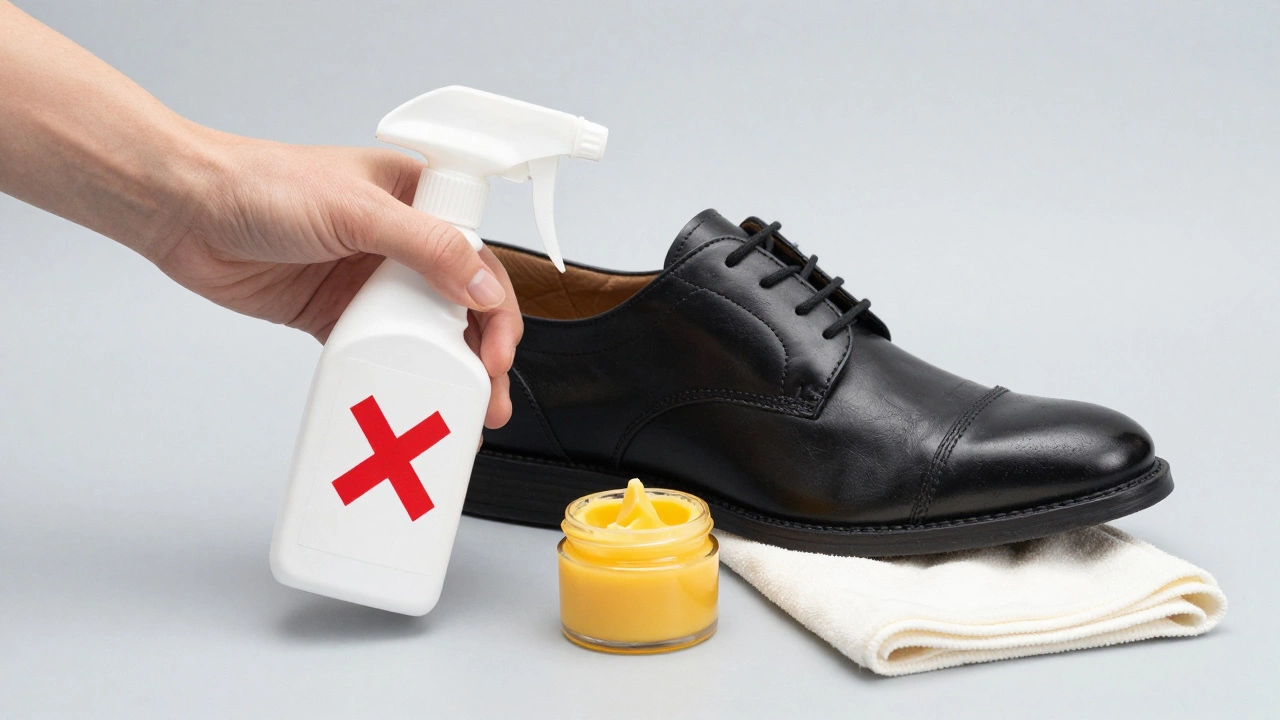
You’ve probably seen those aerosol cans promising an instant shine in seconds. They’re tempting when you’re rushing out to a meeting in Cork or heading to a wedding in Galway. However, silicone-based sprays create a plastic-like film over the leather. This blocks the pores, preventing the leather from breathing. Over time, this buildup traps moisture underneath, leading to mold growth-a real concern in Ireland’s damp climate. Plus, once that silicone layer sets in, it’s incredibly difficult to remove. You’ll end up having to strip the finish entirely before you can apply proper conditioning.
Opt for wax-based polishes instead. They penetrate the leather, nourish it, and provide a natural lustre. Yes, they take longer to apply, but the result lasts longer and actually protects the material. For everyday wear, a simple cream polish works wonders. Save the high-gloss wax for special occasions.
Heat Sources: Radiators, Hair Dryers, and Direct Sunlight
Ireland’s winters are grey and cold, making indoor heating essential. It’s easy to place wet shoes next to a radiator to speed up drying. Don’t do it. Heat dries out leather rapidly, causing it to lose flexibility. Cracks form along stress points like the toe box and heel counter. Similarly, using a hair dryer on high heat damages the surface finish and can warp the sole glue.
Even direct sunlight isn’t harmless. While UV rays won’t melt your shoes, prolonged exposure fades colour and weakens fibres. If you live in a sunny spot in Kerry or Wicklow, keep your shoes away from windows during peak hours. Store them in a cool, dark place with good airflow. A shoe tree made of cedar helps maintain shape while absorbing odours and moisture naturally.
Oil-Based Conditioners and Vaseline
Some old-school tips suggest using olive oil, baby oil, or Vaseline to soften leather. This advice comes from a different era and doesn’t hold up today. Petroleum-based products like Vaseline clog pores and attract dust, creating a grimy layer that’s hard to clean. Plant oils go rancid over time, leaving an unpleasant smell and potentially staining the leather yellow. Modern leather conditioners contain lanolin, beeswax, and other ingredients formulated to replenish lost oils without residue.
If your shoes feel dry after months of wear, apply a small amount of quality conditioner every few weeks. Test it on a hidden area first, especially if you own coloured leather. Darker shades may lighten slightly upon initial application, which is normal but worth checking beforehand.
Ignoring Proper Storage and Rotation
It’s not just about what you put *on* your shoes-it’s also about how you treat them between wears. Wearing the same pair two days in a row gives the leather no time to recover. Sweat and moisture build up inside, weakening the structure. Rotate between at least two pairs to extend their lifespan. This is particularly important if you commute daily in cities like Belfast or Limerick, where walking distances add up.
Store your shoes properly. Avoid stacking them haphazardly in a closet. Use shoe trees to preserve shape and prevent creasing. Keep them in breathable bags rather than plastic ones, which trap humidity. In Ireland’s coastal areas, salt air accelerates deterioration, so extra care in storage pays off.
| Mistake | Why It’s Harmful | Best Practice |
|---|---|---|
| Soaking in water | Strips natural oils, causes shrinking | Wipe with damp cloth, air dry |
| Using bleach or multi-cleaners | Breaks down tannins, fades colour | Use pH-balanced leather cleaner |
| Silicone spray shine | Blocks pores, traps moisture | Apply wax-based polish |
| Drying near radiators | Causes cracking and warping | Air dry at room temp with shoe trees |
| Vaseline or cooking oils | Clogs pores, goes rancid | Use lanolin-based conditioner |
Special Considerations for Suede and Nubuck
If you own suede or nubuck shoes, the rules change slightly. These materials are more delicate and react differently to liquids. Never use standard leather polish on suede-it will stain irreversibly. Instead, invest in a suede brush and eraser kit. Brush gently to lift nap and remove surface dirt. For deeper stains, professional cleaning services in major Irish cities offer specialized treatments.
Waterproofing sprays exist for suede, but choose ones labelled as breathable. Non-breathable coatings defeat the purpose of suede’s soft texture. Apply sparingly and reapply seasonally, especially before autumn rains hit.
When to Seek Professional Help
Not every issue needs DIY intervention. Deep scratches, separated soles, or significant colour loss require expert attention. Cobbler shops in towns like Kilkenny or Derry often carry generations of craftsmanship knowledge. They can resole, recolor, and restore beyond what home kits achieve. Don’t hesitate to visit one annually for preventive maintenance. It’s cheaper than replacing expensive footwear prematurely.
Can I use baby oil on my leather shoes?
No, baby oil should never be used on leather shoes. It clogs the pores, attracts dirt, and can go rancid over time, causing unpleasant odours and discoloration. Always opt for a dedicated leather conditioner containing lanolin or beeswax.
How do I remove salt stains from leather shoes in winter?
Mix equal parts white vinegar and water, dip a soft cloth, and gently dab the stained area. Wipe again with a clean damp cloth to neutralize, then let air dry completely. Follow up with a leather conditioner to restore moisture.
Is it safe to dry leather shoes in the sun?
Prolonged sun exposure can fade colour and weaken leather fibres. While brief indirect light is fine, avoid placing shoes in direct sunlight for extended periods. Air drying indoors at room temperature is safest.
What’s the best way to store leather shoes in Ireland’s humid climate?
Store shoes in a cool, dry place away from windows. Use cedar shoe trees to absorb moisture and maintain shape. Avoid plastic bags; opt for breathable fabric covers instead. Rotate pairs regularly to allow each to rest and dry fully.
Should I waterproof my leather shoes before rainy seasons?
Yes, applying a breathable waterproofing spray before autumn helps repel rain without trapping moisture. Choose products designed for smooth leather, not silicone-heavy variants. Reapply every few months depending on usage frequency.