Irish Gear Advisor Calculator
Choose Your Scenario
Answer these questions to get personalized gear recommendations for Ireland's conditions
Your Recommendations
Select your activity and weather conditions to see recommendations
Warning: Incorrect Gear
Your gear might not protect against Irish weather conditions.
When you’re running through Phoenix Park at dawn, hiking the Wicklow Way, or squeezing in a workout between school runs in Cork, you’ve probably noticed the difference between a pair of leggings that just look sporty and ones that actually keep up with you. In Ireland, where rain is a daily variable and the weather shifts faster than a Dublin bus schedule, the line between regular sportswear and true active sportswear isn’t just about style-it’s about survival.
What Exactly Is Sportswear?
Sportswear in Ireland is often what people grab when they want to look like they exercise-even if they’re just heading to the supermarket after yoga class. Think of those bright, branded leggings from international chains like Lululemon or Nike that you bought on sale at Brown Thomas. They might have moisture-wicking labels, but they’re not built for the kind of conditions we face here.
In Ireland, sportswear is frequently worn as casual attire. You’ll see it in Galway pubs on a Friday night, on the DART commuter trains, or in the queue for coffee at The Coffee House in Temple Bar. It’s fashion-first. The fabric might be polyester blend, the seams aren’t reinforced, and the waistband? It rolls over after 20 minutes of walking uphill in the Howth Cliff Path. It’s designed for aesthetics, not endurance.
What Makes Active Sportswear Different?
Active sportswear is engineered for motion, weather, and real physical stress. It’s not about looking good in a selfie-it’s about staying dry, warm, and comfortable while you’re drenched in rain, soaked in sweat, or freezing on a windy morning in Sligo.
Brands like Decathlon (popular in Ireland for its value) and Outdoor Voices (gaining traction among Dublin runners) design active sportswear with technical features: seam-sealed stitching to block wind-driven rain, flatlock seams to prevent chafing during long-distance runs, and fabrics like Polartec or Gore-Tex Infinium that breathe but don’t soak through. You’ll find these in gear sold at Go Outdoors in Limerick or Mountain Equipment in Belfast, where customers know the difference between a workout and a survival hike.
Take the Irish winter trail runs in the Mourne Mountains. Runners there don’t wear cotton. They wear base layers that pull sweat away from the skin, mid-layers that trap heat without bulk, and outer shells that shed rain while letting vapor escape. That’s active sportswear. It’s not optional-it’s necessary.
Material Matters: Why Fabric Isn’t Just a Label
Most regular sportswear uses a 80% polyester, 20% spandex blend. It’s cheap, stretchy, and looks fine in the mirror. But in Ireland’s damp climate, that blend holds moisture. After a 45-minute session at the local gym in Dundalk or a muddy trail in the Burren, you’re left with clammy fabric clinging to your skin-and that’s a recipe for chills, even if the thermometer says 10°C.
Active sportswear uses technical fabrics like:
- Merino wool blends - naturally odor-resistant, great for layering under a waterproof jacket on a Connemara hike
- Recycled nylon with DWR coating - used by Irish brands like Wicklow Active to repel rain without trapping heat
- Thermolite or PrimaLoft insulation - lightweight warmth for early morning runs in Galway when the wind cuts off the coast
These materials aren’t just marketing buzzwords. They’re tested in real Irish conditions. For example, Wicklow Active, a small Dublin-based brand, designs its gear using feedback from members of the Wicklow Running Club, who train through fog, sleet, and mud all year round.
Fit and Function: Tailored for Movement, Not Just Looks
Sportswear often has a looser, trend-driven fit. Think baggy shorts with drawstrings that slip mid-run, or tops that ride up when you stretch. In Ireland, where you might be scrambling over rocks in the Cliffs of Moher or cycling along the Wild Atlantic Way, that’s a liability.
Active sportswear is cut for biomechanics. It includes:
- Compression zones around quads and calves to reduce fatigue during long runs
- Strategic ventilation panels under the arms or along the spine
- Reflective elements that actually work in low-light conditions - crucial for early winter runs in Belfast or Limerick when it’s dark by 4:30 PM
- High-rise, wide waistbands that stay put during burpees, even after washing 30 times
Brands like Runners Need in Cork and Fitbit Ireland partners like Active Wear Co. in Dublin offer gear designed by former athletes who train in these exact conditions. You won’t find this level of detail in fast-fashion sportswear sold at Primark or H&M.
Real-Life Scenarios: What You’ll Actually Wear in Ireland
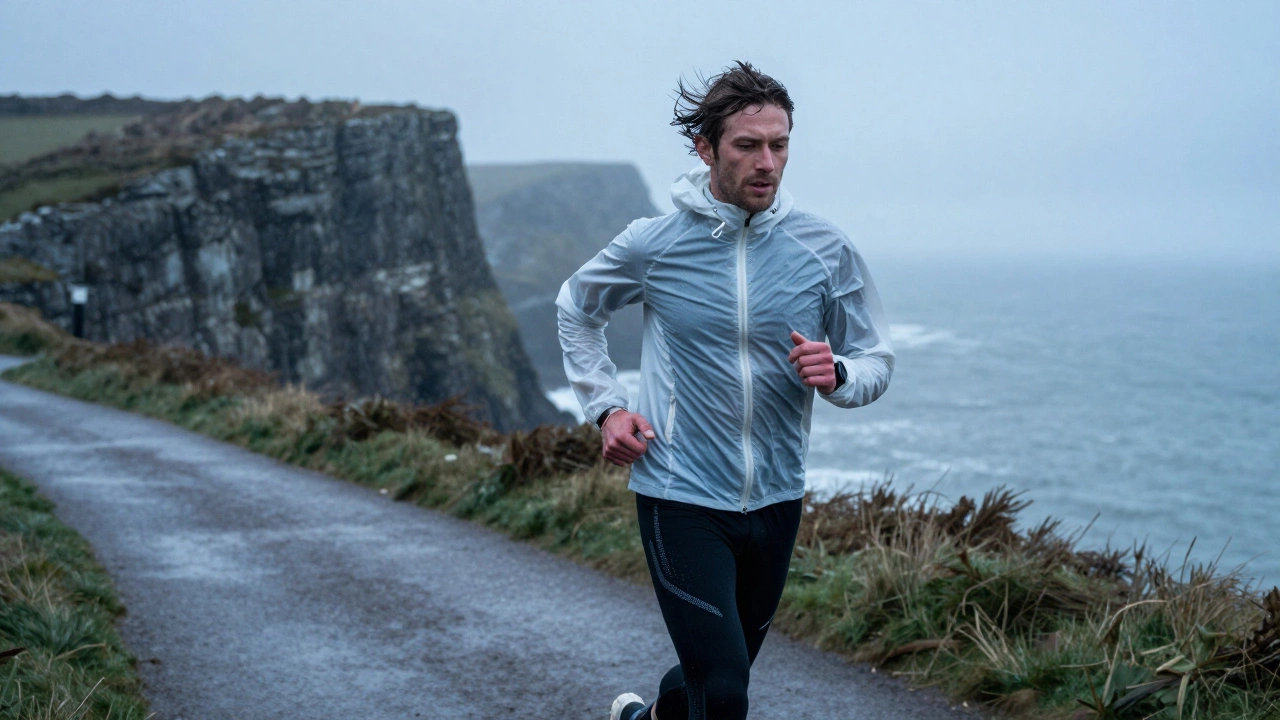
Imagine this: It’s 7 a.m. in Kerry. You’re heading out for a 6-kilometre loop around the Ring of Kerry. The forecast says light rain, 8°C, with wind gusts. What do you wear?
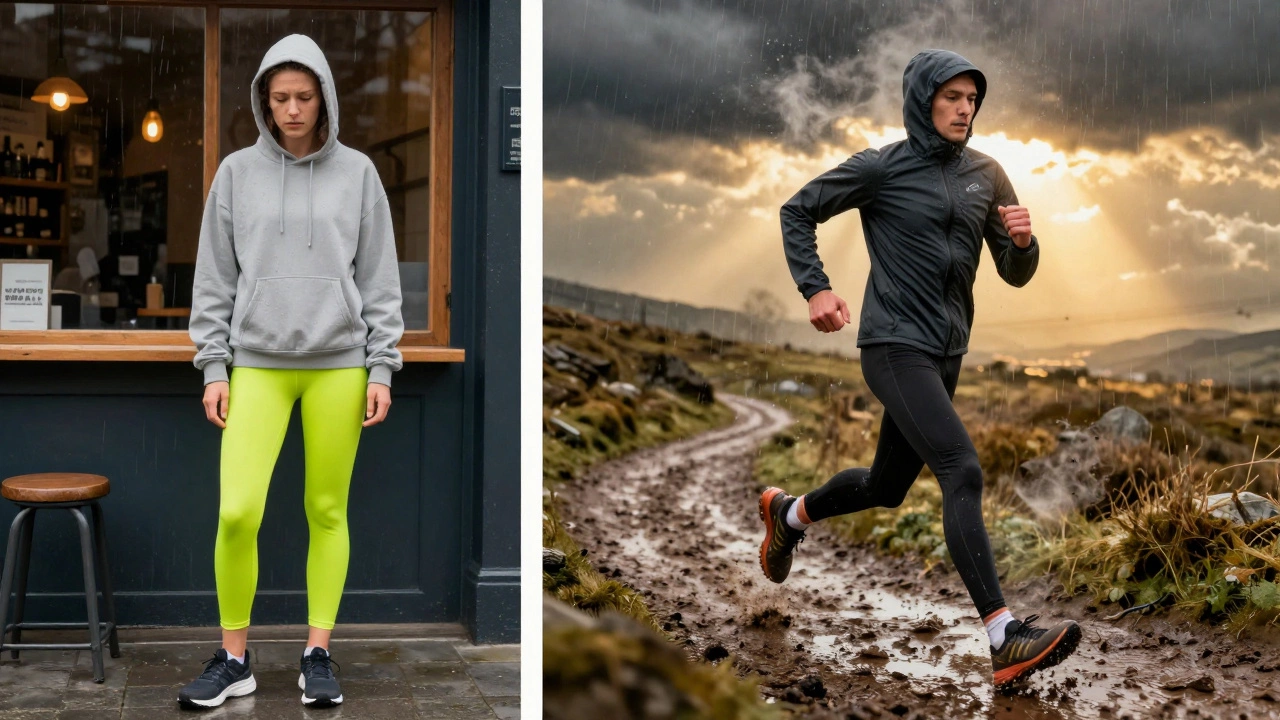
If you’re in regular sportswear: leggings that get heavy with moisture, a cotton hoodie that soaks through, and sneakers that let water in. By the end, you’re shivering, your skin’s irritated, and you’re already dreading the next run.
If you’re in active sportswear: a merino wool base layer, a lightweight waterproof shell with a hood, moisture-wicking tights with silicone grippers at the ankles, and trail-running shoes with Vibram soles. You finish the run dry, warm, and ready to go again tomorrow.
That’s the difference. It’s not about spending more money-it’s about spending it wisely. A €120 pair of active leggings from a trusted Irish brand lasts three years. A €30 pair from a high-street store frays, loses shape, and leaks after six months.

Where to Buy Active Sportswear in Ireland
You don’t need to order from the US. Ireland has a growing ecosystem of local and regional brands that understand our climate:
- Wicklow Active - Dublin-based, designs for Irish trail runners and hikers
- Go Outdoors - Nationwide stores with a dedicated active wear section, staffed by real outdoor enthusiasts
- Decathlon Ireland - Offers high-performance gear at affordable prices, great for beginners
- Mountain Equipment - Belfast and Dublin locations, trusted by climbers and winter trekkers
- Active Wear Co. - Irish-owned, uses recycled materials, ships nationwide
Many of these brands offer free returns and have in-store fitting sessions-something you won’t find with online-only retailers.
Why This Matters for Irish Lifestyles
Ireland’s culture isn’t just about pubs and poetry. It’s about resilience. We train in rain. We run in wind. We hike in mist. Our sportswear needs to match that spirit. Choosing active sportswear isn’t a luxury-it’s a practical decision that affects your comfort, safety, and motivation.
When you invest in gear built for our weather, you’re not just buying clothes. You’re choosing to show up-again and again-no matter what the sky throws at you.
Can I wear regular sportswear for running in Ireland?
You can, but you’ll regret it. Regular sportswear isn’t designed for Ireland’s wet, windy conditions. Cotton absorbs moisture and stays cold, leading to discomfort and even hypothermia risk. Active sportswear wicks sweat, blocks wind, and dries fast-critical for safety and enjoyment.
Is active sportswear more expensive in Ireland?
It can be, but not always. Brands like Decathlon offer high-performance gear for under €50. The real cost is in replacement: cheap sportswear wears out faster and needs replacing every 6-12 months. Active sportswear lasts 2-4 years with proper care, making it cheaper over time.
Do I need different gear for winter versus summer in Ireland?
Absolutely. Summer gear focuses on breathability and UV protection-think lightweight mesh tops and quick-dry shorts. Winter gear adds insulation, windproof shells, and thermal layers. Many Irish brands offer seasonal collections tailored to our unpredictable climate.
Are there Irish-made active sportswear brands?
Yes. Wicklow Active, Active Wear Co., and TrailGear Ireland are all locally designed and tested. They use feedback from Irish athletes and outdoor groups to refine fit and function for our terrain and weather.
What should I look for when buying active sportswear in Ireland?
Look for: seam-sealed construction, moisture-wicking labels (not just "polyester"), reflective elements, and wind-resistant fabric. Try it on and move-crouch, stretch, jog in place. If it rides up, rolls, or feels stiff, it’s not right. Ask staff if they’ve worn it on the Wicklow Way or the Dingle Peninsula-real users know.
If you’re serious about staying active in Ireland, your gear should be too. Don’t settle for clothes that look good on a mannequin. Choose gear that works when the rain comes sideways and the wind bites your ears. That’s not fashion-that’s fitness, Irish style.