Irish Jacket Finder
Answer three quick questions to find the ideal button-free jacket style for your next outing in Ireland.
You are standing on Grafton Street in Dublin, the wind whipping off the Liffey, and you reach for your coat. It has no buttons. No snaps. Just a zipper running down the front. You might wonder, what is a jacket without buttons called? In Ireland, where the weather demands layers that can be shed or zipped up in seconds, this question comes up more often than you think. The short answer is usually a zip-up jacket, but the specific name depends entirely on the cut, the fabric, and the heritage behind it.
It’s not just about semantics. Knowing the right term helps you find what you need when you’re browsing online from Cork to Galway, or when you’re trying to explain your style preference to a shop assistant at Brown Thomas. Let’s break down the types of button-free jackets that dominate the Irish wardrobe, why they work so well here, and how to wear them without looking like you’ve forgotten your trousers.
The Zip-Up Jacket: The Umbrella Term
When people ask about jackets without buttons, they are almost always referring to zip-up jackets. This is the broad category for any outerwear secured by a zipper rather than buttons, snaps, or hooks. Think of it as the parent category. If you see a hoodie with a full-length zipper, that’s a zip-up hoodie. If you see a denim jacket with a metal track, that’s a zip-up denim jacket. The defining feature is the fastening mechanism.
In Ireland, this style has exploded in popularity over the last decade. Why? Because our weather is unpredictable. One minute you’re walking through St Stephen’s Green in sunshine, the next you’re dodging rain near Trinity College. Buttons are slow. Zippers are fast. You can adjust your temperature regulation in seconds. That practicality has made the zip-up a staple for everyone from students in Dublin City University to commuters on the Dart.
The Harrington Jacket: An Irish Icon
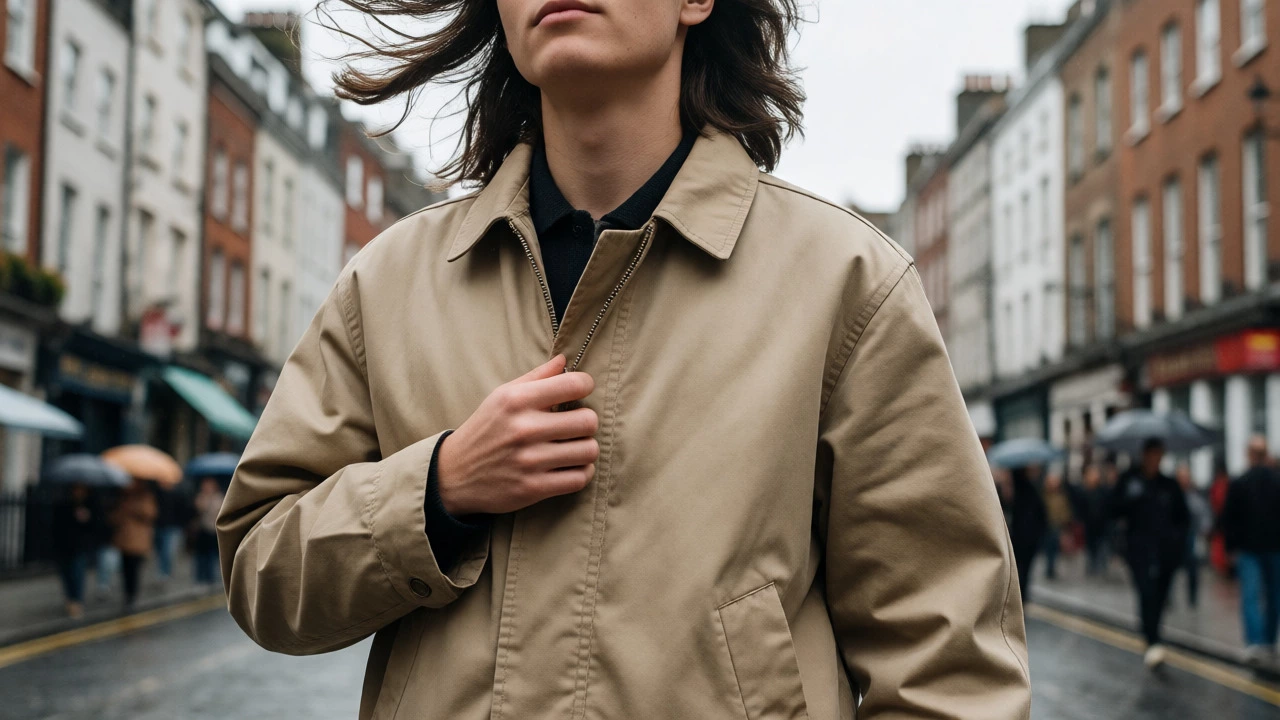
If there is one jacket without buttons that defines Irish style, it’s the Harrington jacket. Originally known as the "G9" by Baracuta, this lightweight, waist-length jacket features a zip front, a stand-up collar, and a tartan lining. While its origins are British (created in Manchester), it became deeply embedded in Irish culture during the mod and skinhead movements of the 1960s and 70s, and later adopted by the casual football fan culture.
Today, brands like Baracuta and local Irish retailers stock Harringtons in every color imaginable. They are perfect for transitional weather-cool enough for a May evening in Kilkenny, warm enough for a light drizzle in Belfast. The lack of buttons means no snagging on scarves, and the zip allows you to vent heat if you’re rushing for a bus.
| Jacket Type | Key Features | Best For |
|---|---|---|
| Harrington | Waist-length, tartan lining, elastic cuffs | Casual smart-casual, mild rain |
| Bomber | Ribbed cuffs/hem, pilot-inspired, often nylon | Streetwear, layering |
| Anorak/Parka | Pullover or half-zip, hooded, waterproof | Heavy rain, hiking, coastal winds |
| Fleece | Synthetic wool, soft, thermal | Cold dry days, base layering |
The Bomber Jacket: From Pilots to Pub Wear
Another contender for the title of "most popular jacket without buttons" is the bomber jacket. Also known as the flight jacket or MA-1, this style originated with military pilots who needed warmth without bulk. The classic design features a zip front, ribbed cuffs, and a ribbed hem. Unlike the Harrington, bombers often have pockets angled upward for easy access while seated.
In Dublin’s nightlife scene, the bomber jacket is ubiquitous. It pairs effortlessly with jeans and sneakers. You’ll see them in black satin, olive green nylon, or even leather. The appeal lies in their versatility. You can wear a bomber under a trench coat for extra insulation during a winter walk along the Cliffs of Moher, or on its own during a summer festival in Galway. The absence of buttons keeps the silhouette clean and modern, which is exactly why it remains a favorite among young professionals in Dublin’s tech district.
Anoraks and Parkas: Battling the Atlantic
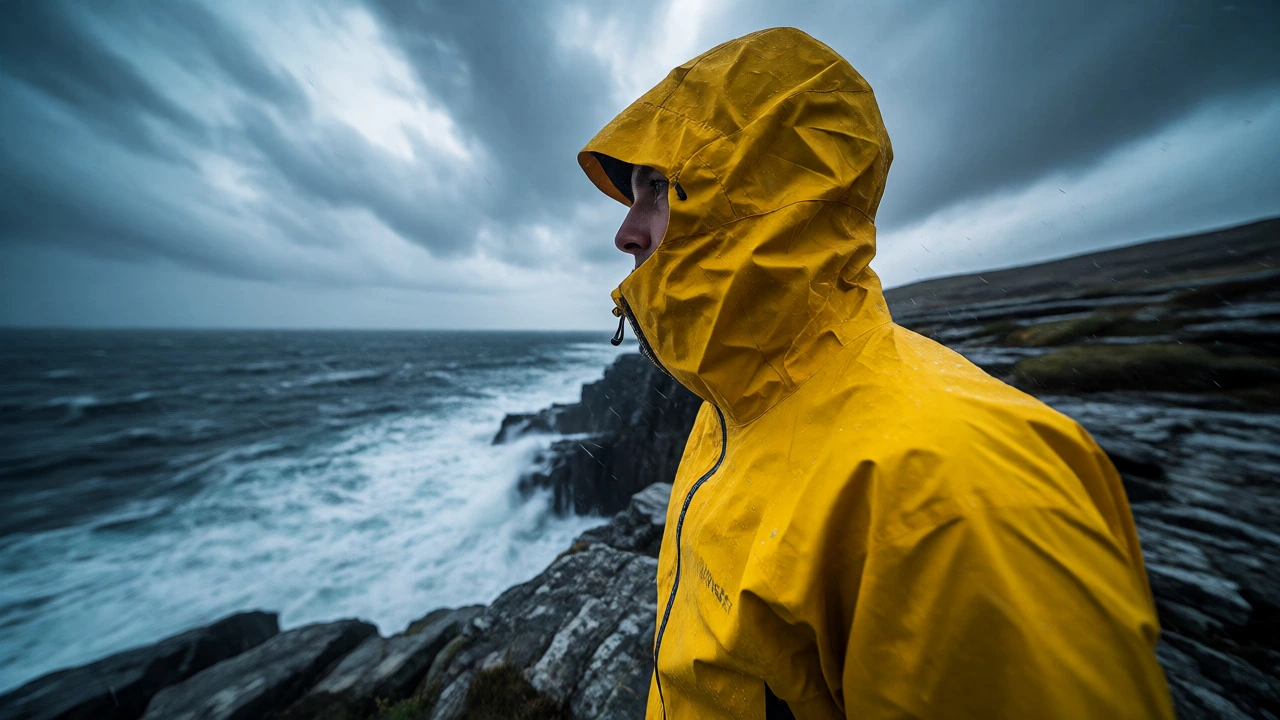
If you live anywhere on the west coast-from Sligo to Kerry-you know that standard jackets don’t cut it when the Atlantic storms roll in. Here, the term "jacket without buttons" often refers to anoraks or parkas. These are typically pullover styles with a half-zip or full-zip front, designed specifically for wet and windy conditions.
Irish outdoor brands like Howies (which started in Edinburgh but has a strong presence in Irish retail) and global giants like Patagonia offer high-performance anoraks. The key difference between an anorak and a parka is length; parkas extend below the hip for added protection. Both rely on zippers because buttons create gaps where water can seep in. If you’re planning a hike in Wicklow Mountains National Park, a zip-up anorak is non-negotiable. It breathes better than a buttoned coat and sheds rain faster.
Fleece Jackets: The Indoor-Outdoor Hybrid
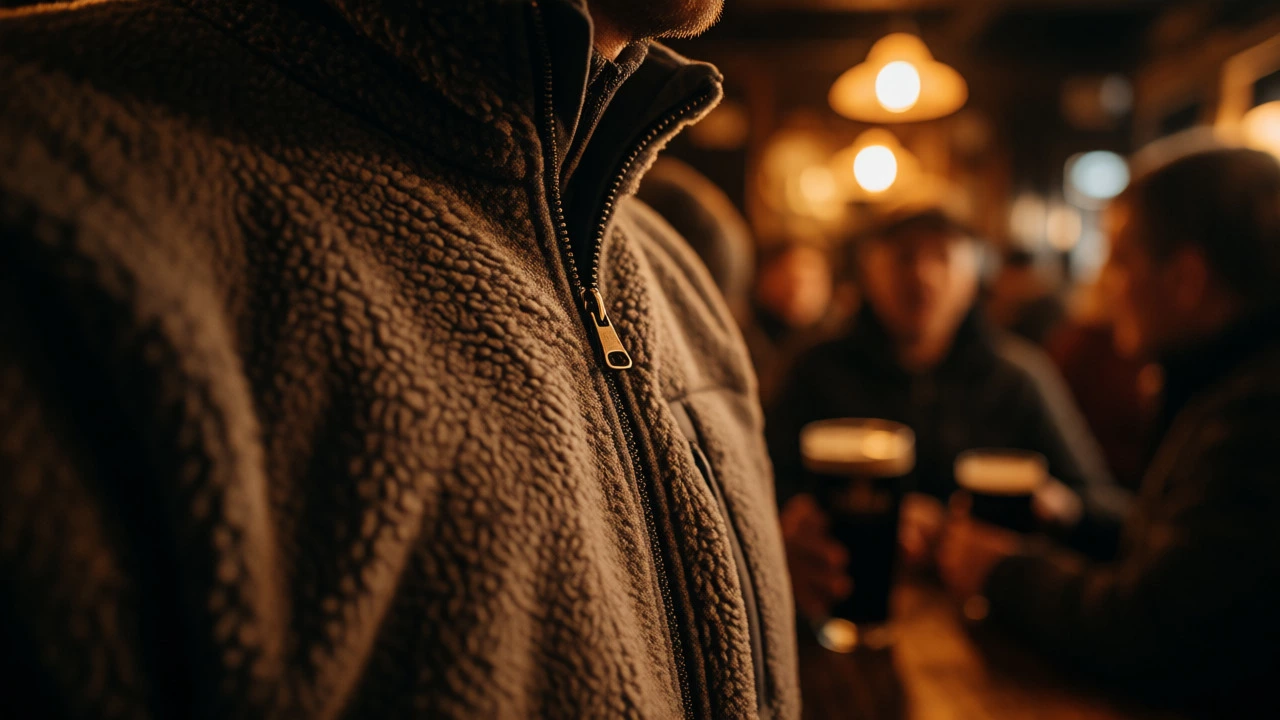
Walk into any pub in Cork or Belfast, and you will see fleece jackets. Technically, these are also jackets without buttons, though some hybrid models exist. The standard fleece uses a full-length zipper. Made from synthetic polyester, fleeces trap body heat effectively while remaining lightweight.
Why do they thrive in Ireland? Because our damp cold feels different from a dry freeze. Wool coats can get heavy and smell when wet. Fleece dries quickly and retains warmth even when damp. It’s the go-to choice for weekend trips to Connemara or morning walks along the Promenade in Bray. Many Irish workplaces accept fleece jackets as part of business casual attire, especially in creative industries or startups in Dublin’s Docklands.
How to Choose the Right Button-Free Jacket in Ireland
Selecting the right jacket isn’t just about style; it’s about survival in the Irish climate. Here’s a quick guide to help you decide:
- For Urban Commuting: Go for a Harrington or a slim-fit Bomber. They look sharp enough for office environments but handle sudden showers well.
- For Coastal Travel: Opt for a technical Anorak with taped seams. Look for materials like Gore-Tex or proprietary membranes used by Irish suppliers.
- For Casual Weekends: A Fleece or a zip-up Hoodie offers maximum comfort. Pair with jeans and boots for a rugged look suitable for rural pubs.
Remember, fit matters. A too-tight zip-up jacket restricts movement, especially when driving on narrow country roads. Too loose, and the wind catches underneath, rendering the insulation useless. Always try to zip it up fully before buying. If the zipper strains across your chest, size up.
Styling Tips for the Irish Wardrobe
One common mistake is treating all button-free jackets the same. A bomber jacket looks odd with formal trousers unless you’re going for a very deliberate high-low mix. Conversely, a bulky parka looks out of place in a city center café.
To nail the look, consider the context. In Dublin, layering is key. Start with a thin merino wool base layer, add a fleece mid-layer, and top with a waterproof shell or Harrington. This system lets you adapt to indoor heating versus outdoor chill. In rural areas like Donegal or Mayo, prioritize function over form. Waterproof zippers and adjustable hoods are worth the extra cost. You’re fighting elements, not just dressing for aesthetics.
Also, check the hardware. Cheap zippers fail. In Ireland, where you might use your jacket daily for months, invest in YKK zippers or equivalent quality brands. A broken zipper renders a button-free jacket useless, whereas a missing button is easily replaced.
Where to Buy Quality Button-Free Jackets in Ireland
You don’t need to order from overseas to find great options. Irish retailers understand the local climate. Stores like Kelly & Duffy in Dublin carry premium Harringtons and bombers. For outdoor gear, check out Decathlon outlets nationwide or specialized shops like Moonwalk in Dublin for climbing and hiking apparel.
Online shopping is convenient, but returns can be tricky with international shipping. Stick to Irish-based e-commerce sites where possible. Many offer free delivery within the Republic of Ireland and Northern Ireland, making it easier to exchange sizes if the fit isn’t right. Look for reviews mentioning durability against rain and wind, not just style photos.
Is a hoodie considered a jacket?
Yes, technically. A hoodie is a sweatshirt with a hood, often featuring a kangaroo pocket and either a pullover neckline or a full-zip front. When it has a zip, it falls squarely into the category of button-free jackets. However, it is generally classified as casual sportswear rather than outerwear, depending on the material thickness.
Can I wear a bomber jacket to work in Dublin?
In most corporate offices, probably not. But in creative agencies, tech companies, or casual Fridays, yes. Choose a dark, matte-finish bomber without loud logos. Pair it with chinos and loafers or clean sneakers to keep it professional yet relaxed.
Are Harrington jackets waterproof?
Traditional cotton Harringtons are water-resistant but not fully waterproof. They can handle light drizzle but will soak through in heavy rain. For true waterproofing, look for modern variations using treated fabrics or synthetic blends, often labeled as "weatherproof" or "showerproof."
What is the difference between a zip-up and a button-up jacket?
The primary difference is the fastening mechanism. Zip-ups offer quicker adjustment and better wind resistance due to the continuous seal. Button-ups provide a more traditional aesthetic and allow for ventilation gaps between buttons, but they are slower to put on and take off.
Do I need a liner in my jacket for Irish winters?
Yes, for December and January. Unlined jackets are fine for spring and autumn. For winter, look for quilted linings, shearling collars, or insulated fills. Alternatively, use the layering method: wear a thick sweater underneath a lighter zip-up shell.