Irish Outerwear Style Finder
It is a Tuesday morning in Dublin, and the wind coming off the Liffey has that specific chill that seeps right through your bones. You reach for your coat, but instead of the satisfying *zzzip* of a modern technical shell, you are fumbling with buttons, toggles, or perhaps a hidden placket. It happens to the best of us. We assume all jackets zip up because that is what we see on the high streets of Grafton Street every day. But there is a whole world of outerwear that relies on tradition, texture, and tactile closure rather than metal teeth. If you are wondering what is a jacket without a zipper called, you are likely looking at anything from a classic trench to a rugged waxed cotton jacket.
In Ireland, where weather shifts from sun to sleet in the time it takes to order a coffee in Temple Bar, understanding these garments is not just about fashion-it is about survival and style. The lack of a zipper often signals a different heritage, a different function, and certainly a different aesthetic. Let’s untangle the terminology so you can walk into any shop in Cork, Galway, or Belfast knowing exactly what to ask for.
The Classic Button-Up Jacket
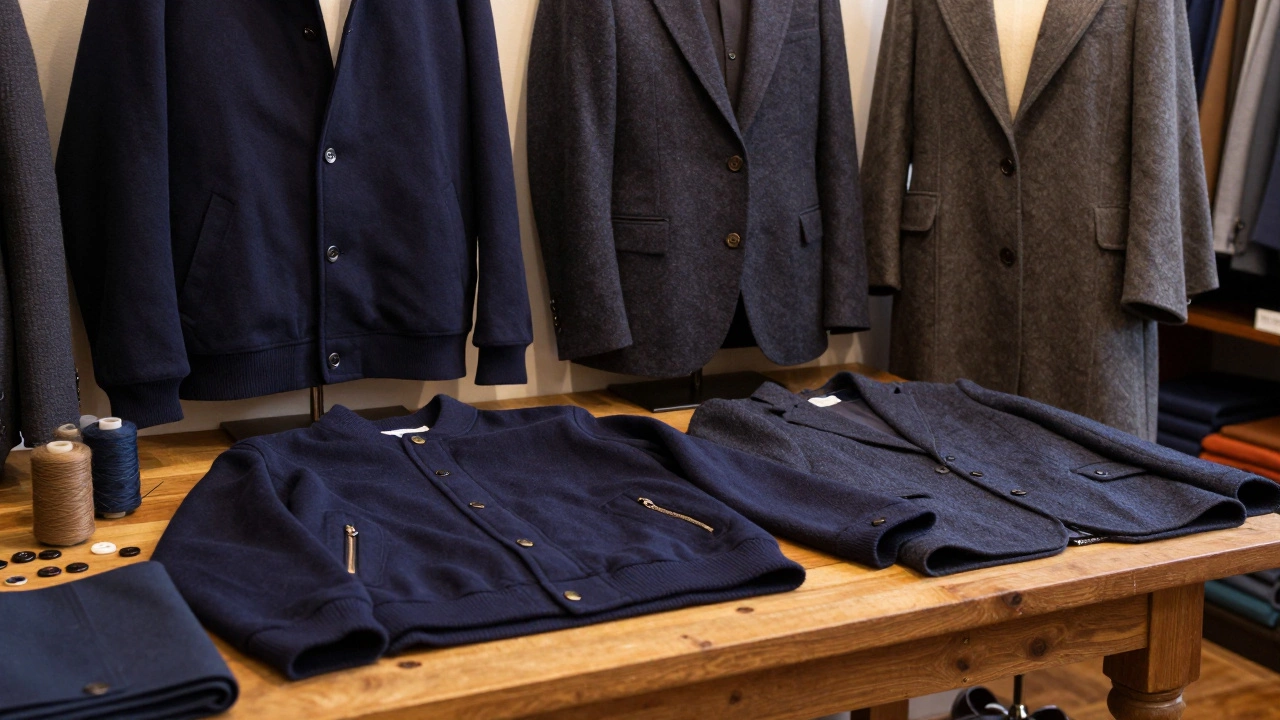
The most straightforward answer to our question is simply a button-up jacket. This is the umbrella term for any upper-body garment that closes with buttons down the front. While this sounds basic, the execution varies wildly depending on the context.
Think of the blazer you might wear to a wedding in County Kerry or a business meeting in the Docklands. These are tailored pieces that rely on structured lapels and precise button placement. In the Irish market, brands like O’Neills have long championed this style for both sport and casual wear. Their rugby jackets, for instance, are iconic. They feature heavy-duty buttons and a ribbed hem, designed to withstand the mud of a pitch in Donegal while keeping the wearer warm. Unlike a zippered track jacket, which feels athletic and temporary, a button-up rugby jacket feels permanent. It is part of the uniform.
Why do we still use buttons when zippers are faster? It comes down to durability and repairability. A broken zipper often means replacing the entire garment. A popped button? You can sew that back on in seconds with a needle and thread found in any household drawer in Ireland. There is also the element of adjustment. Buttons allow you to leave the bottom one undone-a rule of thumb in menswear that prevents the jacket from bunching up around the waist. Zippers force a binary choice: fully closed or fully open. Buttons offer nuance.
The Trench Coat: Weatherproof Elegance
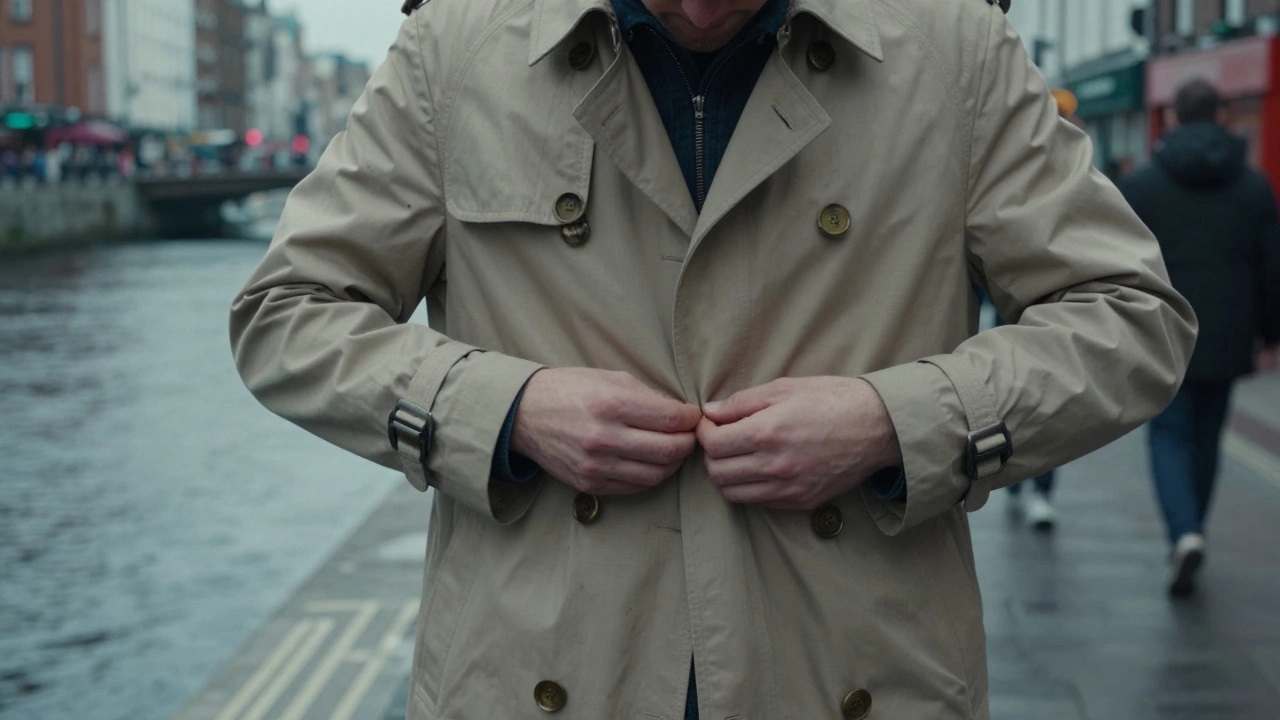
If you have ever watched an episode of Derry Girls or walked through the rain-soaked streets of Killarney, you have seen the trench coat. This is perhaps the most famous non-zipped jacket in existence. Technically, a trench is a type of raincoat, but its construction is distinct.
Trench coats typically feature a double-breasted front with overlapping flaps held by buttons. They include epaulets (shoulder straps), a storm flap (the extra layer of fabric behind the main closure), and often a belt. The brand Burberry popularized this style, but in Ireland, you will find excellent alternatives in local department stores like Dunnes Stores or independent boutiques in Kilkenny.
The reason trenches don’t use zippers is functional as well as historical. Zippers were invented in the early 20th century, but the trench coat dates back to World War I. More importantly, zippers can corrode. Salt air along the Cliffs of Moher or the damp humidity of the Wild Atlantic Way is the enemy of cheap metal zippers. A button-and-placket system, especially when made with water-resistant gabardine fabric, offers a more reliable seal against the elements. When you button a trench, you are engaging a layered defense system that keeps the wind out without relying on a single point of failure.
Waxed Cotton and Toggle Jackets
For those who spend their weekends hiking the Wicklow Mountains or fishing off the coast of West Cork, the standard button-up isn’t enough. Enter the waxed cotton jacket. These are heavy-duty garments treated with paraffin wax to repel water. They are the workhorses of Irish outdoor culture.
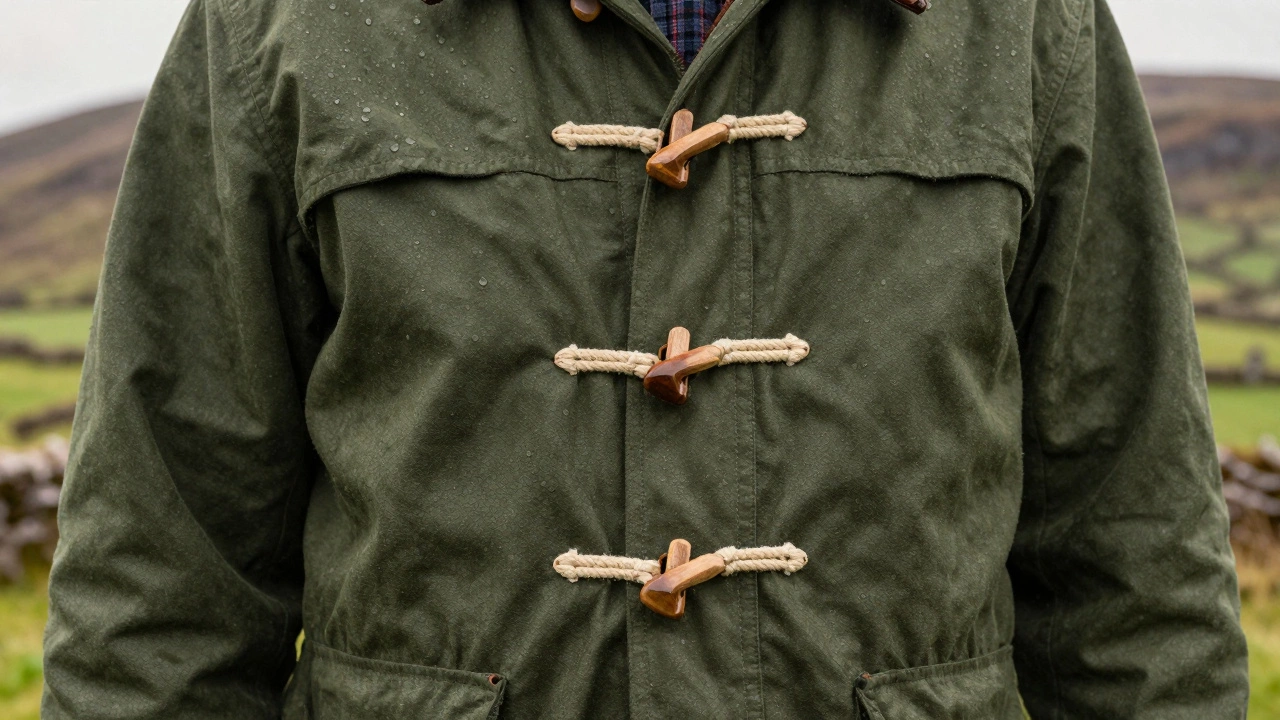
Many of these jackets, particularly those inspired by military surplus or traditional farming gear, use toggles instead of buttons or zippers. A toggle is a wooden or plastic knob that passes through a loop. To close it, you pull the cord tight. This mechanism is brilliant for wet conditions. Try zipping up a jacket with gloves on during a freezing rainstorm in January-it is nearly impossible. Pulling a toggle through a loop? That requires minimal dexterity.
Brands like Barbour (though British) are staples in Irish wardrobes, but local makers also produce similar styles. The key attribute here is maintenance. Waxed jackets need re-waxing every few years to maintain their water resistance. This ritual connects the wearer to the garment in a way that disposable fast-fashion items never do. It is a cycle of care that fits well with the Irish appreciation for longevity and value.
Anoraks and Parkas: The Hidden Zip
Here is where things get tricky. You might look at an anorak and think, "That doesn’t have a visible zipper." And you’d be right. Many traditional anoraks feature a hood and a front opening that is covered by a buttoned placket. However, underneath that placket, there is almost always a zipper.
So, is an anorak a jacket without a zipper? Technically, no. It is a jacket with a concealed zipper. The design intent is to hide the mechanical hardware for a cleaner, softer look. The buttons serve as a secondary closure and a stylistic element. In Ireland, the anorak is a school uniform staple. Think of the navy blue or green parkas worn by children across the country. They are durable, easy to put on, and protect against the notorious Irish drizzle.
If you are shopping for something truly zipper-free, avoid the anorak unless you check the inside. Look for labels that specify "button-front" or "toggle-front." The distinction matters if you want that authentic, vintage feel without the modern convenience of a quick-release zip.
Cape Coats and Cloaks
Let’s stretch the definition of "jacket" slightly. What if the garment doesn’t have sleeves at all? Or what if it wraps entirely around the body? This brings us to cape coats and cloaks. While less common in everyday urban Dublin life, they are making a comeback in high fashion and are deeply rooted in Irish history.
A cape coat usually has armholes but no sleeves, draping over the shoulders. It might close with a single button, a clasp, or nothing at all. Historically, cloaks were essential for protection against the elements before modern tailoring existed. Today, you might see them in bridal shops in Galway or as statement pieces in avant-garde boutiques in Dublin’s Smithfield area. They represent a return to romantic, flowing silhouettes that contrast sharply with the boxy, utilitarian nature of zippered bombers and puffers.
Comparison of Closure Types
| Closure Type | Best For | Durability | Weather Resistance | Style Vibe |
|---|---|---|---|---|
| Buttons | Formal wear, smart casual | High (repairable) | Moderate | Classic, timeless |
| Toggles | Outdoor activities, rural wear | Very High | High (with waxed fabric) | Rugged, traditional |
| Hidden Placket | Urban casual, school uniforms | Medium | High (if lined) | Clean, minimalist |
| Clasp/Buckle | Capes, military-inspired | High | Moderate | Dramatic, bold |
Choosing the Right Jacket for Irish Weather
When selecting a jacket without a zipper in Ireland, consider the microclimate you live in. If you are in the dry east, a lightweight button-up blazer might suffice for autumn evenings. But if you are in the west, facing the full force of the Atlantic, you need structure and material weight.
Look for natural fibers like wool, cotton, or linen blends. Synthetic materials can pill and lose shape over time. Wool, in particular, is hydrophobic-it repels water naturally-and retains heat even when wet. This makes it ideal for Irish winters. Pair a wool button-up jacket with a waterproof inner layer, and you have a versatile system that adapts to changing conditions.
Also, consider the fit. Non-zippered jackets often have a looser cut to accommodate layers. A zippered jacket tends to hug the body tighter. If you plan to wear a sweater underneath, ensure the buttons don’t strain when closed. Strained buttons are a sign of poor fit and will lead to tears in the fabric.
Caring for Your Non-Zippered Jacket
Maintenance is key. For button-ups, check the threads regularly. Replace missing buttons immediately to prevent further damage. For waxed cotton jackets, store them in a cool, dry place away from direct sunlight, which can crack the wax. Re-wax them annually using products available at outdoor retailers like Decathlon or specialized leather and fabric care shops.
Avoid machine washing unless the label explicitly says it is safe. Most high-quality button-up jackets require dry cleaning or gentle hand washing. This preserves the shape and integrity of the fabric. Remember, these garments are investments. Treating them with respect ensures they last for years, much like the traditions they embody.
Is a cardigan considered a jacket without a zipper?
Technically, no. A cardigan is a knitted sweater, not a jacket. Jackets are typically made from woven fabrics like cotton, wool, or synthetic blends and are designed as outerwear. Cardigans are knitwear, usually worn as mid-layers. However, some heavy-knit cardigans can function similarly to light jackets in mild Irish weather.
Why do trench coats not have zippers?
Trench coats originated in the early 20th century, before zippers became common in civilian clothing. Additionally, buttons provide a more secure seal against wind and rain when combined with storm flaps. Zippers can corrode in salt air and are harder to repair if they break.
What is the difference between a blazer and a suit jacket?
A suit jacket is part of a matching set with trousers, made from the same fabric. A blazer is a standalone jacket, often in navy or black, with metal buttons. Blazers are more versatile and can be paired with chinos, jeans, or dress pants, making them a staple in Irish smart-casual attire.
Are toggle jackets waterproof?
Toggle jackets are often made from waxed cotton, which is highly water-resistant. However, they are not completely waterproof indefinitely. The wax coating needs to be reapplied periodically to maintain its effectiveness against heavy Irish rain.
Where can I buy quality button-up jackets in Ireland?
You can find quality options at Dunnes Stores, O’Neills, and Penneys for affordable choices. For higher-end or bespoke options, visit independent tailors in cities like Dublin, Cork, or Galway. Outdoor retailers like Decathlon also offer functional button-up styles for active use.