Irish Weather Outfit Advisor
Not sure what to grab for that damp Tuesday in Grafton Street? Answer three quick questions to find your perfect match.
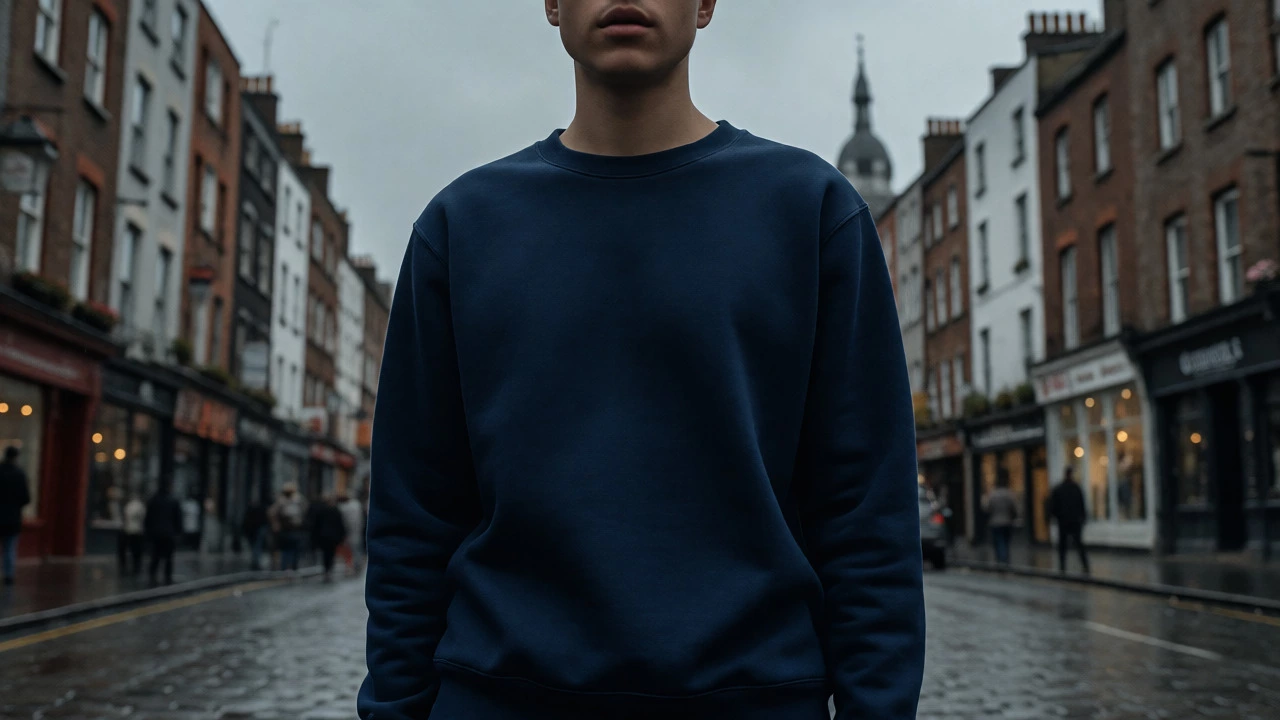
You’re standing in Grafton Street on a damp Tuesday afternoon, the kind where the sky looks like it’s about to cry but hasn’t quite committed yet. You reach for your favourite jumper, only to realize you left the hooded one at home. Instead, you grab that sleek, collar-less top you’ve been eyeing up. But what do you actually call this garment? Is it just a hoodie minus the hood? Or does it have its own identity? In Ireland, where our weather demands layers and our style leans towards practical comfort, knowing the difference between a crewneck sweatshirt and a standard hoodie matters more than you might think.
The short answer is simple: a hoodie without a hood is typically called a crewneck sweatshirt or simply a pullover. While "sweatshirt" is the broad category, the specific term depends on the neckline. If it has no hood and a round neck, it’s a crewneck. If it has a V-neck, it’s a V-neck sweatshirt. But let’s be honest-language evolves, especially when you’re trying to find the right thing to wear while waiting for a Luas tram in the rain.
Naming Conventions: Sweatshirt vs. Pullover
In Dublin, Cork, or Galway, you’ll hear these terms used interchangeably, but there are subtle distinctions that matter if you’re shopping online or talking to a tailor. The term "sweatshirt" originally referred to garments worn by athletes during warm-ups. They were made of heavy cotton fleece to absorb sweat. Today, the word has lost much of that athletic specificity. When people say "sweatshirt," they usually mean any casual, long-sleeved knit top with a round neck.
A "pullover" is technically broader. It refers to any garment you pull over your head. This includes wool jumpers, cardigans (if they don’t button), and yes, sweatshirts. However, in common Irish usage, if you ask for a pullover, you might get handed a chunky Aran sweater from Donegal rather than a lightweight cotton piece from Penneys. So, context is key. If you want the modern, casual look, stick to "crewneck sweatshirt." It’s precise, widely understood, and avoids the confusion of getting a thick wool jumper when you wanted something light enough for an office setting.
Why does this distinction matter here? Because our climate is unpredictable. One minute you’re sweating on a hike in Wicklow Mountains, the next you’re shivering outside a pub in Temple Bar. A hood adds bulk and can feel stifling indoors. Removing it creates a cleaner silhouette that works better under blazers or over t-shirts. That’s why the hoodie without a hood has become a staple in Irish wardrobes-it bridges the gap between sportswear and smart-casual.
Anatomy of the Non-Hooded Top
To understand what you’re buying, you need to know the parts. Unlike a hoodie, which features a kangaroo pocket and a drawstring-adjustable hood, the non-hooded version relies on simplicity. Here’s what defines it:
- Neckline: Usually ribbed and round (crewneck) or angled down (V-neck). No fabric extension for a hood.
- Pockets: Often absent. Some modern versions include side-seam pockets, but the classic design has none.
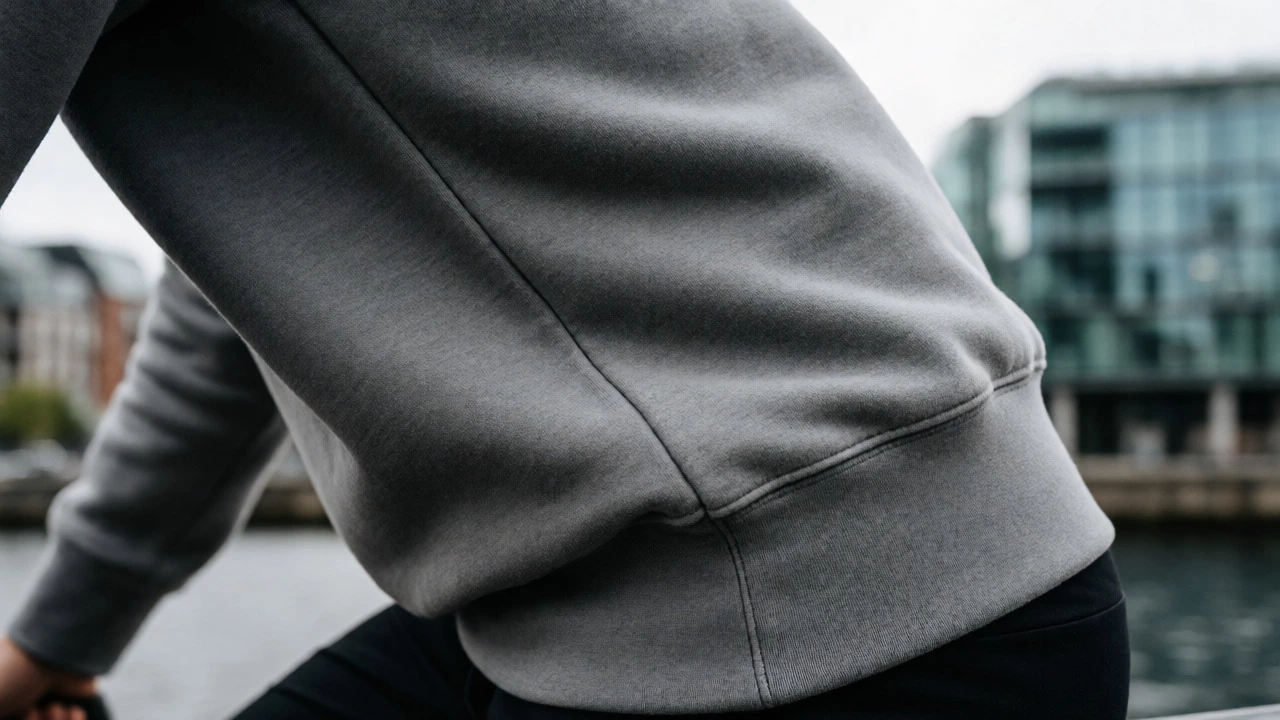
- Cuffs and Hem: Tight ribbing at the wrists and waist to keep warmth in. This is identical to hoodies but feels less restrictive around the neck.
- Fabric: Typically French terry or fleece-backed cotton. In Ireland, we prefer heavier weights (300gsm+) because thin fabrics don’t cut through our wind.
If you’re looking at labels in stores like Brown Thomas or Littlewoods, check the GSM (grams per square meter). Anything below 250gsm will feel flimsy against an Irish breeze. For real protection, aim for 300-400gsm. Brands like Nike and Adidas offer technical blends that wick moisture, which is crucial if you’re cycling along the Grand Canal Dock.
Why Irish Weather Favors the Crewneck
Hoods are great for sudden showers, but they’re terrible for humidity. Our air is often damp, not just wet. A hood traps heat and moisture against your head, leading to that uncomfortable sweaty feeling even when it’s cool outside. A crewneck allows heat to escape naturally. It’s breathable. Plus, let’s face it, hoods rarely stay up when the wind picks up off the Atlantic. They flap around, ruin your hair, and look silly in photos.
There’s also the social aspect. In many Irish workplaces, especially in tech hubs like Silicon Docks, dress codes have relaxed. But a hooded sweatshirt can still look too casual, almost juvenile. A well-fitted crewneck, however, reads as mature and put-together. Pair it with dark jeans and clean sneakers, and you’re ready for a client meeting or a night out in Ranelagh. It’s versatile in a way hoodies aren’t.
| Feature | Hoodie | Crewneck Sweatshirt |
|---|---|---|
| Weather Protection | Good for rain, poor for wind (flaps) | Better for wind, good for mild rain |
| Office Appropriateness | Low (too casual) | Medium (smart-casual acceptable) |
| Layering | Bulky under coats | Slim profile fits easily under jackets |
| Style Perception | Streetwear, sporty | Classic, timeless, minimalist |
Where to Buy Quality Crewnecks in Ireland
You don’t need to spend a fortune to get a good one, but cheap options often lose shape after two washes. In Dublin, local brands are gaining traction. Look for Irish-made labels that use sustainable cotton. Dublin-based startups often focus on ethical production, which aligns with growing consumer values here. Check out independent boutiques in Drury Street or online platforms that ship quickly within Ireland.
For budget-conscious shoppers, Penneys and Primark offer decent basics. Just inspect the stitching. Double-stitched seams last longer. If you’re willing to invest, Reiss or Massimo Dutti provide higher-quality fabrics that resist pilling. Pilling is a big issue in humid climates; friction causes little balls of fuzz to form on the surface. Higher thread counts prevent this.
Consider second-hand options too. Thrift stores in areas like Phibsborough or Shandon in Cork often carry vintage sweatshirts. These older pieces tend to have thicker, softer cotton that new clothes can’t match. Plus, buying second-hand reduces waste, which is increasingly important to Irish consumers concerned about sustainability.
Styling Tips for the Irish Climate
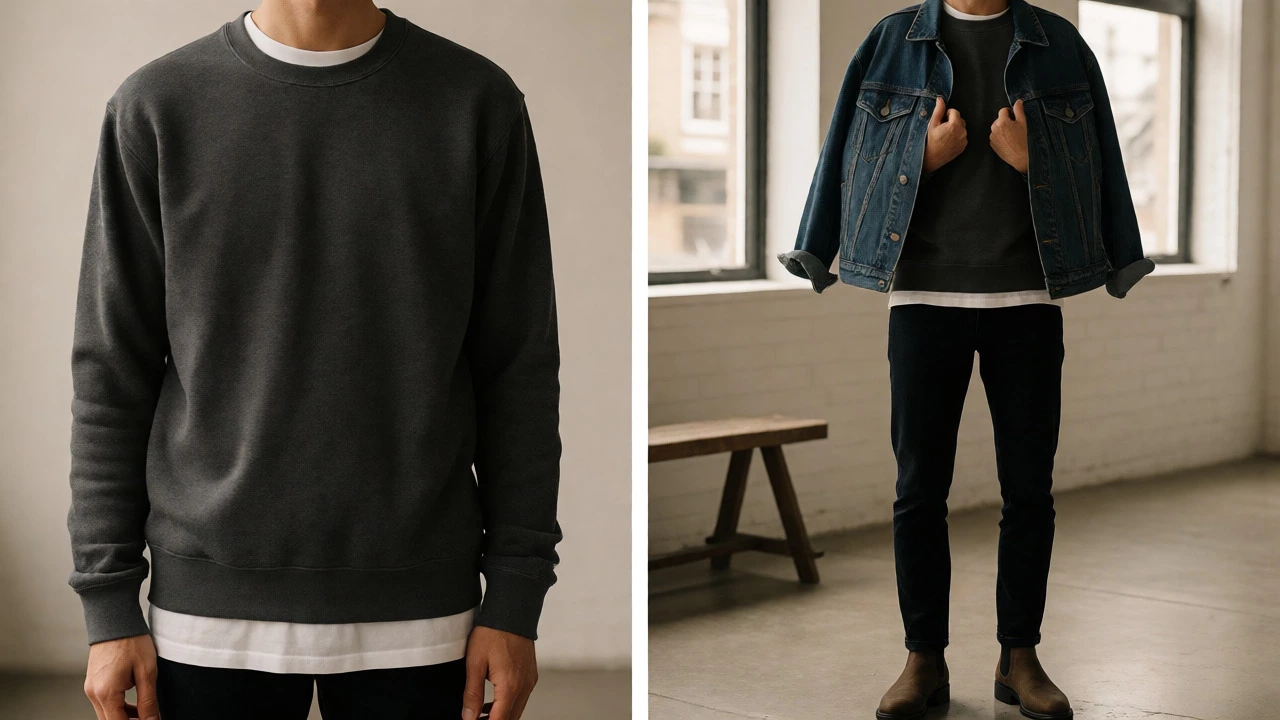
How do you wear a crewneck without looking like you just rolled out of bed? Layering is everything. Start with a crisp white t-shirt underneath. Let the collar peek out slightly. This adds structure. Over the crewneck, throw on a denim jacket or a leather biker jacket. Both work well with the casual vibe of the sweatshirt but elevate the overall look.
For men, pair a grey or navy crewneck with chinos or dark denim. Avoid baggy fits unless you’re going for a deliberate streetwear aesthetic. Tailored cuts look sharper. Women can opt for cropped crewnecks paired with high-waisted trousers or skirts. Add accessories like a scarf-essential for our chilly mornings-to break up the monotony of the solid colour.
Footwear matters too. Sneakers are obvious, but boots work surprisingly well. Chelsea boots or desert boots add a touch of sophistication. If you’re heading to a festival like Electric Picnic, pair your crewneck with rugged hiking boots. It’s practical for muddy fields and keeps you warm when the evening temperature drops.
Maintenance: Keeping Your Sweatshirt Fresh
Ireland’s hard water can be tough on fabrics. Minerals build up, making clothes feel stiff and dull. To combat this, wash your crewneck inside out in cold water. Use a gentle detergent. Skip the tumble dryer if possible; air drying preserves elasticity. If you must use a dryer, keep it on low heat. High heat shrinks cotton and damages synthetic blends.
Store them folded, not hung. Hangers stretch out the shoulders over time, creating those unsightly bumps. Fold neatly and stack them in a drawer. This maintains the shape and prevents creasing. If you notice pilling, use a fabric shaver gently. Don’t pull the pills off by hand; it damages the fibers further.
By understanding the nuances of naming, construction, and styling, you’ll navigate Irish fashion with confidence. Whether you call it a sweatshirt, pullover, or crewneck, the goal remains the same: staying comfortable and stylish regardless of what the weather decides to do tomorrow.
Is a crewneck sweatshirt warmer than a hoodie?
Not necessarily. Warmth depends on fabric weight and lining, not the presence of a hood. However, hoodies retain more heat around the head and neck, which can make them feel warmer overall. In windy conditions, a hood can actually chill you if it lets wind in, whereas a snug crewneck seals better.
Can I wear a crewneck sweatshirt to work in Dublin?
Yes, provided it’s smart-casual. Choose neutral colours like black, navy, or grey. Ensure it fits well and isn’t overly baggy. Pair it with tailored trousers or dark jeans and clean shoes. Avoid loud logos or distressed fabrics for professional settings.
What is the best fabric for an Irish winter?
Heavyweight cotton fleece (300gsm+) or merino wool blends. Merino regulates temperature and resists odour, making it ideal for long days. Cotton fleece is durable and easy to care for. Avoid thin synthetics that trap moisture and feel clammy in damp weather.
Do crewneck sweatshirts shrink in the wash?
100% cotton ones can shrink if washed in hot water or dried on high heat. Always check the care label. Pre-shrunk cotton minimizes this risk. Washing in cold water and air drying significantly reduces shrinkage.
Are there Irish brands that make quality crewnecks?
Yes, several Irish designers and manufacturers focus on high-quality basics. Look for brands emphasizing local production or sustainable materials. Independent boutiques in major cities often stock these. Online retailers specializing in Irish-made goods are also a good source.