
When you’re standing in a Dublin queue for a pint at The Brazen Head, or walking the cliffs of Moher under a rare burst of sun, you don’t want to feel like you’re wrapped in a damp towel. Summer in Ireland doesn’t mean desert heat-it means unpredictable showers, cool mornings, and sudden bursts of warmth that leave you sweating in a synthetic blouse. So what fabric is actually coolest in summer? The answer isn’t just about temperature-it’s about how fabric behaves in Ireland’s damp, changeable climate.
Linen: The Irish Summer Staple
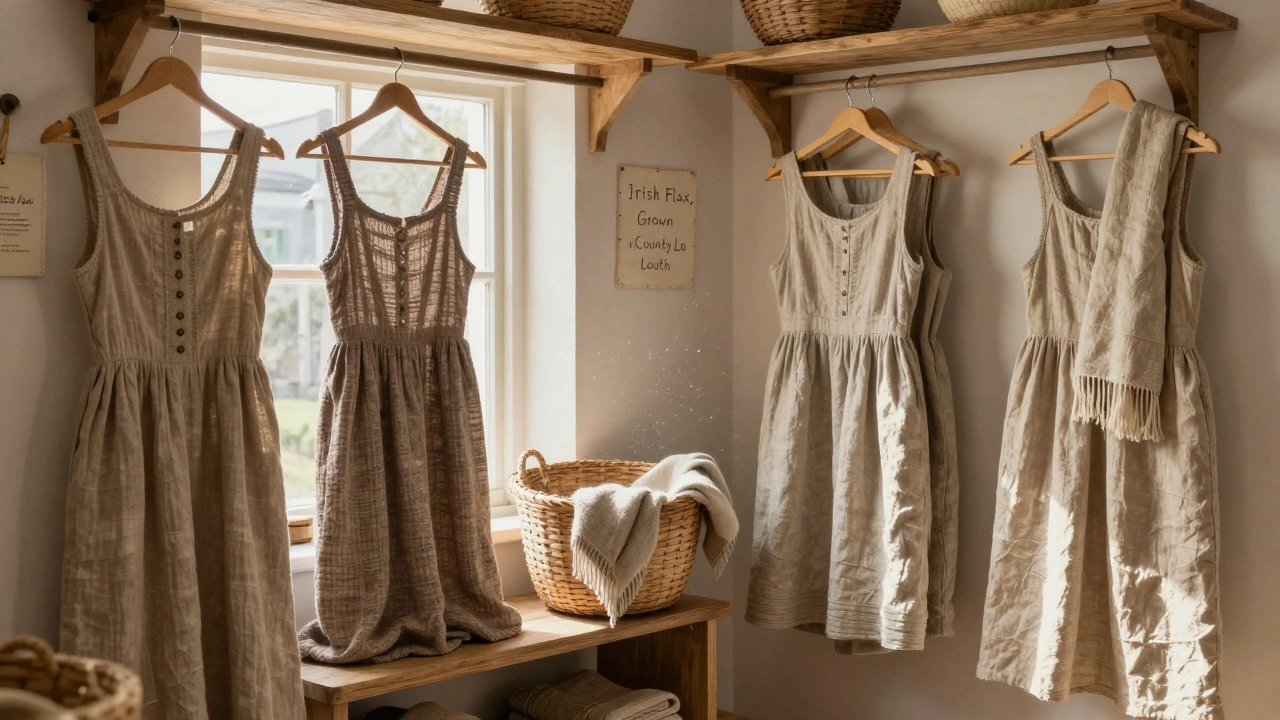
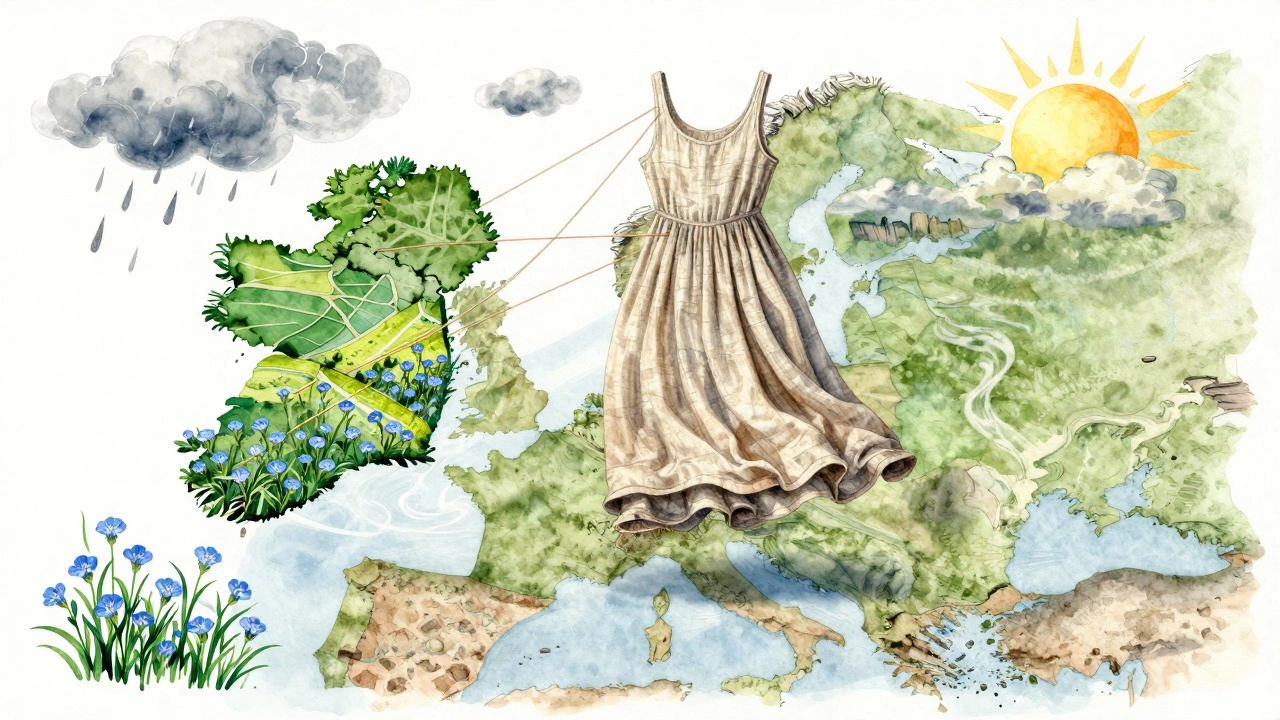
Linen is the undisputed champion for summer wear in Ireland. Made from flax, which grows well in our damp, cool soil, it’s been woven here since the 1800s. You’ll find it in every local boutique from Galway to Cork-brands like Linea and Claremont use Irish-grown flax for their lightweight dresses. Linen breathes better than any synthetic. It pulls moisture away from your skin and dries fast, even when the rain rolls in from the Atlantic. Unlike cotton, which clings when wet, linen loosens up. That’s why you’ll see women in Doolin wearing linen shifts with cotton lace trim, even when the forecast says ‘showers all day’.
It’s not just about comfort. Linen wrinkles. And in Ireland, that’s a feature, not a flaw. A slightly rumpled linen dress says you’ve been out walking the Burren, not sitting in an office. It’s the fabric of authenticity. You won’t find a single linen dress in an Irish department store that’s labeled ‘wrinkle-free’-because that’s not what we want.
Cotton: Good, But Not Always Great
Cotton is common, but it’s not the hero you think it is. In a dry heat, yes-it’s cool. But in Ireland, where humidity hovers around 80% most summer days, cotton absorbs sweat and holds it. You’ve felt it: that heavy, sticky feeling after a short walk from the bus stop to the café. Cotton doesn’t dry quickly, and when it’s damp, it traps heat. That’s why you’ll rarely see locals wearing heavy cotton tees or thick cotton dresses in late June or July.
There’s one exception: lightweight, open-weave cotton-like voile or batiste. Brands like Wild Geese use these for their summer collections. These fabrics let air move through, and they’re often blended with a touch of linen for better moisture control. If you’re buying cotton in Ireland, look for ‘gauzy’, ‘sheer’, or ‘breathable weave’ on the label. Anything labeled ‘100% cotton’ without a weave note? Skip it.
Silk: Elegant, But Not Practical
Silk feels luxurious. It drapes beautifully. And yes, it’s naturally cool. But in Ireland? It’s a risk. Silk is delicate. One rain shower, and you’re either carrying a damp dress in a plastic bag or rushing to a dry cleaner in Temple Bar. It doesn’t handle damp air well-it can mildew if left in a damp closet. And let’s be honest: most of us don’t have the time or money to treat silk like museum fabric.
That said, silk blends are a smart compromise. A 70% silk, 30% linen mix from Mayo Made gives you the sheen of silk with the resilience of flax. These are perfect for weddings, Galway Races, or evening drinks in Kilkenny. But for daily wear? Stick to pure linen.
Rayon and Viscose: The Trap
You’ll see rayon and viscose sold as ‘silky’ or ‘breathable’ alternatives. They look like silk, feel soft, and are cheap. But here’s the catch: they’re made from wood pulp, processed with harsh chemicals. In Ireland’s damp climate, they turn limp and clingy when wet. They don’t dry well. And once they’ve been washed a few times, they lose shape. You’ll find them in fast-fashion stores like Primark or Zara-but you’ll also see them hanging in the back of wardrobes, stretched out and stained.
Rayon is fine for a one-time event. But if you’re buying a summer dress you plan to wear more than twice? Avoid it. It’s not sustainable, and it’s not practical for our weather.
What About Synthetic Fabrics?
Polyester, nylon, spandex-these are the enemies of summer comfort in Ireland. They trap heat. They hold sweat. They smell. Even ‘performance’ fabrics marketed for ‘active wear’ are a bad fit for casual summer wear here. We don’t need moisture-wicking tech for a stroll in Phoenix Park. We need natural fibers that work with the environment, not against it.
Some brands try to sneak in ‘cooling technology’-tiny vents, silver threads, or ‘ice-feel’ finishes. Don’t be fooled. These are marketing tricks. They might feel cool for five minutes when you first put them on. But once you’re walking through a drizzle in County Wicklow, they’ll feel like plastic wrap.
What to Look For When Shopping
When you’re browsing summer dresses in Ireland, here’s what to check:
- Check the label: Look for ‘100% linen’ or ‘linen blend’. Avoid anything over 20% synthetic.
- Feel the weave: Hold it up to the light. If you can see daylight through the fabric, it’s breathable.
- Test the drape: Let it hang. Good linen moves. Cheap fabric just hangs stiff.
- Ask about origin: Many Irish brands now label where their flax is grown. Look for ‘Irish flax’ or ‘grown in County Louth’.
- Buy from local makers: Shops like The Linen House in Kilkenny, Flax & Folk in Galway, or Clare’s Craft in Ennis don’t just sell dresses-they tell you how to care for them.
How to Care for Linen in Ireland
Don’t panic if your linen dress wrinkles. That’s normal. Wash it in cold water, on a gentle cycle. Don’t tumble dry. Hang it on a wooden hanger outside in the shade-our Irish air dries it naturally without fading the color. Ironing? Only if you want to. A quick steam from a kettle works just as well. And never store it in plastic. Linen needs air. A cotton bag on a wooden hanger in your wardrobe is perfect.
Pro tip: If you’re heading to a summer festival like the Galway International Oyster Festival or the Cork Midsummer Festival, pack a light linen shawl. Evenings get chilly, and the sea breeze off Galway Bay doesn’t care what your dress is made of.
The Bottom Line
For summer dresses in Ireland, linen is the only fabric that truly works. It’s cool when it’s warm, dry when it’s damp, and timeless when it’s windy. It’s the fabric that matches our weather-not fights it. Skip the synthetics. Avoid the clingy cottons. And don’t fall for the ‘cool tech’ hype.
When you wear linen, you’re not just wearing fabric. You’re wearing a tradition. One that’s been woven into our landscape, our seasons, and our quiet, resilient way of being. In Ireland, the coolest fabric isn’t the one that promises the most-it’s the one that lasts the longest, through every kind of weather we throw at it.