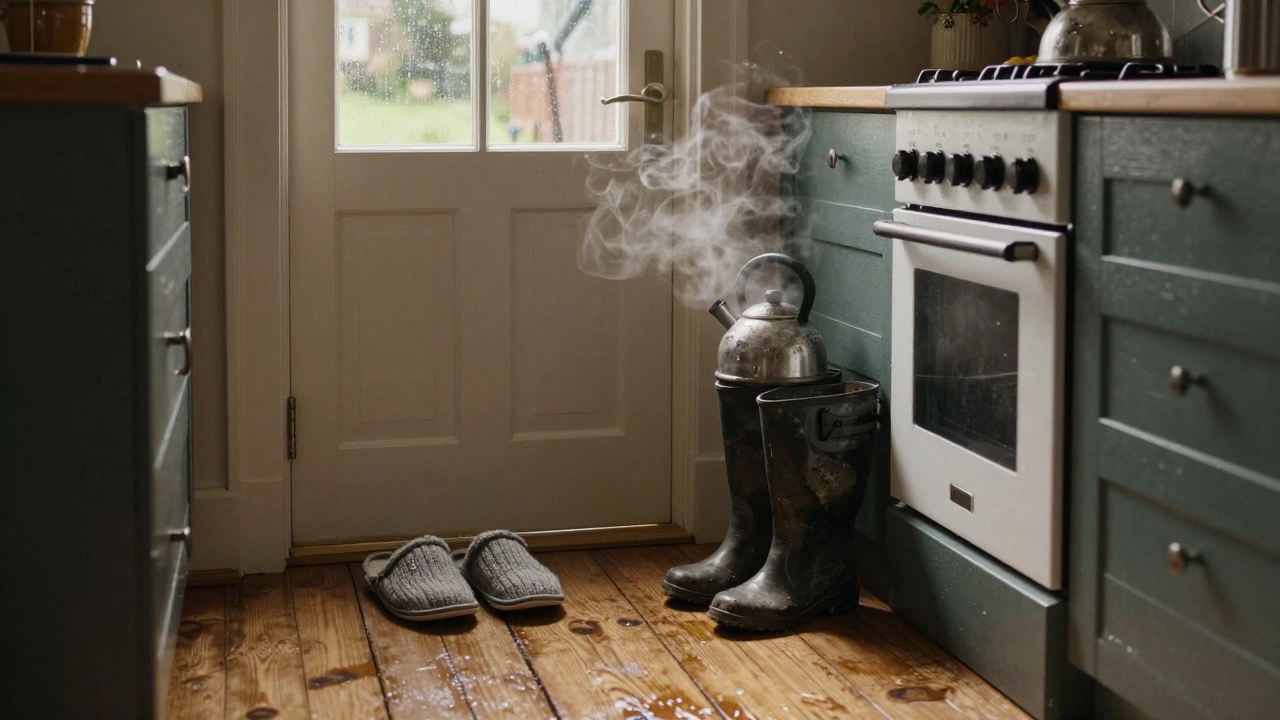
When you step out of the shower in your Cork apartment or shuffle to the kitchen in your Galway cottage, what do you call those soft, slip-on shoes on your feet? In Ireland, we’ve got our own names - slippers, house shoes, bedroom slippers, even garden clogs if you’re heading out to the back garden in winter. But if you’ve ever wondered what Chinese people call the same thing, you’re not just asking about language - you’re stepping into a 5,000-year-old culture where footwear carries meaning far beyond comfort.
What Chinese People Actually Call Slippers
In Mandarin Chinese, the most common word for slippers is 拖鞋 (tuōxié). Break it down: 拖 means ‘to drag’ or ‘to pull,’ and 鞋 means ‘shoe.’ So literally, it’s a shoe you drag on your feet - which, if you’ve ever shuffled around your kitchen in woolly slippers while making tea, sounds painfully accurate.
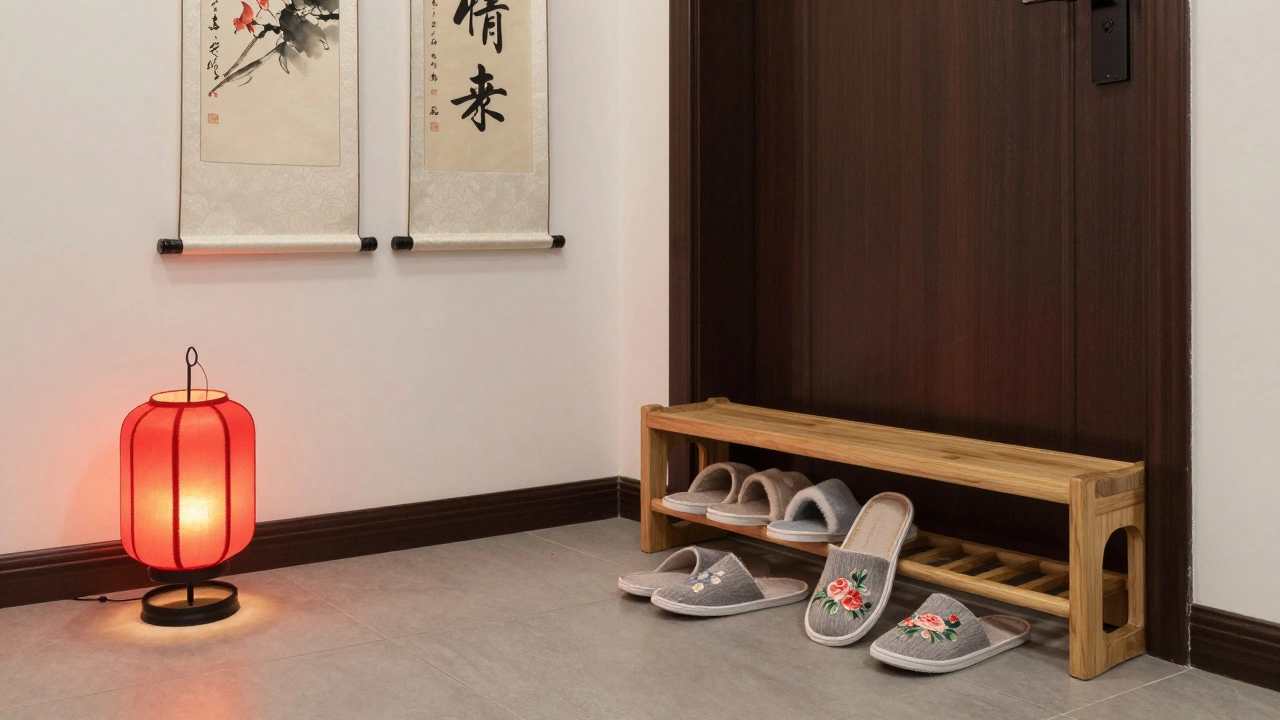
There are regional variations. In southern China, especially in places like Guangzhou or Hong Kong, you might hear 人字拖 (rénzìtuō) for flip-flops, but that’s not what you wear indoors. For home use, 拖鞋 is universal. In traditional homes, especially in older generations, you’ll find slippers made from cotton, felt, or even silk - often embroidered with flowers or dragons. These aren’t just footwear; they’re part of daily ritual. In many households, you take off your outdoor shoes at the door and slip into your 拖鞋 before even saying hello.
This isn’t just about cleanliness. It’s about respect. Walking into someone’s home with muddy boots is like walking into a church in your shoes - it’s rude. In China, the home is sacred space, and slippers mark the boundary between outside and inside. You don’t just wear them - you honor them.
How This Connects to Irish Households
Here in Ireland, we’re not so different. Think about it: in a country where rain falls more than 200 days a year, and mud clings to boots like a second skin, we’ve developed our own unspoken rules. Walk into any home in Limerick, Derry, or Sligo, and you’ll see a pile of wellies by the door. Inside, people slip into woolly slippers - the kind you buy at Dunnes Stores or Clery’s, the ones with rubber soles so you don’t slide on wet kitchen tiles.
Irish slippers aren’t fancy. They’re practical. Thick fleece lining. Non-slip soles. Often bought in packs of two because one gets lost behind the radiator. You’ll find them in homes from the Aran Islands to the Dublin suburbs. They’re worn with socks, sometimes without. They’re the footwear of Sunday mornings, of tea breaks, of watching the rain lash against the window while the kettle sings.
And just like in China, there’s a quiet ritual here too. You don’t wear your outdoor shoes indoors. Not because of tradition, but because of the weather. The mud, the wet grass, the puddles from last night’s downpour. You take them off. You put on your slippers. It’s automatic. It’s normal. It’s Irish.
Why This Matters for Irish Consumers
If you’ve ever bought slippers from a Chinese online store - say, from Alibaba or Taobao - you’ve probably noticed the difference. Chinese slippers are often thinner, lighter, made for indoor use only. They don’t have thick soles because they’re not meant to walk on wet pavement. In Ireland? We need slippers that can handle a quick dash to the bin, a trip to the shed, or even stepping outside to check the mail. So what do we do? We adapt.
Brands like Clarks and Dr. Martens sell slippers in Ireland with rubber soles and waterproof uppers - the kind that survive a soggy hallway. Even Primark now sells slippers labeled ‘indoor/outdoor’ - a direct response to Irish needs. You won’t find this in China. You won’t find this in Japan. But you’ll find it in every Irish household that’s ever had a slipper soaked through by a muddy boot left on the mat.
And then there’s the material. In China, silk and cotton dominate. In Ireland? Fleece, wool, and microfiber. We need warmth. We need insulation. We need something that doesn’t freeze your toes when the central heating cuts out at 2 a.m. - which, let’s be honest, happens more than we’d like to admit.
What You Can Learn From Chinese Slippers
There’s something beautiful in the Chinese approach: simplicity, intention, ritual. In Ireland, we’ve lost some of that. We buy slippers on sale, we lose them, we replace them. We don’t think about them as objects with meaning. But maybe we should.
Chinese families often pass down slippers - not as heirlooms, but as symbols of care. A mother buys her son a pair for his first apartment. A grandmother knits a pair for her grandchild. They’re not expensive. But they’re personal. In Ireland, we could learn from that. Instead of buying the cheapest pair from the supermarket, why not invest in one good pair? One that lasts. One that fits. One that you don’t just wear - you cherish.
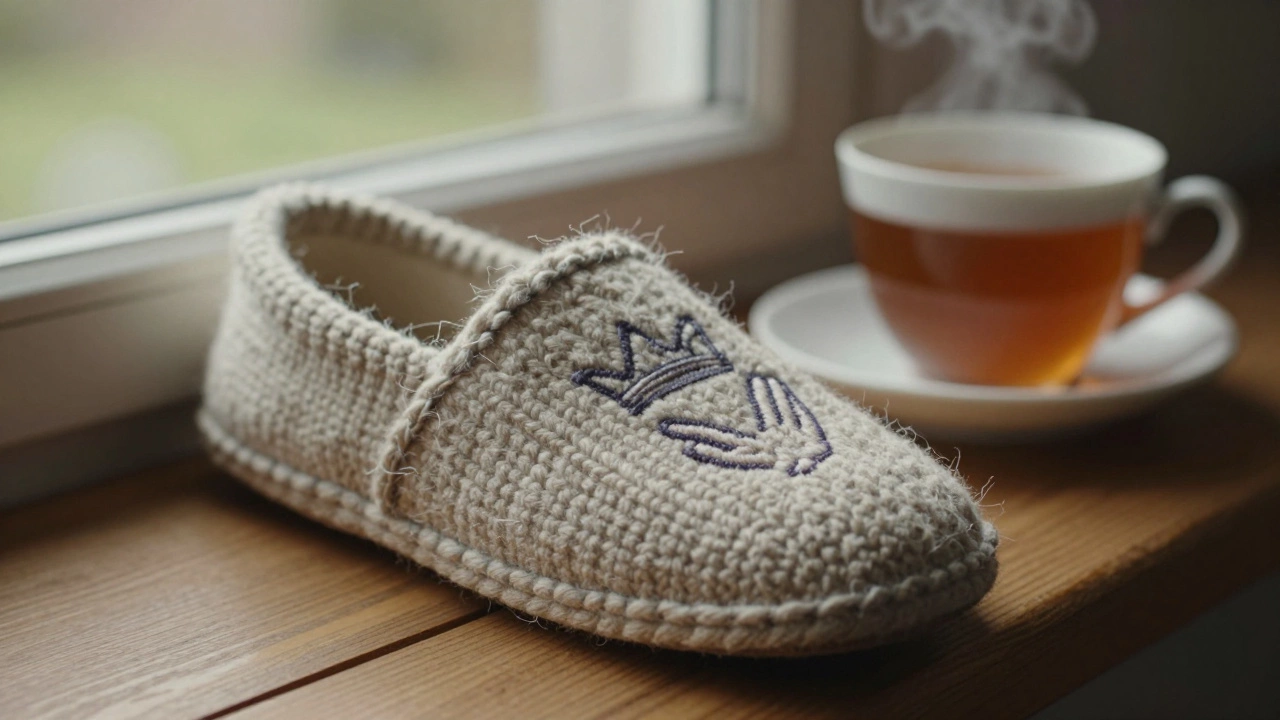
Look at the Irish-made slippers from Claddagh Slippers in Galway. Hand-stitched. Wool-lined. Embroidered with the Claddagh symbol - heart, crown, hands. They’re not cheap. But they’re made for Irish floors, Irish weather, Irish homes. And they’re worn with pride.
Where to Buy Slippers in Ireland That Honor Both Comfort and Culture
If you’re looking for slippers that work for Ireland’s climate and your home’s vibe, here are a few trusted options:
- Dunnes Stores - Reliable, affordable, and always in stock. Their fleece-lined slippers are a winter staple.
- Claddagh Slippers (Galway) - Handmade, ethically made, and built to last. A true Irish product.
- Clery’s (Dublin) - A heritage brand. Their wool slippers have been in Irish homes since the 1950s.
- Amazon UK (with Irish delivery) - For those who want the Chinese-style 拖鞋 with a rubber sole. Just check the sole material before buying.
- Local craft fairs - From the Belfast Craft Market to the Kilkenny Design Centre, you’ll find artisans making slippers with Irish wool and traditional patterns.
And if you’re feeling adventurous? Try a pair of Chinese cotton slippers - the kind with the little embroidered flowers - but wear them only indoors. Keep them by the door. Let them be your quiet nod to a different way of living. You don’t have to adopt the whole culture. But you can borrow a little of its wisdom.
Slippers Are More Than Footwear
Slippers are the quietest part of our homes. We don’t talk about them. We don’t post them on Instagram. But they’re there - every morning, every evening, every rainy Tuesday in County Tipperary.
In China, they carry history. In Ireland, they carry resilience. We don’t have silk slippers. We have wool. We don’t have embroidered dragons. We have damp socks and a well-worn pair that still fits after ten winters.
So when you ask, ‘What do Chinese people call slippers?’ - you’re not just asking for a translation. You’re asking how people live. And in Ireland, we live the same way, in our own quiet, muddy, cozy way.
Next time you slip on your slippers, remember: you’re not just putting on shoes. You’re stepping into a ritual older than most of us realize - and one that, in its simplicity, connects us to a world far beyond our own.