
US vs. Irish T-Shirt Term Translator
Select the term you're familiar with in Ireland to see what to look for on US websites.
Click a term above to translate it!
Quick Summary
- Americans almost always use "T-shirt" or "Tee" for the basic style.
- "Crewneck" refers to the standard round collar.
- "V-neck" is the pointed collar style.
- "Graphic tee" is the term for shirts with prints or logos.
- "Undershirt" is specifically for the layer worn beneath a dress shirt.
The Basics: T-shirts and Tees
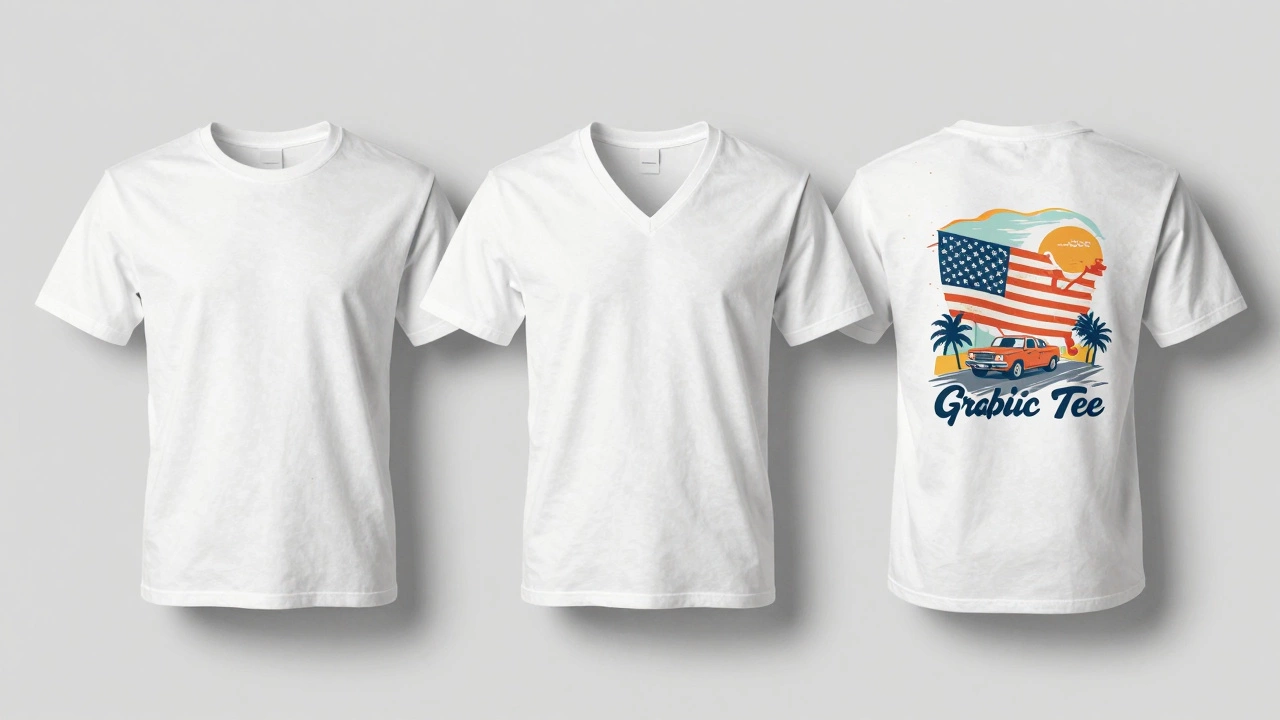
For the most part, the terminology is surprisingly similar. In the US, a T-shirt is exactly what it sounds like: a short-sleeved fabric shirt with a crew neckline. They call them "T-shirts" because the shape resembles the letter T. If you're chatting casually, you'll hear them say "tee." In the American English terms world, a "tee" isn't just a shortening of the word; it's a category. When someone says they're wearing a "basic tee," they mean a plain, solid-colored shirt without any branding. In Ireland, we might just call this a plain T-shirt, but in a US retail context, "tee" often implies a more casual, everyday garment. If you're shopping at a place like Penneys (which is Primark everywhere else), you're seeing the global standard, but on a site like Amazon US or Gap, the distinction between a "tee" and a "top" (which is more common for women's clothing) becomes more apparent.Deciphering the Necklines: Crewnecks and V-Necks
This is where things get specific. If you're looking for a standard round neck, Americans often call it a Crewneck. This term comes from the crew uniforms worn by rowers. While we might just call it a "round neck" or not mention the neck at all, a US seller will explicitly label it a crewneck to distinguish it from other styles. Then there's the V-neck. This is universal, but Americans are very particular about the "depth" of the V. You'll see "deep V-necks" or "shallow V-necks." For someone living in the rainy climate of Cork or Kerry, a V-neck is often just a style choice, but in the US, it's frequently marketed as a more "mature" or "dressy" version of the T-shirt, often worn under a blazer for a business-casual look.| Irish/UK Term | US Equivalent | Key Characteristic |
|---|---|---|
| T-shirt / Tee | T-shirt / Tee | Standard short-sleeve cotton shirt |
| Round neck | Crewneck | Circular neckline, fits close to the neck |
| V-neck | V-neck | Pointed neckline, varies in depth |
| Printed T-shirt | Graphic Tee | Includes art, logos, or text |
| Vest / Undershirt | Undershirt / A-shirt | Worn under other clothes for sweat/warmth |
Graphic Tees and Statement Shirts
If you're into band shirts or shirts with funny slogans, you're looking for Graphic Tees. In Ireland, we might just say "a printed T-shirt," but in the US, a "graphic tee" is a specific cultural entity. It ranges from vintage 90s rock band shirts to modern minimalist designs. When you see "graphic tee" on a US website, it doesn't just mean a picture is on the front. It could be a "pocket tee" (a T-shirt with a small pocket on the chest) or a "full-print tee" (where the design covers the entire garment). If you're ordering these for a stag do in Temple Bar or a music festival like Electric Picnic, keep in mind that US "graphic tees" are often oversized by default, whereas European cuts tend to be slimmer.The Hidden Layer: Undershirts and A-Shirts
Here is where the biggest confusion happens. In Ireland, if you say you're wearing a "vest," people think of a knitted sleeveless garment or perhaps a piece of gym gear. In the US, a Undershirt is the general term for the shirt you wear under your actual clothes. Specifically, they have the A-shirt. This is the ribbed, sleeveless white shirt that looks like a tank top. While some people wear these as outerwear in the summer (the "wife-beater" style, though that term is now considered outdated and often offensive), its primary purpose is as a base layer. If you buy an "A-shirt" thinking it's a fashion top, you might be surprised to find it's quite sheer and designed to be hidden under a button-down.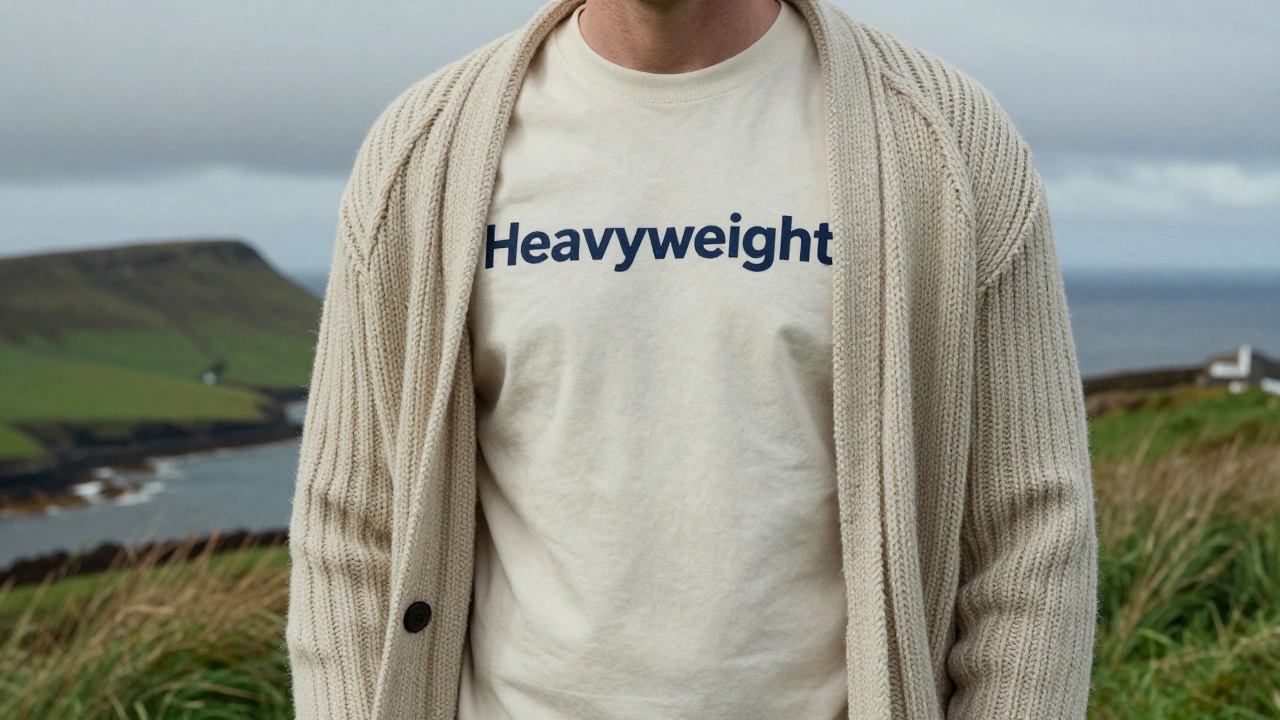
Understanding Fit and Fabric
Americans don't just describe the shirt; they describe the "fit." You'll see terms like "Slim Fit," "Athletic Fit," and "Relaxed Fit."- Slim Fit: Closest to the body, similar to what you'd find in a high-street shop in Grafton Street.
- Athletic Fit: Wider in the shoulders and chest but narrower at the waist.
- Relaxed Fit: Boxy and loose. This is very popular in US streetwear culture.
Shopping Tips for the Irish Consumer
If you're ordering from US brands like Champion, Carhartt, or Nike US, be wary of the sizing. US sizes are generally larger than those we use in Ireland. A US Medium can often feel like an Irish Large. Always check the size chart in inches and convert them if necessary. Another tip is to watch out for the term "Heavyweight." In the US, a Heavyweight Tee is a thick, durable cotton shirt. These are fantastic for our unpredictable weather because they provide a bit more warmth than the thin, breezy tees found in most fast-fashion outlets. Just don't expect them to dry quickly if you get caught in a sudden Dublin downpour.Is a "tee" the same as a T-shirt?
Yes, they are the same. "Tee" is simply a casual shorthand for T-shirt used extensively in American English.
What is a crewneck shirt?
A crewneck is a T-shirt with a round, close-fitting neckline. It is the most common style of T-shirt and is what most people mean when they say "round neck" in Ireland.
What is a graphic tee?
A graphic tee is a T-shirt that features a printed design, logo, or image. This is the US term for what we typically call a printed T-shirt.
What is the difference between an undershirt and a T-shirt?
A T-shirt is designed as outerwear, whereas an undershirt is specifically made to be worn beneath another garment to absorb sweat or provide an extra layer of warmth. Undershirts are often thinner or sleeveless (like the A-shirt).
Do US T-shirts fit differently than Irish ones?
Generally, yes. US sizes tend to be larger and boxier. It is highly recommended to check the specific measurements of a US garment before purchasing, as a US Medium is often larger than an Irish Medium.