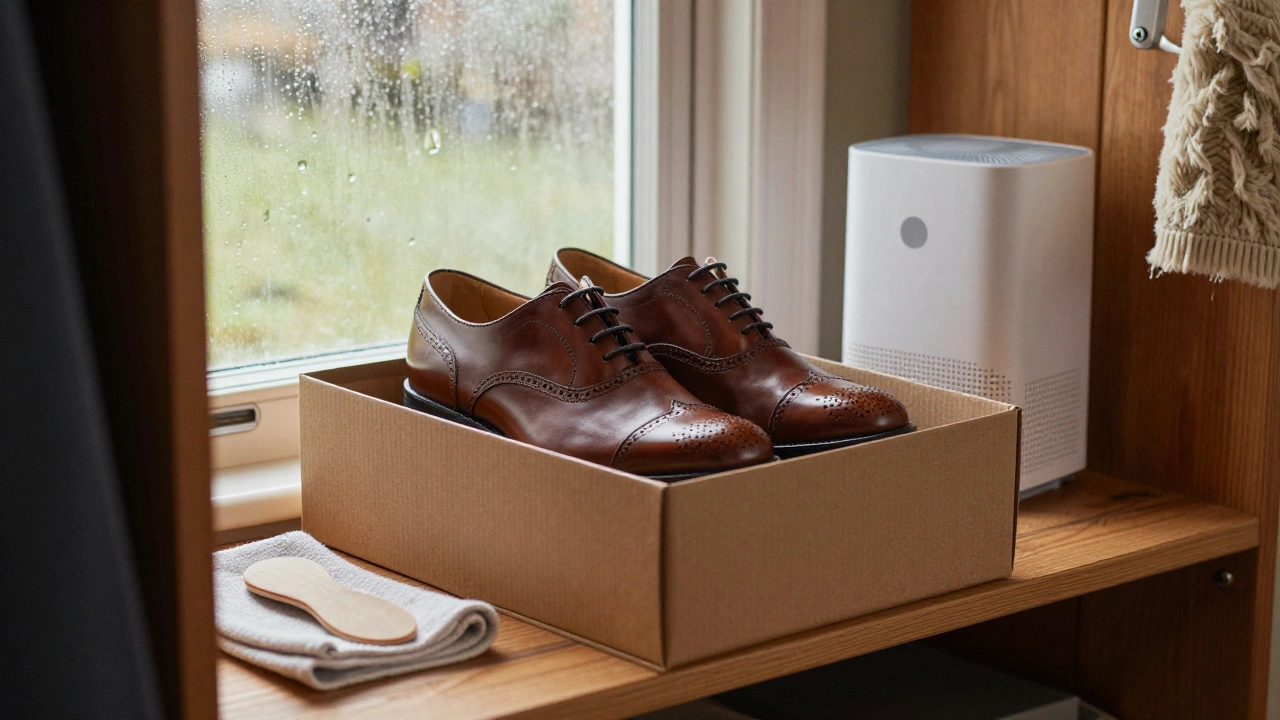
Leather Shoes Storage: How to Keep Your Irish Leather Shoes Lasting Longer
When you invest in a good pair of leather shoes, durable, water-resistant footwear designed for Ireland’s wet weather and rough streets. Also known as leather footwear, it’s not just about style—it’s about survival in a country where rain is a daily forecast. But if you don’t know how to store them right, even the best pairs can warp, crack, or grow mold in just a few months. Most people think leather shoes last forever if they’re expensive. That’s not true. In Ireland, humidity, salt from roads, and damp floors eat away at leather faster than you’d expect. Without proper leather shoe storage, the method of keeping leather footwear protected from moisture, dust, and shape loss when not worn, your boots become expensive paperweights.
Think about it: you buy a pair of Tricker’s or A. K. O’Connor because they handle puddles and cobblestones. But if you toss them in a closet next to damp towels or leave them in the hallway after a rainy walk, you’re setting them up to fail. Shoe trees, wooden or plastic inserts that maintain the shape of shoes and absorb moisture aren’t luxury items—they’re essential. A simple cedar shoe tree pulls dampness out overnight and keeps the toe box from collapsing. And don’t just use any box. A ventilated shoe cabinet, or even just a shelf with space around each pair, makes a bigger difference than you’d guess. You wouldn’t store wool sweaters in a plastic bag in a basement, so why treat leather like it’s disposable?
And what about shoe dehumidifier, a small device or canister that reduces moisture in enclosed storage spaces? They’re not just for collectors. In Irish homes, especially in Galway or Cork where the air sticks to everything, a small silica gel pack or electric shoe dehumidifier tucked into your shoe rack can extend the life of your boots by years. It’s not magic—it’s science. Leather is skin. It breathes. It needs to dry out. If it stays wet, it stiffens. If it stiffens, it cracks. And once it cracks, repair costs add up faster than you think.
Some folks still believe leather shoes should be stuffed with newspaper. Don’t. Newspaper ink transfers, and the paper holds moisture instead of pulling it away. Use cotton socks or proper shoe trees. Clean them after every muddy walk with a damp cloth, not a hose. Let them air dry at room temperature—never near a radiator. And rotate your pairs. Wearing the same boots every day? You’re asking for trouble. Let them rest. Let them breathe. That’s how you get five years out of them instead of two.
Below, you’ll find real advice from Irish homeowners who’ve figured this out the hard way. From what brands last longest in the wet to how to fix a cracked heel without spending a fortune. No fluff. No theory. Just what works in a house where the front mat is always soggy and the hallway smells like wet wool.