Irish Worker Foot Pain Risk Calculator
Are you at risk? Answer these quick questions to see how your work setup is affecting your feet.
Personalized Recovery Tips
If you’ve ever finished a shift at a busy Dublin café or stood on the hard floors of a Cork warehouse until your soles felt like they were on fire, you know the struggle. Standing all day is a brutal reality for many workers across Ireland, from healthcare staff in Galway to retail assistants in Belfast. The problem isn’t just that you’re tired; it’s that your feet are taking a beating from gravity, poor flooring, and often, inadequate footwear. You don’t have to accept this pain as part of the job description. With the right approach to gear and posture, you can get through your shift without needing an ice bath the moment you walk through your front door.
The Reality of Irish Work Floors
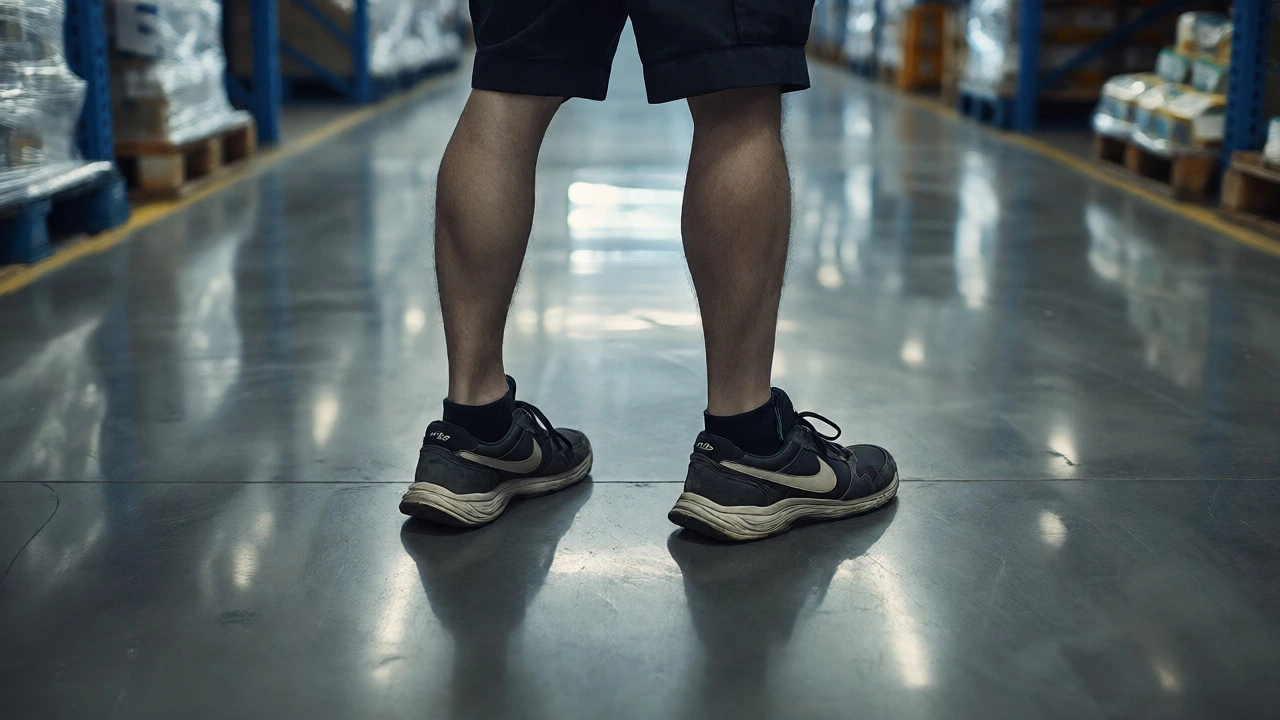
Let’s be honest about where we work. In Ireland, many service jobs involve standing on surfaces that offer zero forgiveness. Think about the polished concrete floors in modern industrial estates in Naas or the old, uneven flagstones in traditional pubs along the Wild Atlantic Way. These surfaces transmit every bit of impact directly up your legs. Unlike carpeted offices, these materials don’t absorb shock. If you’re working in a factory in Limerick or a supermarket in Dundalk, you are likely subjecting your plantar fascia-the thick band of tissue running across the bottom of your foot-to repetitive stress. This leads to plantar fasciitis, heel spurs, and general inflammation. The key here is understanding that your environment is hostile to your anatomy, so you need external help to survive it.
Choosing the Right Work Shoes in Ireland
Your shoes are your first line of defense. But here is the trap: most people buy "comfortable" shoes that are actually too soft. A squishy foam sole might feel great in the fitting room at Brown Thomas, but after eight hours, that foam compresses and loses its ability to support your arch. You need structure, not just cushioning.
| Shoe Type | Best For | Common Pitfall | Irish Context Tip |
|---|---|---|---|
| Running Sneakers | Light walking, short shifts | Lack lateral support; wear out quickly on concrete | Avoid if you stand still for long periods; they collapse under static weight. |
| Clogs (e.g., Birkenstock) | Kitchens, medical settings | Can cause slipping if wet; lack ankle stability | Great for hygiene, but add a non-slip spray if working in wet kitchens. |
| Safety Boots | Construction, warehousing | Heavy; stiff break-in period | Look for composite toes instead of steel to reduce weight by 30%. |
| Orthopedic Loafers | Retail, office hybrid roles | Often look unfashionable; limited style options | Brands like Clarks (founded in Somerset but huge in UK/Ireland) offer better styles now. |
When shopping for work shoes, ignore the marketing fluff about "cloud-like comfort." Look for three specific features: a firm midsole, a deep heel cup, and adequate toe box width. Your toes need room to splay. If your shoe squeezes them together, you’ll develop bunions, which only worsens the pain. In Ireland, our damp climate also matters. Leather breathes poorly when wet, leading to fungal issues that distract from physical pain. Look for moisture-wicking linings or rotate two pairs of shoes so each has 24 hours to dry out completely.
The Magic of Orthopedic Insoles
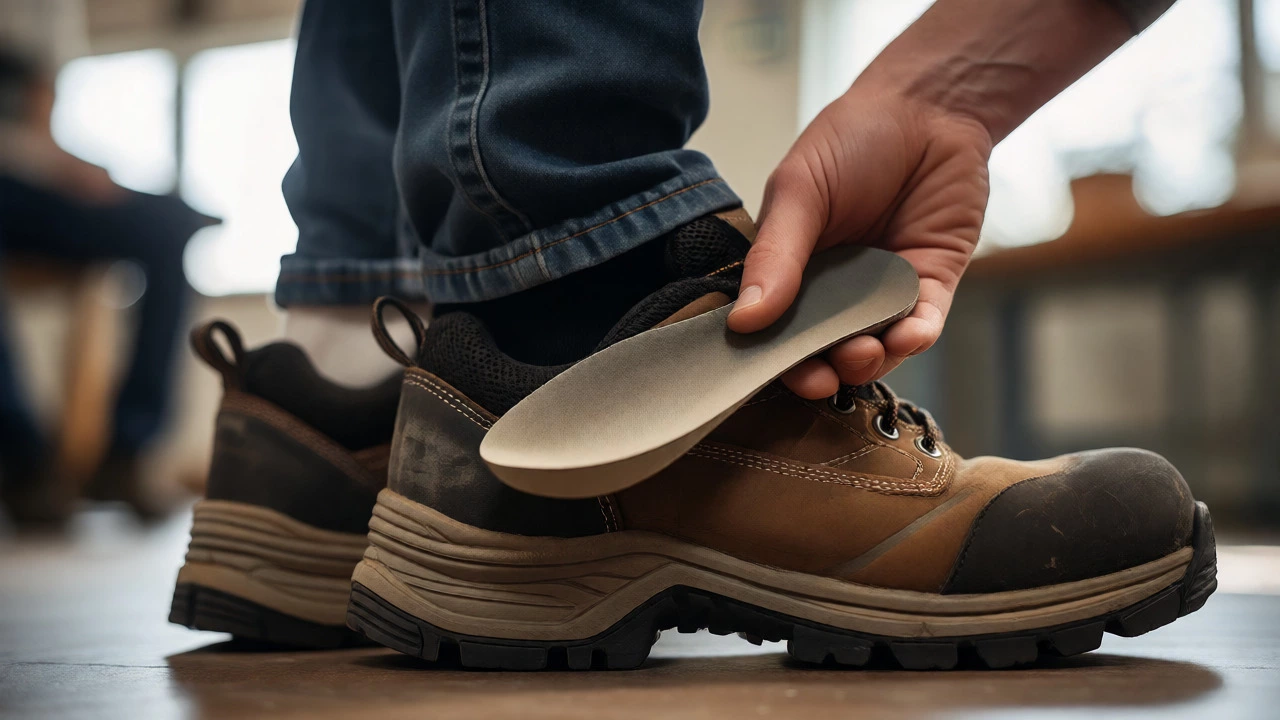
If your employer mandates specific safety boots-common in construction sites around Dublin Port-you might be stuck with heavy, rigid footwear. Here, you cannot change the shoe, but you can change what goes inside it. Custom or high-quality over-the-counter orthotic insoles are game-changers. They correct alignment issues that cause your knees and hips to twist, sending pain signals down to your feet.
You don’t always need expensive custom-molded inserts from a podiatrist in Ballsbridge, though those are excellent if you have severe flat feet. Start with a reputable brand available at pharmacies like Boots or independent health stores in cities like Waterford. Look for insoles with a rigid arch support and a metatarsal pad. The pad lifts the bones behind your toes, relieving pressure on the ball of your foot-a common sore spot for cashiers who pivot repeatedly.
Micro-Movements and Posture Hacks
Standing still is actually worse than walking. When you lock your knees and stay static, blood pools in your lower legs, causing swelling and heaviness. You need to keep your muscles active to pump blood back up to your heart. Try these tricks during your shift:
- The Rocking Technique: Shift your weight from your heels to your toes every few minutes. This activates your calf muscle pump.
- The Step Stool Trick: If you have access to a small crate or step, rest one foot on it for a minute, then switch. This changes the angle of your pelvis and relieves lower back tension, which indirectly helps foot strain.
- Toe Grips: While no one sees you, try gripping the floor with your toes for five seconds, then release. This strengthens the intrinsic muscles of the foot.
In Irish workplaces, especially in hospitality, managers often discourage sitting. But if you can find a way to elevate your feet slightly during a lull, do it. Even resting your feet on a low shelf while checking emails can reduce venous pressure significantly.
Recovery Routine After Work
Once your shift ends, don’t just collapse onto the sofa. Your feet need active recovery. Given Ireland’s rainy weather, you’re probably indoors anyway, so use that time wisely.
- Contrast Showers: Alternate between hot and cold water on your feet. Three cycles of 30 seconds cold, 1 minute hot. This reduces inflammation and improves circulation.
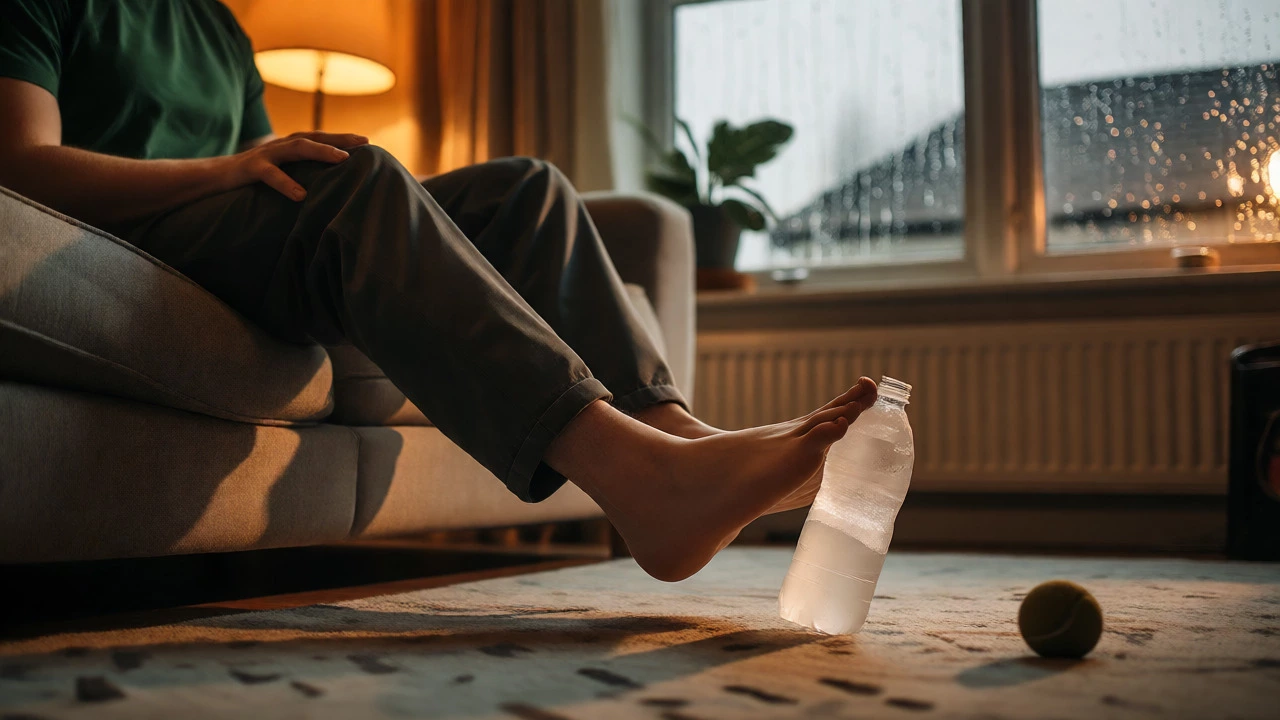
- Tennis Ball Roll: Place a tennis ball (or a frozen water bottle) under your foot and roll it back and forth. Focus on the arch. It hurts a bit-that’s good. It breaks up adhesions in the plantar fascia.
- Calf Stretching: Tight calves pull on the heel bone, increasing strain on the foot. Stand facing a wall, put one leg back with the heel flat, and lean forward. Hold for 30 seconds per side. Do this daily.
Night splints are another option for chronic pain. They keep your foot flexed at 90 degrees while you sleep, preventing the plantar fascia from tightening overnight. Many people find their first steps in the morning are the most painful; a splint eliminates that morning agony.
When to See a Professional
If you’ve tried new shoes, insoles, and stretches for two weeks and the pain persists, see a doctor. In Ireland, you can visit your GP for a referral to a physiotherapist or podiatrist. Don’t wait until you’re limping. Early intervention prevents minor strains from becoming chronic conditions like tendonitis. Also, check if your workplace offers any wellness allowances. Some larger Irish employers contribute to gym memberships or physiotherapy costs, which could cover the cost of professional assessment.
Do compression socks really help with foot pain?
Yes, especially if you experience swelling. Compression socks improve blood flow and reduce fatigue. In Ireland, brands like Sigvaris are widely available in pharmacies. Choose graduated compression (tighter at the ankle) for the best results.
How often should I replace my work shoes?
Every 6 to 12 months, depending on usage. If you walk 5,000+ steps a day standing/walking, the midsole foam degrades within six months. Check the tread pattern; if it’s worn smooth, you’ve lost support and traction, increasing injury risk.
Are barefoot shoes good for standing all day?
Not immediately. Barefoot shoes require strong foot muscles. If you’re used to cushioned shoes, switching abruptly can cause Achilles tendonitis. Transition slowly over several months, starting with just one hour a day.
Does the type of floor affect foot pain more than the shoes?
Both matter equally. Concrete floors are harsh, but anti-fatigue mats can mitigate this. If you can’t change the floor, invest in better shoes and insoles. If you own the business, consider installing rubberized flooring in standing areas.
What is the best exercise for plantar fasciitis?
The towel stretch. Sit on the floor with legs extended. Loop a towel around the ball of your foot and gently pull your toes toward you. Hold for 15-30 seconds. Repeat 3 times. Do this before getting out of bed in the morning.