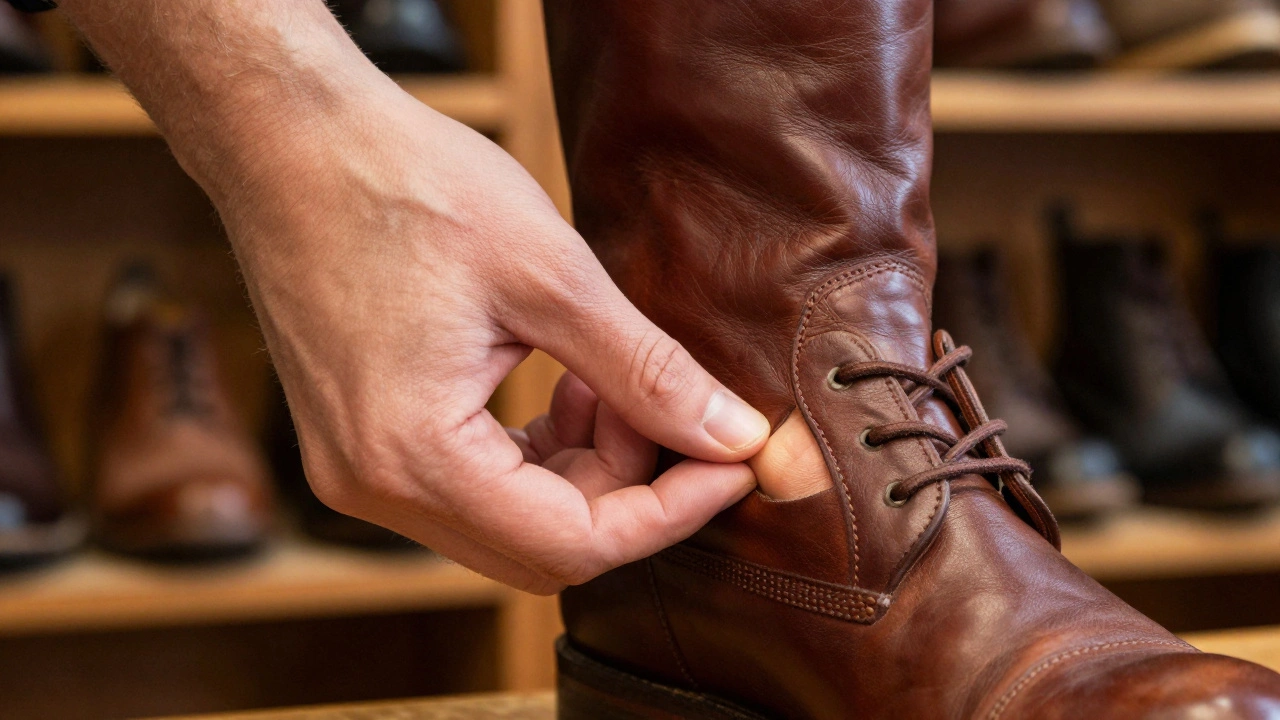
Walking across the uneven granite slabs of Temple Bar or navigating the steep, rain-slicked steps of Grafton Street is part of daily life in Dublin. If your toes are jammed against the front of your footwear, those familiar Irish walks quickly turn into a nightmare of blisters and bruised nails. You might be wondering if that snug feeling you get when trying on a new pair of boots is normal. It isn't.
The short answer is no. Your toes should never touch the end of your shoes when walking. In fact, they shouldn't even touch them when you are standing still. Proper fit requires a specific amount of 'wiggle room'-a gap between your longest toe and the shoe's edge. This space allows your feet to expand naturally as you walk and prevents the painful friction that leads to common foot ailments.
Why do my toes hurt after walking on Irish streets?
Irish urban environments often feature older infrastructure with uneven surfaces, including cobblestones and worn pavement. When combined with tight shoes, these irregularities force your toes to push forward repeatedly, causing impact trauma and pressure points that result in pain, bunions, or black toenails.
The Science of Toe Room
Your feet are dynamic structures. They aren't static blocks; they swell throughout the day due to gravity, activity, and temperature changes. By late afternoon, your feet can be up to half a size larger than in the morning. This is why shopping for shoes in the evening is a golden rule among podiatrists.
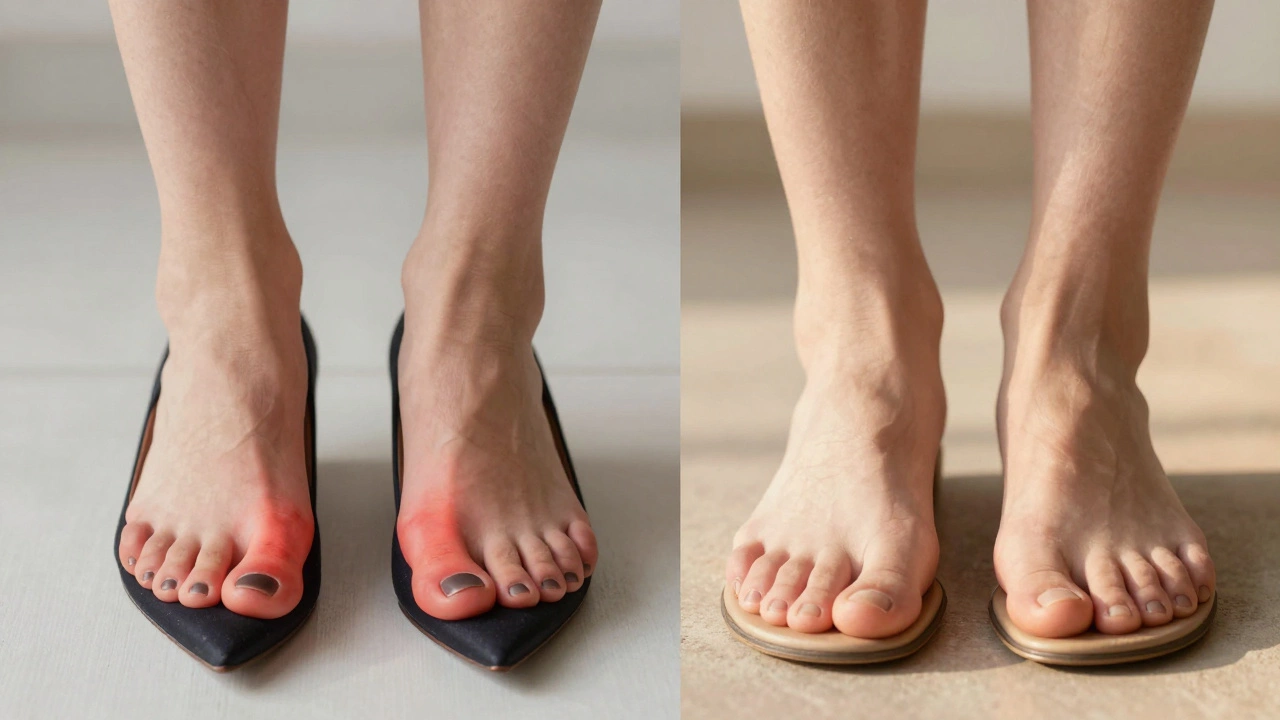
When you take a step, your foot flattens slightly, and your toes spread out to grip the ground. If there is no space at the front, your toes have nowhere to go but down or back. This constant compression restricts blood flow and puts immense pressure on the nail beds. Over time, this leads to ingrown toenails, hammertoes, and chronic pain. For anyone living in Ireland, where outdoor activities range from hiking the Cliffs of Moher to casual city strolls, protecting your foot mechanics is essential for long-term mobility.
The Thumb Rule is a simple method to check shoe fit by measuring the space between your longest toe and the shoe's end using your thumb width. Also known as The Half-Inch Test, it ensures adequate room for foot expansion during walking.How to Check the Fit: The Thumb Test
You don't need a professional fitter to know if your shoes are too small. Just use the "thumb test." Here is how you do it:
- Stand up straight with your weight evenly distributed on both feet. Do not sit down while testing.
- Look at your longest toe (this is often your big toe, but for many people, it is the second toe).
- Place your index finger vertically between the tip of that toe and the inside end of the shoe.
- If your finger fits comfortably with a little room to spare, the shoe is likely the right length. If your finger feels cramped or doesn't fit at all, the shoe is too small.
Aim for about half an inch (roughly 1.25 centimeters) of space. This buffer zone absorbs the shock of each step and gives your toes room to splay. If you are buying online from retailers like Brown Thomas or Derry Hackett, always check their return policy because sizing varies wildly between brands. A size 8 in one brand might feel like a 7.5 in another.
Leather Shoes and the Break-In Myth
In Ireland, leather shoes are a staple, especially for workwear and formal occasions. There is a persistent belief that stiff leather will "stretch out" to fit your feet perfectly over time. While high-quality calfskin or suede does mold to the shape of your foot, it rarely stretches significantly in length. It might widen slightly, but if the shoe is too short, it will remain too short.
Relying on the break-in period is a recipe for injury. Walking around Merrion Square or commuting on the Luas in shoes that pinch your toes now will only cause more damage later. Leather should feel comfortable from the first wear. If it rubs, it will blister. If it squeezes, it will deform your toes.
| Symptom | Cause | Long-Term Risk |
|---|---|---|
| Toenail discoloration (black/blue) | Repetitive impact against the shoe tip | Nail loss, fungal infection |
| Blisters on toes | Friction from lack of movement space | Chronic skin thickening, open sores |
| Numbness or tingling | Compressed nerves due to tight fit | Morton's neuroma, permanent nerve damage |
| Calluses on ball of foot | Pressure concentration from restricted toe splay | Painful plantar fasciitis, metatarsalgia |
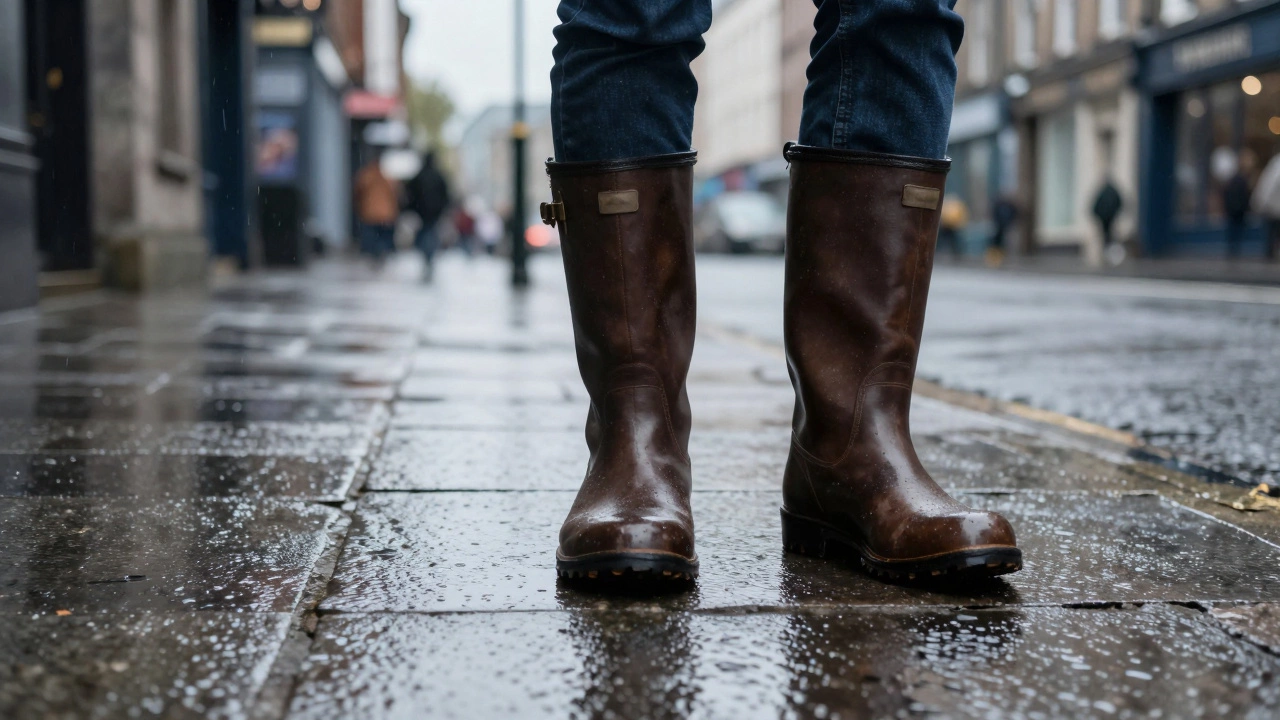
Ireland’s Weather and Foot Swelling
The Irish climate plays a unique role in foot comfort. We experience rapid shifts in weather, often moving from dry sunshine to heavy rain within hours. When it rains, socks get damp. Wet socks increase friction and can make feet feel colder, causing muscles to tense up. More importantly, humidity and temperature fluctuations affect tissue fluid retention.
If you are wearing waterproof boots for a hike in Wicklow or just walking through a rainy Dublin afternoon, ensure your footwear accounts for thicker, warmer socks. Wool socks, popular here for their moisture-wicking properties, take up more space than thin cotton ones. Always try on shoes with the socks you intend to wear. A shoe that fits perfectly with bare feet might crush your toes when paired with a chunky merino wool sock.
Choosing the Right Brand in Ireland
Shoe sizing is notoriously inconsistent. Brands like Clarks, which has deep roots in the UK and Ireland, tend to run true to size or slightly generous. However, fashion-forward labels found in stores like Next or Zara often prioritize aesthetics over ergonomics, resulting in narrower, shorter lasts. Local cobblers in towns like Kilkenny or Galway can sometimes stretch a shoe slightly, but they cannot add length. Prevention is better than cure.
When shopping, look for brands that offer wide-width options. Many Irish men and women have wider feet due to genetic factors or lifestyle habits like years of wearing restrictive footwear. Ignoring width can force your toes into a cramped position even if the length seems correct. A properly fitted shoe supports the arch and allows the forefoot to remain stable.
Common Mistakes to Avoid
- Buying based on style alone: That sleek pointed-toe oxford might look sharp for a wedding in Killarney, but if it cramps your toes, you won't enjoy the reception.
- Ignoring heel slip: If your heel slides out when you walk, the shoe is likely too big in length or width, causing you to grip with your toes, which leads to fatigue and cramping.
- Wearing the wrong socks: Thin socks in winter boots create friction; thick socks in summer loafers create pressure. Match the sock to the season and the shoe.
- Assuming both feet are the same size: Most people have one foot slightly larger than the other. Always fit the shoe to the larger foot. Using an insert in the smaller shoe can help secure the fit.
When to See a Professional
If you consistently experience pain despite having the right size, it might be time to consult a podiatrist. Conditions like flat feet, high arches, or previous injuries can alter how your foot interacts with footwear. In Ireland, private podiatry clinics are widely available in cities like Cork and Limerick, and some services may be covered under certain medical insurance plans. Custom orthotics can also provide additional support and cushioning, but they require enough room in the shoe to function effectively. Squeezing an orthotic into a tight shoe defeats its purpose.
Remember, your feet carry you everywhere-from the bustling streets of Belfast to the quiet trails of Connemara. Treating them with respect by choosing the right fit is one of the best investments you can make in your overall health. Don't let a cheap pair of ill-fitting shoes ruin your enjoyment of Ireland's beautiful landscapes.
Is it okay for my toes to touch the end of my shoes if I wear thick socks?
No. Thick socks compress over time and do not provide sufficient cushioning against the hard end of a shoe. Even with thick socks, you need at least a thumb's width of space to prevent impact injuries and allow for natural foot swelling during the day.
Do leather shoes stretch in length?
Leather shoes stretch very minimally in length, usually less than a quarter of an inch. They primarily stretch in width. If your toes touch the end, the shoe is too small and will not become comfortable through breaking in.
What is the best time of day to buy shoes in Ireland?
Late afternoon or early evening is best. Your feet naturally swell throughout the day due to activity and gravity. Buying shoes then ensures they will be comfortable even when your feet are at their largest, preventing tightness later in the day.
Why do my toenails turn black after walking?
Black toenails, or subungual hematoma, are caused by repetitive trauma where the toe hits the front of the shoe. This is common in shoes that are too short or narrow. The impact bruises the nail bed, leading to bleeding under the nail.
Can I fix shoes that are too small?
It is difficult to permanently increase the length of a shoe. Cobblers can stretch the width slightly, but adding length is not feasible without damaging the structure. It is better to exchange the shoes for a larger size rather than attempting repairs.