
Irish Jacket Care Advisor
Select your jacket type and typical usage to get personalized care advice tailored for Irish dampness and urban grime.
Wash Frequency
Water Temperature
Drying Method
Key Warning
If you live in Dublin or anywhere else in Ireland, you know the drill. One minute it’s sunny on Grafton Street, and the next, a sideways rainstorm is soaking your shoulders. This relentless dampness makes us wonder: should we be throwing our jackets into the washing machine more often than we think? The short answer is no, but with a massive caveat. Washing too frequently can destroy the waterproofing and insulation that keep you dry, while not washing them enough can lead to smells and degraded performance. It’s a balancing act, especially when dealing with the unique mix of urban grime from city buses and salt spray from coastal walks along the Wild Atlantic Way.
The Golden Rule: Read the Label First
Before you even think about water temperature, check the care label inside your jacket. This tag is your bible. If it says "dry clean only," do not take chances, especially with structured wool coats from brands like Harris Tweed or tailored blazers. For most modern outdoor gear, the label will specify a gentle cycle and specific detergent types. Ignoring this is the fastest way to ruin an expensive piece of clothing. In Ireland, where we rely heavily on layering, getting the base layer wrong matters less than ruining your outer shell.
Gore-Tex is a high-performance waterproof fabric technology widely used in Irish outdoor jackets. Unlike standard cotton or polyester, Gore-Tex relies on microscopic pores that block liquid water but allow sweat vapor to escape. However, these pores can get clogged by dirt, body oils, and laundry residue. When they clog, the fabric stops breathing, leaving you sweaty and cold. Proper cleaning actually restores this breathability, which is why neglect is just as bad as over-washing.
Why Less Is Usually More
For most synthetic insulated jackets and down puffers, frequent washing breaks down the fibers. Down feathers, commonly found in winter coats sold in shops like Brown Thomas or specialized outdoor retailers, lose their loft if washed too aggressively. Each wash strips away natural oils that keep the feathers clumped together and warm. Over time, your jacket becomes flat and heavy, offering little protection against the biting wind off the Irish Sea.
Synthetics are tougher, but they still suffer. Repeated agitation causes micro-tears in the fabric weave. If you wear your jacket daily for commuting on the Luas or DART, spot cleaning is your best friend. Use a damp cloth with mild soap to wipe down stains immediately. This keeps the overall structure intact and reduces the need for full immersion washes, which should happen perhaps once or twice a season, depending on usage.
When You Absolutely Must Wash
There are times when skipping the wash isn’t an option. If you’ve been hiking in Wicklow Mountains and got covered in mud, or if you spilled coffee during a meeting in Cork, you need to clean it. But how you do it matters.
- Mud and Dirt: Let mud dry completely before brushing it off. Wet mud pushes deeper into the fibers. Once dry, use a soft brush to remove loose particles before washing.
- Sweat and Odor: Body oils degrade waterproof coatings (DWR). If your jacket smells after a day at the gym or a long walk, it needs a wash to reset its performance.
- Salt Spray: If you’ve been near the coast, say in Galway or Kerry, salt crystals can accumulate. Salt attracts moisture and can corrode zippers and buttons. Rinse these jackets promptly.
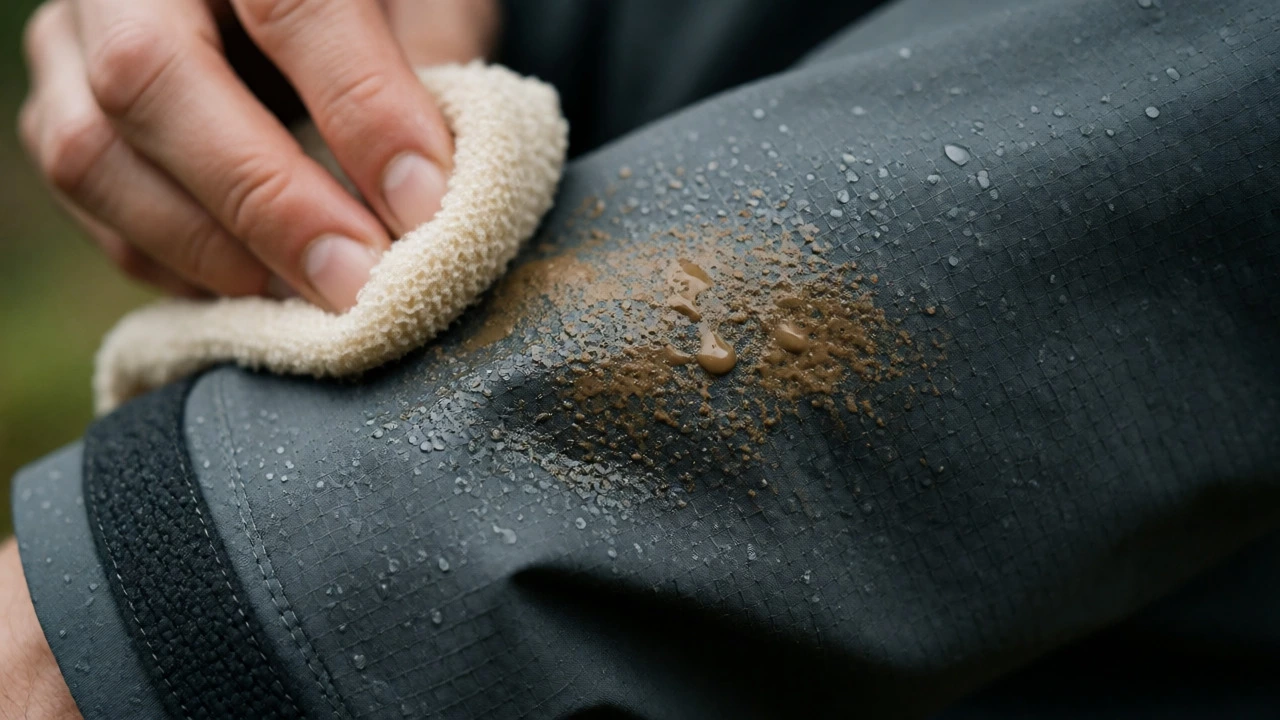
The Right Way to Wash Technical Jackets
Most people make the mistake of using regular household detergent. Stop doing that. Standard detergents contain additives like softeners, bleaches, and optical brighteners. These leave a film on technical fabrics that attracts water instead of repelling it. This phenomenon is called "wetting out," where the outer layer soaks up water rather than letting it bead up and roll off.
Instead, use a cleaner specifically designed for technical outerwear. Brands like Nikwax or Grangers are popular in Ireland because they are formulated to preserve Durable Water Repellent (DWR) finishes. Here is the step-by-step process that works best for Irish conditions:
- Preparation: Zip up all zippers, close Velcro tabs, and empty pockets. Turn the jacket inside out to protect the outer face.
- Cycle Selection: Use a gentle or delicate cycle with cold or lukewarm water (usually below 30°C). Hot water can damage adhesives in seam-sealed jackets.
- Detergent: Add the technical cleaner. Do not add fabric softener. Ever.
- Rinse Twice: Run an extra rinse cycle to ensure all soap residue is gone. Any leftover soap will kill the water repellency.
- Drying: Tumble dry on low heat if the label allows. Heat helps reactivate the DWR coating. If you don’t have a tumble dryer, hang it to air dry, but avoid direct sunlight which can fade colors.
Caring for Wool and Leather Jackets
Ireland has a rich tradition of wool production, and many locals own heritage wool coats. These require different handling. Wool is sensitive to agitation and heat. Washing a wool coat in a standard machine cycle can cause felting, where the fibers shrink and mat together permanently.
| Jacket Type | Wash Frequency | Water Temp | Drying Method | Special Notes |
|---|---|---|---|---|
| Gore-Tex / Hard Shell | Every 10-15 wears | Cold/Lukewarm | Tumble Dry Low | Use technical cleaner; reapply DWR if needed |
| Down Puffer | Once per season | Cold | Tumble Dry with Tennis Balls | Tennis balls help fluff feathers |
| Wool Coat | Spot clean only | N/A (Dry Clean) | Air Dry Flat | Brush regularly to remove dust |
| Leather Biker | As needed | N/A | Air Dry | Condition every 6 months |
For leather jackets, common among bikers in Dublin’s Temple Bar area or fashion-conscious crowds, water is the enemy. Never submerge leather in water. Instead, wipe it with a damp cloth and let it air dry away from radiators. After drying, apply a leather conditioner to keep it supple. Irish winters can be harsh, and dry, cracked leather looks worn out quickly without proper moisturizing.

Reviving Water Repellency
Even with perfect washing habits, your jacket’s ability to shed rain will fade over time. This is normal. The DWR coating wears off due to friction and exposure. How do you know it’s time to re-treat? Perform the water test. Sprinkle a few drops of water on the sleeve. If they bead up and roll off, you’re good. If the water soaks into the fabric and creates a dark patch, the DWR is gone.
You can restore this with a spray-on treatment available at most Irish outdoor stores like Decathlon or Ellis Bridgeman. Apply it to a clean, damp jacket and tumble dry on low heat to bond the treatment. This simple step can extend the life of your jacket by years, saving you money in the long run. Given the cost of quality outerwear here, protecting your investment is smart financial planning.
Storage Matters Too
In Ireland, space can be tight, especially in older apartments in cities like Limerick or Waterford. Don’t cram your jackets into a crowded closet. Compressing down jackets or wool coats for long periods can crush the insulation and distort the shape. Hang them loosely on wide wooden hangers to maintain shoulder structure. If you must store them in bags for summer, ensure they are completely dry first. Mold loves the damp Irish climate, and a musty smell is hard to remove from fabric fibers.
Also, consider the local environment. If you live near the coast, store jackets in breathable cotton garment bags rather than plastic ones. Plastic traps humidity, which can lead to mildew growth on natural fibers. Regular airing out, even indoors, helps keep fabrics fresh between wears.
Frequently Asked Questions
Can I use regular laundry detergent on my waterproof jacket?
No, you should avoid regular detergent. It contains additives that leave a residue on the fabric, attracting water and reducing breathability. Always use a technical cleaner designed for waterproof garments to maintain performance.
How often should I wash my down jacket?
Generally, once or twice a year is sufficient unless it gets visibly dirty or smelly. Over-washing down jackets can strip natural oils from the feathers, causing them to lose loft and warmth. Spot cleaning minor stains helps reduce the frequency of full washes.
Does rain ruin my jacket if I don't wash it right after?
Rain itself doesn't ruin the jacket, but the dirt and pollutants carried by rainwater can settle into the fabric. If you've been in heavy traffic or industrial areas, rinsing the exterior with clean water can prevent buildup. However, immediate washing isn't always necessary unless the jacket is soaked through or muddy.
What is 'wetting out' in waterproof jackets?
Wetting out occurs when the outer fabric absorbs water instead of repelling it, creating a wet, dark appearance. This happens when the Durable Water Repellent (DWR) coating wears off or gets clogged with dirt. While the inner membrane may still be waterproof, the jacket feels clammy and loses breathability.
Is it safe to put a wool coat in the washing machine?
It depends on the specific coat. Many pure wool coats are labeled 'dry clean only' because agitation and heat cause felting and shrinking. Some modern blends are machine washable on a wool cycle with cold water. Always check the care label first to avoid permanent damage.