Suit Storage & Travel Advisor
Answer a few questions about your situation to get personalized advice on how to store or pack your suit.
Select options and click "Get Advice" to see your custom storage plan.
Picture this: you’re flying out of Dublin Airport for a client meeting in London or heading down to Cork for a wedding. You’ve got your best suit, a tailored ensemble typically made from wool or a wool-blend fabric, designed for formal or professional wear packed away. But should it live in that crumpled plastic dry-cleaning bag, or do you need a proper garment carrier? If you’re based here in Ireland, dealing with our damp climate and frequent travel, the answer isn’t just about wrinkles-it’s about protecting an investment that can cost upwards of €500 at boutiques like Brown Thomas or David Clery.
The Irish Climate Factor: Why Humidity Matters
Let’s be real about the weather. We don’t get the scorching heat that dries out fabrics quickly, nor do we have the bone-dry air of continental Europe. Instead, we deal with persistent humidity and rain. Keeping a suit in a sealed plastic bag is a recipe for disaster. Plastic traps moisture against the fabric. In a country where rainfall is a daily companion, this trapped moisture can lead to mildew smells and fabric degradation over time. If you leave a suit in a plastic bag in your wardrobe during a wet November, you might find a musty odor that no amount of steaming will fully remove.
Conversely, breathable materials are your friend. Cotton canvas bags or those with mesh panels allow air circulation. This is crucial if you’re storing a suit between wears in a small apartment in Ranelagh or a student dorm in Galway. The goal is to let the fibers breathe so they can recover their shape after being worn.
Wrinkles vs. Structure: The Physics of Packing
Does keeping a suit in a bag cause permanent damage? Not necessarily, but it depends on how you pack it. A cheap, thin nylon bag offers zero structural support. When you shove a jacket into a standard suitcase, the shoulders collapse, and the lapels crease. These aren’t just surface-level wrinkles; they distort the internal structure of the jacket, which often includes padding and canvas interlining.
If you’re traveling for work, say from Shannon to Frankfurt, using a dedicated garment bag, a specialized luggage item designed to hold clothing flat or folded to minimize creasing makes sense. Look for ones with padded hangers. They keep the shoulder line intact. However, if you’re just moving the suit from your office in Ballsbridge to your home in Swords, hanging it properly is better than stuffing it in a bag. Gravity is actually helpful here-it pulls the fabric straight, reducing stress on the seams.
When a Bag Is Essential: Travel Scenarios
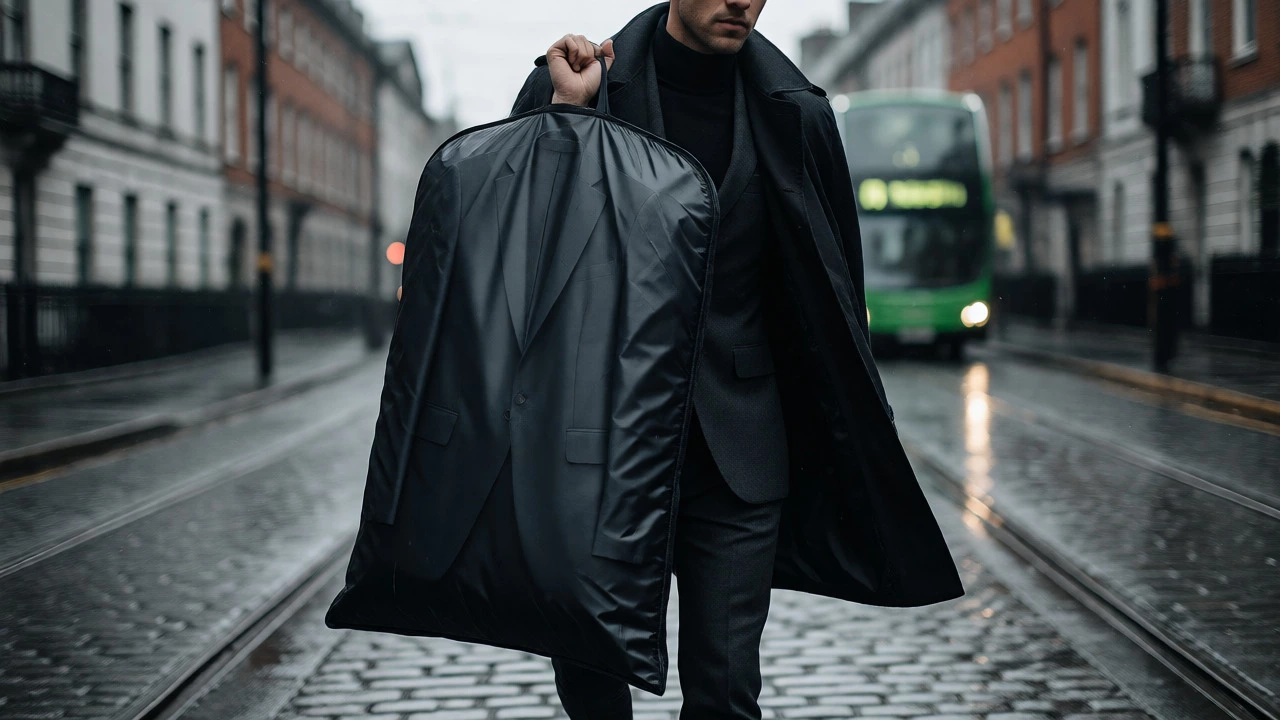
You absolutely need a bag when you’re leaving the house. Walking through Dublin city center in a suit without protection exposes it to wind, rain, and potential snags on tram rails or bicycle handles. A lightweight, foldable garment bag fits easily under an airplane seat or in an overhead bin on the DART. It acts as a shield against the elements.
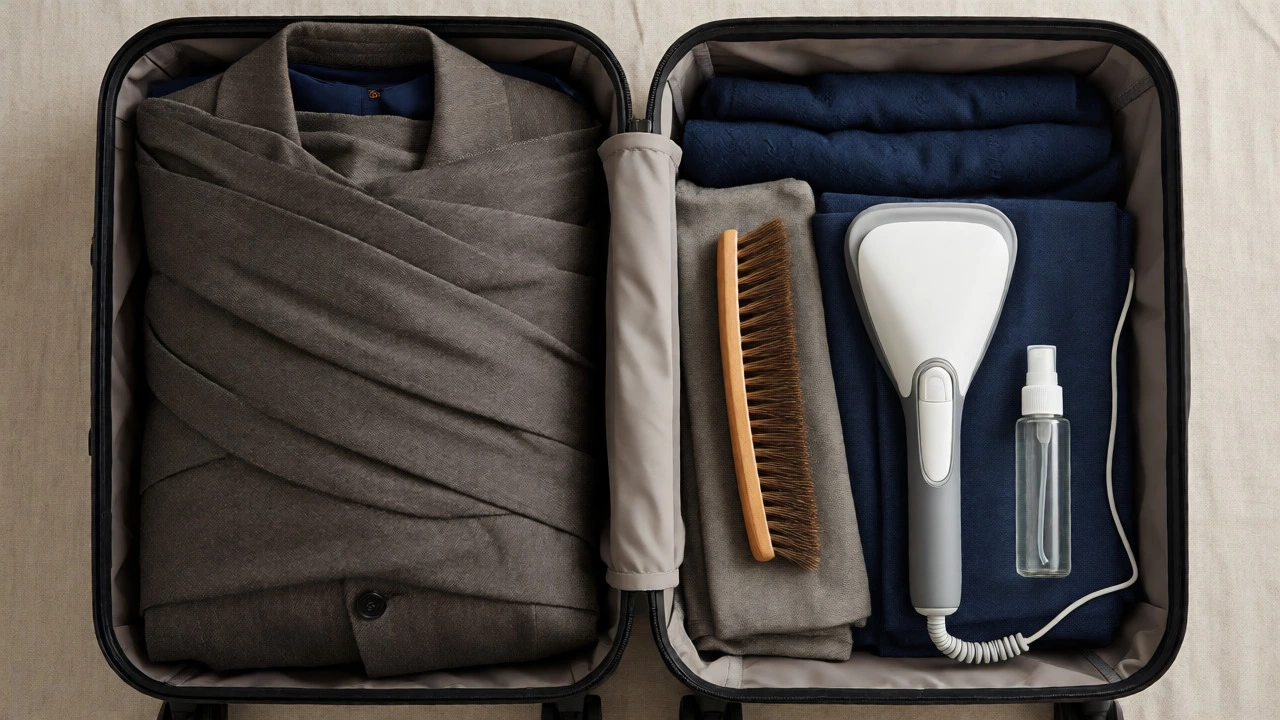
For longer trips, consider the "bundle wrapping" technique inside a soft-sided bag rather than folding. Lay the trousers along the spine of the bag, then wrap the jacket around them. This method uses the bulk of the other clothes as a cushion, preventing sharp creases. It’s a trick favored by frequent flyers who spend half their life between Dublin and New York.
Storage at Home: To Bag or Not to Bag?
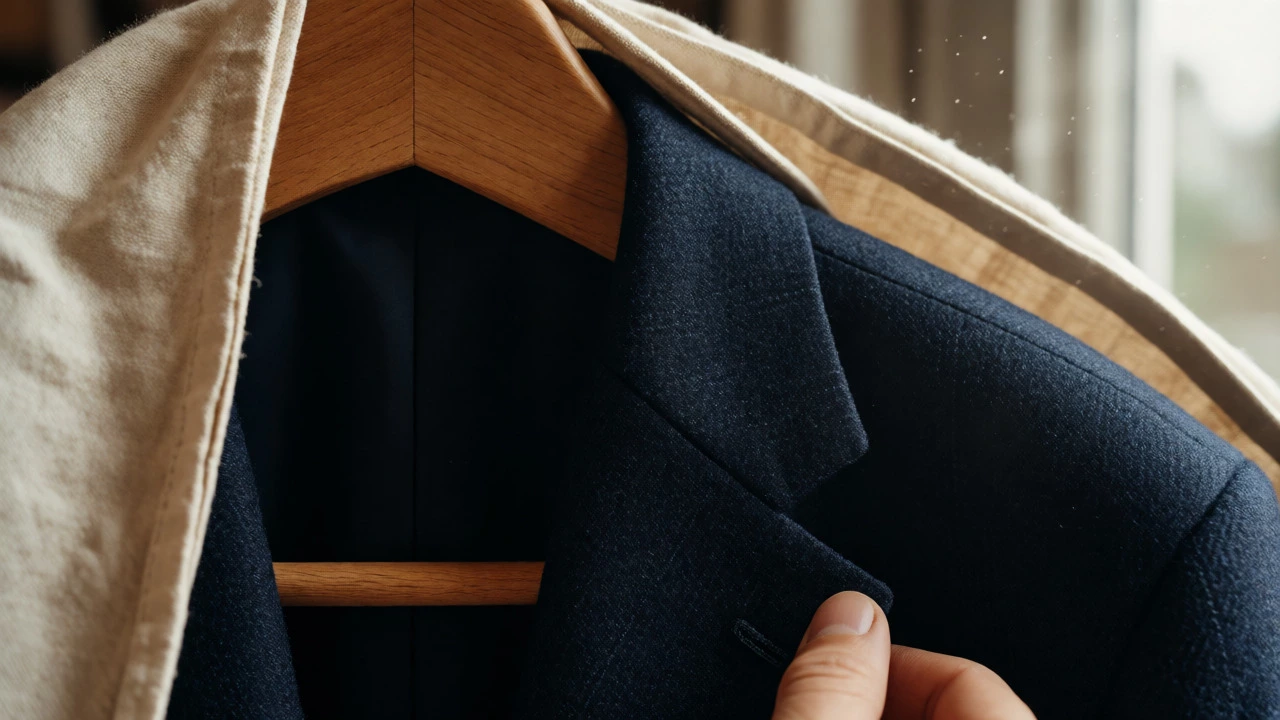
Once you’re back in your own space, take the suit out of the travel bag immediately. Leaving it in a confined space compresses the natural loft of the wool fibers. Wool has memory, but it needs room to relax. Use a wide, wooden hanger-never wire. Wire hangers create those unsightly bumps on the shoulders that ruin the silhouette.
Do you use a dust cover at home? Only if your closet is dusty or you have pets. For most people in modern apartments, a breathable cotton cover is fine, but avoid plastic dry-cleaning covers. Those are meant for short-term transport only. If you store a suit in a plastic bag for months, the chemicals in the plastic can react with the dye in the fabric, leading to discoloration. This is especially true for darker navy or charcoal suits common in Irish business attire.
Choosing the Right Bag: Material and Design
Not all bags are created equal. Here is what to look for when shopping in local stores like Arnotts or online retailers delivering to Ireland:
| Bag Type | Best For | Pros | Cons |
|---|---|---|---|
| Plastic Dry-Cleaner Bag | Transport from cleaner | Cheap, waterproof | Traps moisture, causes static, non-breathable |
| Nylon Garment Bag | Air travel | Lightweight, durable, compact | Can stick to wool, less breathable |
| Cotton Canvas Bag | Home storage | Breathable, protects from dust | Not waterproof, bulky |
| Leather/Garment Case | Luxury travel | Stylish, rigid structure | Expensive, heavy |
For the average Irish commuter, a mid-range nylon bag with a lining is the sweet spot. It balances protection with weight. If you’re a partner at a law firm in Temple Bar, investing in a leather case might align with your brand image, but functionally, it doesn’t offer much more protection than a high-quality nylon option.
Maintenance Tips for Longevity
Packing is only half the battle. How you treat the suit before and after affects its lifespan. Always brush your suit with a horsehair brush after wearing it. This removes dirt and skin oils that accumulate throughout the day. If you’ve been walking in the rain, let the suit air dry completely before putting it in any bag. Never pack a damp suit. That’s the fastest way to kill the fabric.
Steaming is preferable to ironing. An iron can shine the fabric, especially wool, creating a glossy patch that looks tired. A handheld steamer relaxes wrinkles without direct contact. If you’re staying in a hotel in Belfast or London, hang the suit in the bathroom while you shower. The steam from the hot water helps release minor creases naturally.
Special Considerations for Irish Weddings and Events
Wedding season in Ireland brings a surge in suit usage. Whether you’re attending a ceremony in a rural county or a city venue, you’ll likely transport your suit multiple times. Many groomsmen make the mistake of leaving suits in car trunks overnight. Heat and humidity fluctuations in a car can warp buttons and shrink linings. Bring the suit indoors whenever possible.
If you rent a suit from a service like Moss Bros or a local hire shop, check their return policy regarding bags. Some require specific packaging to ensure the next customer gets a pristine garment. Keeping the original bag until the event ends is usually wise, but transfer it to a breathable cover once you’re home.
FAQ
Is it bad to keep a suit in a plastic bag long-term?
Yes. Plastic bags trap moisture and prevent airflow, which can lead to mildew and fabric degradation. In Ireland’s humid climate, this risk is higher. Remove suits from plastic bags immediately after bringing them home.
What is the best material for a suit storage bag?
Breathable materials like cotton or canvas are best for home storage because they allow air circulation. For travel, lined nylon is preferred for its durability and lightweight properties, provided the suit is dry before packing.
How do I prevent wrinkles when traveling with a suit?
Use a garment bag with a hanger, or employ the bundle-wrapping method in a suitcase. Turn the jacket inside out, lay it flat, and roll it gently around softer items. Avoid sharp folds.
Can I hang my suit in a wardrobe without a bag?
Yes, hanging a suit on a wide wooden hanger in a well-ventilated wardrobe is ideal. Use a breathable dust cover only if necessary to protect against dust or pets. Ensure there is enough space between garments to prevent crushing.
Does the type of fabric affect how I store my suit?
Yes. Wool is resilient but prone to moth damage and mildew if stored damp. Linen wrinkles easily and benefits from loose hanging. Synthetic blends are more resistant to moisture but can retain odors, so airing them out is crucial.