Work Shoe Cost & Responsibility Checker
Fill in the details to see who typically pays.
Financial Impact Analysis
Effective Hourly Rate (if you pay): -
Below Minimum Wage? -
Annual Cost (assuming 1 replacement/year): -
Recommendation: -
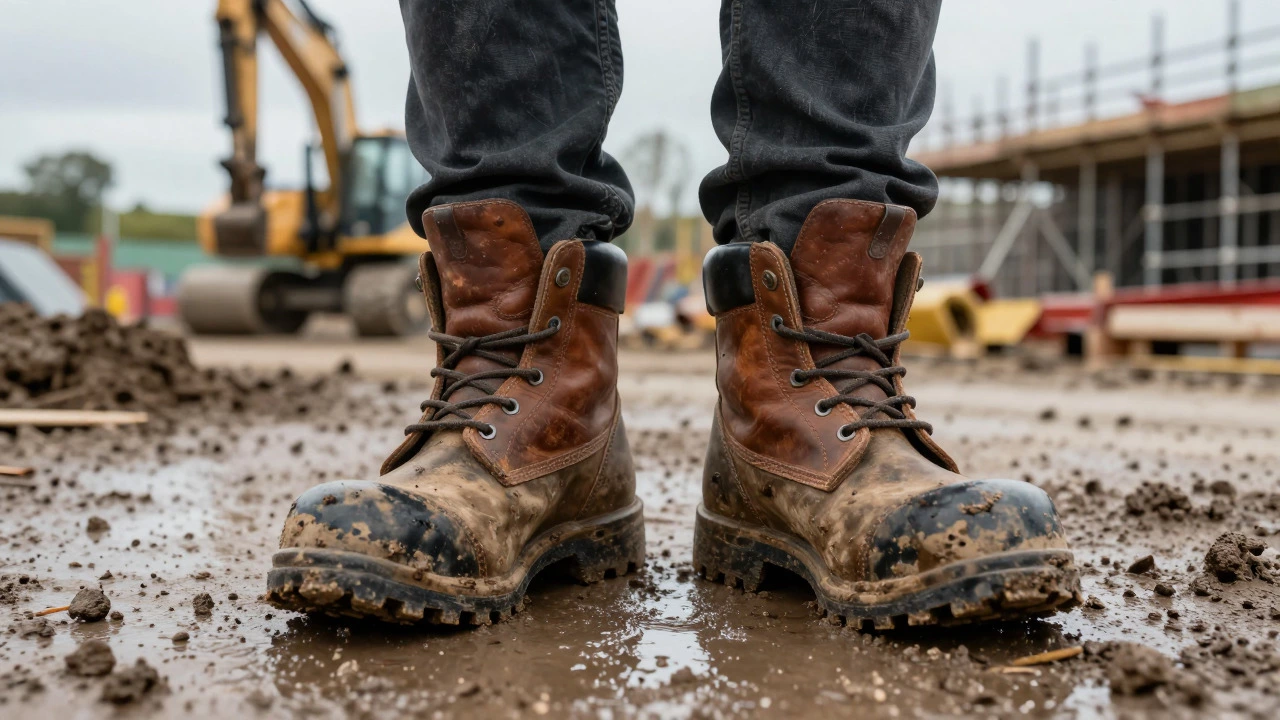
Walking into a construction site in Dublin or a hospital ward in Cork with the wrong footwear can be a real headache. You might wonder if your boss should foot the bill for those sturdy boots or steel-toed caps. In Ireland, the answer isn't always a simple yes or no. It depends heavily on what you do, where you work, and whether those shoes count as standard gear or special protection.
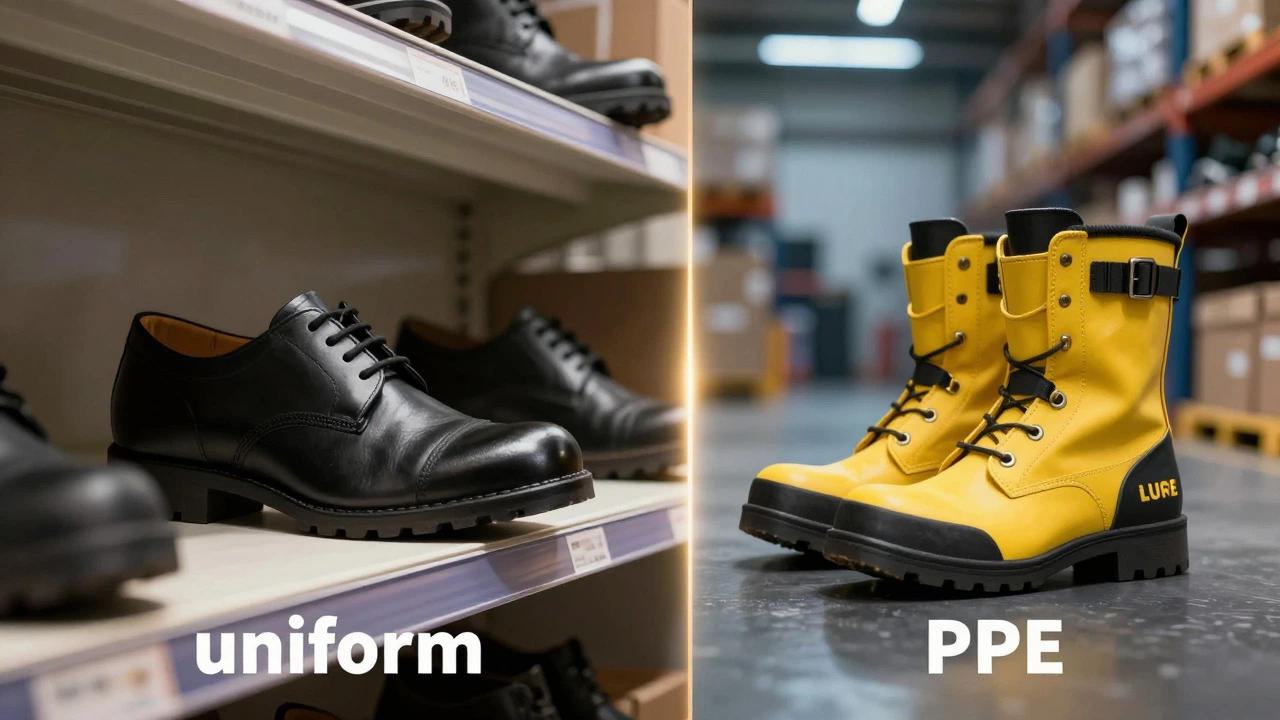
Many workers in the Republic of Ireland assume that if it’s part of the job, the company pays. But the law draws a line between 'uniform' and 'Personal Protective Equipment' (PPE). Understanding this distinction saves you from unexpected expenses at the end of the month, especially when a pair of high-quality work shoes can cost upwards of €150.
The Legal Line: Uniform vs. Protection
In the Irish context, the Employment (Provision of Information and Consultation) Regulations and general common law principles help define who pays for what. The core rule is straightforward: if the item is required to protect your health and safety, the employer usually pays. If it’s just part of a dress code to look professional, you likely pay.
Personal Protective Equipment is gear designed to prevent injury or illness in the workplace. This includes helmets, gloves, goggles, and crucially, safety footwear. Under the Safety, Health and Welfare Act 2005, employers must provide PPE free of charge if the risk cannot be controlled by other means. So, if you are a builder working near heavy machinery, those steel-toe boots are almost certainly PPE. Your employer must buy them, maintain them, and replace them when they wear out.
On the other hand, a 'uniform' is different. Think of the white coat in a lab, the scrubs in a clinic, or the branded polo shirt in a retail store in Grafton Street. These are often considered part of the job's appearance rather than direct protection. Unless the contract says otherwise, employees typically cover these costs. However, there is a nuance: if the uniform is expensive and specific to the role, some collective agreements might shift the burden, but it’s not the default legal requirement.
When Does an Employer Have to Pay?
Let’s break down the scenarios where the money comes from the company pocket. You need to ask yourself three questions about your footwear:
- Is it mandatory? If you get sent home for not wearing it, it’s likely a requirement.
- Does it protect you from a specific hazard? Slips, trips, falling objects, chemical spills, or electrical risks all point to PPE status.
- Is it specialized? Standard leather shoes are not PPE. Specialized non-slip soles or metatarsal guards are.
If the answer to the second question is yes, the employer pays. For example, a warehouse worker in Limerick handling pallets needs anti-static, slip-resistant boots. That is PPE. A barista in Galway City might need non-slip shoes due to wet floors. While debatable, many hospitality managers treat these as PPE because the risk of injury is high and specific to the environment. If the risk is general (like walking on pavement), it’s less clear-cut.
It is worth noting that the National Minimum Wage Act doesn’t explicitly ban deductions for uniforms, but deducting too much can push your hourly rate below the national minimum wage. As of 2026, the adult minimum wage in Ireland is a significant factor. If buying your own work shoes drops your effective hourly pay below the statutory floor, the deduction might be illegal. Keep receipts and track your hours if you suspect this is happening.

Industry-Specific Examples in Ireland
Different sectors handle this differently. Here is how it plays out in some common Irish industries:
| Industry | Typical Footwear Requirement | Who Usually Pays? | Reasoning |
|---|---|---|---|
| Construction & Trades | Safety Boots (S3/S4 rated) | Employer | Mandatory PPE under SHW Act 2005; high risk of injury. |
| Hospitality (Bartenders/Chefs) | Non-slip Shoes | Varies (Often Employee) | Often seen as uniform unless contract states PPE. Check local union rules. |
| Retail (Branded Stores) | Black Leather Shoes | Employee | Dress code/uniform; low physical risk. |
| Healthcare (Nurses/Carers) | Closed-toe, Clean Shoes | Employee | Hygiene requirement, not necessarily protective against impact. |
| Logistics/Warehousing | Steel Toe/Anti-Static | Employer | PPE due to forklifts and heavy loads. |
Notice the pattern? High physical risk equals employer payment. Low physical risk, high aesthetic requirement equals employee payment. If you work in a factory in Waterford producing automotive parts, your boots are PPE. If you work in a boutique in Temple Bar, your shoes are fashion.
Negotiating the Cost: Practical Tips
What if you fall into the gray area? Maybe you’re a delivery driver in Belfast or Dublin using your own car, but you need comfortable, durable shoes for long shifts. Or perhaps you’re in a role where the 'uniform' is expensive, like tailored suits for finance professionals in the Docklands.
Here are some practical steps to manage the cost:
- Check your Contract: Read the small print. Does it say 'employee to provide own uniform'? Or does it say 'employer provides necessary equipment'? Ambiguity can sometimes be resolved in your favor if the item is critical to safety.
- Ask for a Reimbursement Policy: Many large Irish companies have a petty cash system or expense claim process. Even if they don’t buy the shoes directly, they might reimburse up to €100 per year for 'work-related attire'.
- Union Representation: If you are a member of a trade union (like SIPTU or ICTU), check your collective agreement. Unions often negotiate allowances for uniforms or specific gear. This is a powerful tool in Ireland’s industrial relations landscape.
- Tax Relief: Generally, work clothes aren’t tax-deductible for most employees in Ireland unless they are specialist clothing worn exclusively for work and not suitable for everyday use. Safety boots often qualify for this exemption. Keep your receipts and consult Revenue if you think you qualify.
Don’t be afraid to ask. HR departments in Dublin tech firms or manufacturing plants in Midleton are used to these queries. A polite email asking, "Could we clarify if our safety footwear is covered under the PPE policy?" is rarely met with resistance. It shows you care about compliance and safety.
Common Pitfalls to Avoid
One big mistake is assuming 'mandatory' means 'paid for'. If your boss says, "You must wear black shoes," that doesn’t automatically make them PPE. You need to link the requirement to a hazard. If the only reason is 'it looks better,' it’s a dress code.
Another pitfall is ignoring the condition of the gear. If your employer buys you safety boots, they are responsible for their replacement when they become unsafe. Don’t wait until the sole is completely worn through. Document the wear and tear with photos and request replacements promptly. This protects you from being blamed for an accident caused by faulty gear.
Finally, watch out for 'hidden' deductions. Some smaller businesses might try to deduct the cost of shoes from your first paycheck without explicit consent. Ensure any such arrangement is written in your contract or a separate agreement. Verbal promises often evaporate when payday arrives.
Frequently Asked Questions
Does my employer have to pay for my safety boots in Ireland?
Yes, if the boots are classified as Personal Protective Equipment (PPE) required to prevent injury from specific workplace hazards, the employer must provide them free of charge under the Safety, Health and Welfare Act 2005.
Can my employer deduct the cost of work shoes from my salary?
They can, provided the deduction is agreed upon in writing and does not reduce your hourly rate below the Irish National Minimum Wage. If the shoes are PPE, the deduction is generally illegal unless you voluntarily agree to a different arrangement that complies with wage laws.
Are non-slip shoes for bartenders considered PPE?
It depends on the specific risk assessment. If the wet floor risk is deemed significant enough to require specialized footwear, they may be treated as PPE. However, many hospitality employers classify them as uniform. Check your contract or speak with a union representative for clarity.
How often should an employer replace my work shoes?
There is no fixed legal timeline. Replacement is required when the footwear no longer provides adequate protection. Typically, this happens every 1-2 years depending on usage intensity. Keep records of wear and tear to support your claim for replacement.
Do I get tax relief on work shoes in Ireland?
Generally, no, unless the shoes are 'specialist' clothing worn exclusively for work and not suitable for everyday leisure. Safety boots often qualify for this exemption. You must keep receipts and submit a claim to Revenue, but approval is not guaranteed for standard office shoes.