
Coat Fit & Layering Calculator
Recommended Actions
Fit Tests to Perform
In the chill that settles over Dublin Bay in late March, the question of how your coat fits becomes immediately practical rather than purely aesthetic. Here in Ireland, our unpredictable weather forces us to make constant compromises between staying warm and looking sharp while navigating cobbled streets or catching the Luas. Many people walk past you wearing layers that bunch awkwardly or trench coats that flare out excessively in the wind. The answer isn't binary; a coat shouldn't simply be tight or loose-it should serve a specific function relative to your environment and lifestyle.
Coats, as a category of outerwear, sit at the intersection of protection and presentation. When we talk about fit in this context, we aren't just discussing vanity. We are discussing thermal regulation and mobility. If you're heading out on a windy Saturday afternoon in Bray, a skin-tight wool overcoat might restrict your movement. Conversely, an oversized parka might hinder you when reaching into a shop window in Grafton Street. Let's break down exactly what "tight" versus "loose" actually means for the Irish wearer.
The Anatomy of a Proper Coat Fit
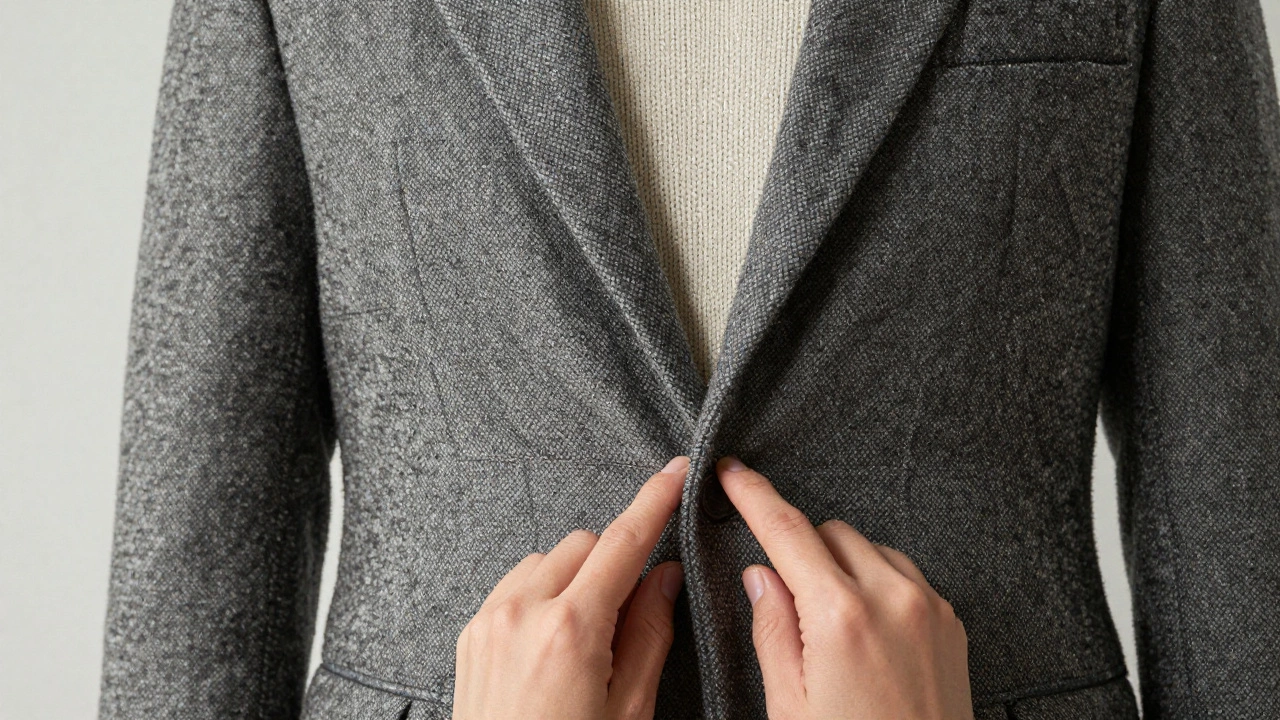
To determine if a garment is right for you, you need to understand the mechanics of tailoring. A well-fitted jacket respects your natural shoulder line without adding bulk or drooping over your trapezius muscle. In the world of men's suits, the shoulders are the most critical area. For coats, this rule extends to the entire torso. You should be able to reach across your chest and button the coat comfortably without the fabric pulling open to reveal everything underneath. This pull creates horizontal tension lines, or "smiles," which signal the coat is too small.
If you look in the mirror and see vertical drag lines hanging from the buttons, the garment is likely too large. This happens frequently when shoppers buy their first winter coat in Dunnes Stores and default to their jeans size plus two sizes, assuming they need room for heavy jumpers. While you do need room for layering, excessive width makes you look shapeless. Instead, think about ease. The fabric should hang cleanly from your collar down to your hem, creating a silhouette that follows your posture without clinging to your frame.
Understanding Irish Weather Dynamics
The Irish climate is notorious for its variability. We don't just have cold; we have damp, wind-driven chill that penetrates clothing instantly. In December, a tight coat might feel snug and secure against the wind, but come January, when temperatures drop below freezing, that same coat offers zero insulation buffer. Thermal retention relies heavily on trapped air. A slightly looser fit allows for a pocket of warm air between your sweater and the coat, which acts as an insulating barrier.
Consider the rainfall factor. Whether you are stuck in a downpour on the N1 or walking through a park in Rathmines, water management is key. Heavy wool coats absorb moisture and shrink if soaked. They also dry slowly. In these scenarios, technical outerwear behaves differently. A waterproof shell or a waxed cotton coat requires a different fit philosophy. Waxed jackets often tighten as they age and wear in. You need enough room so the material doesn't crack when you raise your arms.
Layering Strategies for Dublin Commuters
Most of us living here navigate a distinct temperature gradient between indoors and outdoors. An office in Dublin city centre is often heated aggressively, while the journey there is brisk. If you buy a coat that fits perfectly over your shirt, you won't be able to wear it over your work jumper once you step out the door. This leaves you sweating inside because you've removed your outer layer too early.
Aim for a fit that accommodates a medium-weight knit without looking boxy. Try this simple test: Put on your coat over your thickest intended layer-the chunky cashmere pullover you'd wear to Dublin Fashion Week in November. Button it. Can you slide two fingers under the waistband? Good. Can you raise your arm fully to catch a cab without feeling restricted at the armpit? That is the Goldilocks zone. We see many folks making the mistake of prioritizing the visual look over the physical reality of layering. On public transport, specifically the DART or Red Line bus, you need to move freely. A coat that pulls back when you lift an arm looks sloppy and feels restrictive.
Fabric and Structure Differences
The material dictates the necessary cut. Lightweight fabrics like gabardine, used in classic trench coats, rely on draping. These materials are fluid and require a bit more length and flow to drape correctly. If you cinch a trench coat too tightly, it loses that elegant waterfall effect that defines the style.
Heavier materials like tweed or thick barbour jackets behave like armor. They are stiff. With these, you can afford to have a trimmer fit because the fabric holds its shape and provides its own structure. If you wear a stiff leather jacket, tight is safer because the material doesn't sag. However, bulky insulated parkas designed for the Wicklow hills naturally create a boxier silhouette. Trying to wear those super tight defeats the purpose of the insulation inside. Know your fabric properties before deciding on the cut.
Navigating Local Retailers and Brands
When shopping locally, you encounter varying fit standards. Brands based in the Republic, such as O'Neill & Sons, tend to offer a more relaxed, traditional cut suited to rural heritage. Their jackets often feature slightly longer sleeves and broader shoulders, reflecting a history of outdoor utility. These are fantastic for durability but can look baggy if you prefer modern slim styles.
International brands available in Brown Thomas or other high-end retailers often follow contemporary European sizing, which leans towards slimming silhouettes. They assume you will tailor the garment yourself to achieve a perfect match. Don't hesitate to visit a local tailor after purchase. Alterations are cheap compared to buying a new coat every year. Adjusting side seams can take three inches off a waist without compromising shoulder integrity. It is far better to buy for comfort across the back and tailor for definition than to force a size that hurts.
| Style Type | Ideal Fit Level | Best For Location | Key Constraint |
|---|---|---|---|
| Trench Coat | Slim, structured | City / Office | Must allow suit jacket underneath |
| Parka | Relaxed, voluminous | Countryside / Winter | Must accommodate heavy knits |
| Bomber Jacket | Slightly cropped | Urban / Casual | Hems should hit waistband |
| Cashmere Overcoat | Draping / Flowy | Formal Events | Shoulders must be exact |

Movement Tests Before Purchasing
Never buy a heavy coat without doing the "car seat" test. Get into the driver's position of your vehicle, close the door, and check if the backrest hits you in the neck. A coat that is too long or too bulky prevents the car door from closing or traps heat inside the vehicle cabin. Next, simulate carrying a bag. Place a laptop or heavy grocery bag on your shoulder. Does the hem lift unevenly? Does the seam split at the bottom corners? These stress points reveal where the fabric lacks structural support. Finally, mimic sitting on a pub stool or cafe chair. The coat should not ride up uncomfortably or expose your backside entirely.
Many shoppers forget that the sleeve length matters immensely. Your wrists should be exposed when your arms hang down. In Ireland, we touch things-opening umbrellas, adjusting scarves, holding tickets. If your sleeve covers your hand entirely, you lose dexterity and risk snagging your cuffs. Leave at least an inch or two of cuff visible from a shirt or sweater underneath. This also ensures your hands remain warm when reaching into your pockets without exposing the fabric to friction damage.
Conclusion on Balance and Longevity
Ultimately, the decision depends on prioritizing warmth or trendiness. For the typical Irish winter, prioritize function. A slightly looser fit protects against wind penetration and keeps you warmer during the commute. For social settings, a tighter fit signals confidence and attention to detail. Remember that clothes last longer when not stretched constantly. Stressing the seams accelerates wear. By choosing a balanced fit-one that allows breathing room but maintains shape-you get both style and longevity out of your investment.
How tight should a winter coat be?
A winter coat should fit comfortably over your base layers without compressing the insulation. You should be able to move your shoulders freely and button the front without visible strain on the fabric. Aim for a gap of roughly two fingers between the button and your body when zipped or buttoned.
Is it better to buy coats larger for layering?
Buying significantly larger is often a mistake. Instead, buy a true size that accommodates a medium-weight layer. Excessively large coats look sloppy and trap less heat. If you know you will layer heavily, consider having a professional tailor adjust the sides of a standard fit.
What fits best for rainy days in Dublin?
For heavy rain, a waterproof trench coat with a slightly looser fit is ideal to prevent the fabric from sticking to you. Alternatively, a technical rain jacket with adjustable hoods and drawstrings helps seal out wind without needing extra volume.
Should I tailor my coat myself?
Structural tailoring like taking in shoulders is complex and requires a professional. You can easily shorten sleeves or hem length at home with basic sewing skills, but always consult a tailor for significant changes to preserve the coat's lining and balance.
Do leather jackets fit differently?
Yes, leather is rigid and does not stretch. Leather jackets often require a "break-in" period. Buy them feeling comfortable, not painfully tight. As the material warms, it will soften slightly, but it will never truly loosen significantly.