T-Shirt Storage Calculator
What's your situation?
Enter your details above to see the best storage method for your t-shirts in Ireland.
In Ireland, where damp air clings to clothes longer than a pub conversation after last call, how you store your t-shirts isn’t just about neatness-it’s about survival. Whether you’re living in a damp Galway flat, a stone cottage in County Kerry, or a rented apartment in Dublin’s south side, the moisture in the air doesn’t care if your t-shirts are cotton, bamboo, or recycled polyester. They’ll still mildew if left crumpled in a drawer or sagging on a thin plastic hanger. So, is it better to hang t-shirts or fold them? The answer isn’t one-size-fits-all. It’s about climate, space, and what your wardrobe can actually handle in a country where rain is a daily forecast, not a suggestion.
Why Ireland’s Weather Changes Everything
Most online guides tell you to fold t-shirts to prevent stretching. That’s true-unless you live somewhere with 80% humidity year-round. In Ireland, folded t-shirts tucked into drawers spend weeks in a dark, airless space. Combine that with damp towels left on the bathroom floor, washing machines that don’t spin fast enough, and radiators that barely warm the room, and you’ve got a breeding ground for mildew. You’ve probably seen it: that faint, musty smell when you pull out a t-shirt from the bottom of the pile, or the faint grey spots near the collar that won’t wash out. It’s not dirt. It’s mold.
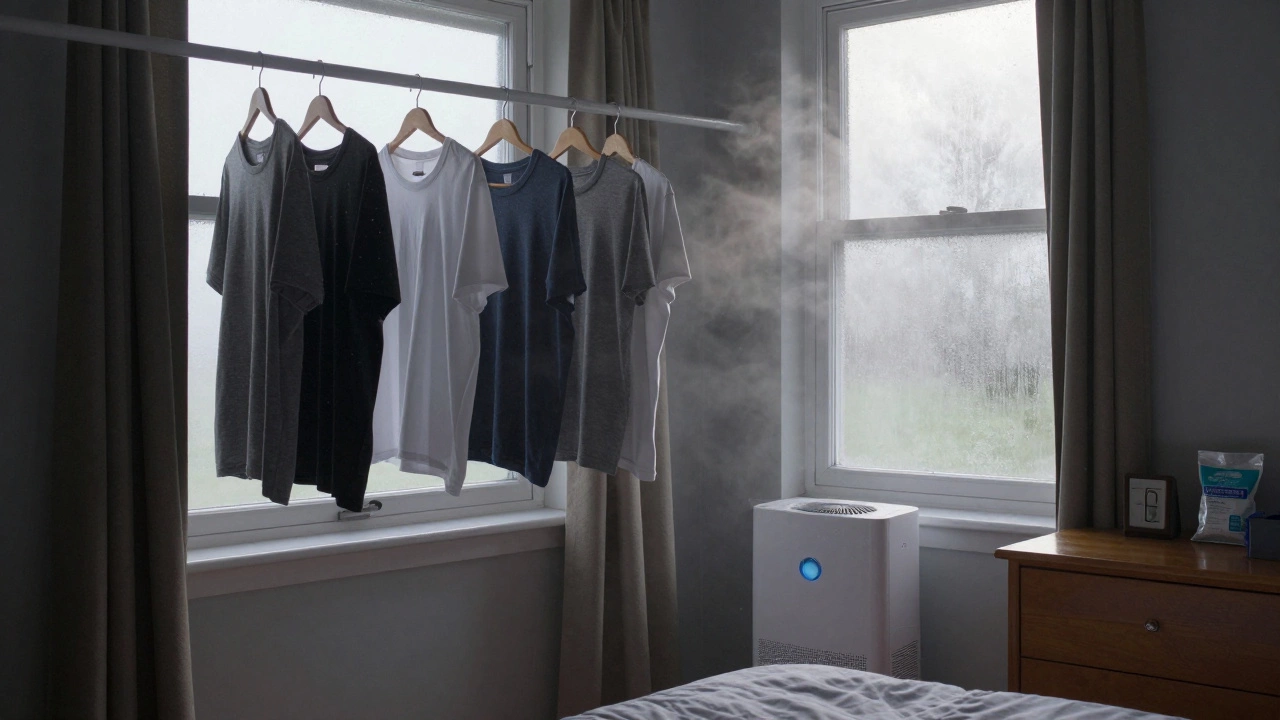
Hang your t-shirts, and you give them air. Even in a poorly ventilated room, hanging lets moisture escape. It’s why Irish laundry rooms in older homes often have retractable clothes lines crisscrossing the ceiling, and why even in Dublin, you’ll still see drying racks in kitchen windows during winter. Hanging isn’t just for shirts with buttons-it’s a practical move in a climate that hates stillness.
The Folded T-Shirt Problem in Irish Homes
Think about your drawer. How many t-shirts do you own? If you’ve got more than five, you’re probably stacking them. But in a typical Irish home, drawers aren’t deep, and they’re rarely climate-controlled. A drawer full of folded t-shirts becomes a pressure cooker for moisture. The bottom ones get squashed, the top ones get damp from condensation when the heating kicks on. And if you’ve ever tried to dig through a drawer full of folded t-shirts after a week of rain, you know the frustration: you pull one out, it’s wrinkled, smells faintly off, and you end up throwing it in the wash anyway.
Brands like Penneys (Primark) and Dunnes Stores sell cheap cotton t-shirts by the dozen. They’re great for layering under a raincoat or wearing to the local GAA match. But they’re not built to last if stored poorly. After a few months of drawer storage in a house without central heating-common in older Irish terraces-you’ll notice the fabric starts to thin at the armpits, the neckline loses its shape, and the colour fades unevenly from moisture exposure.
When Hanging Works Best
Hanging t-shirts works best when you have space and airflow. In a modern Irish apartment with a walk-in wardrobe or even a simple rail near a window, hanging is the smarter choice. Use wide, padded hangers-thin wire ones from the supermarket stretch the shoulders in days. You can find sturdy wooden hangers at Clery’s in Dublin, or even online from Irish brands like Irish Linen Co. or Wicklow Wool, which sell wardrobe accessories designed for damp climates.
Hanging also helps if you’re rotating seasonal t-shirts. In Ireland, summer doesn’t last long. You might wear your favourite festival tee once in June, then store it until August. Hanging keeps it ready to wear without needing to iron it out of a crumpled mess. It also helps you see what you own. No more buying the same t-shirt twice because you forgot you already had it tucked under three others in a drawer.
When Folding Still Makes Sense
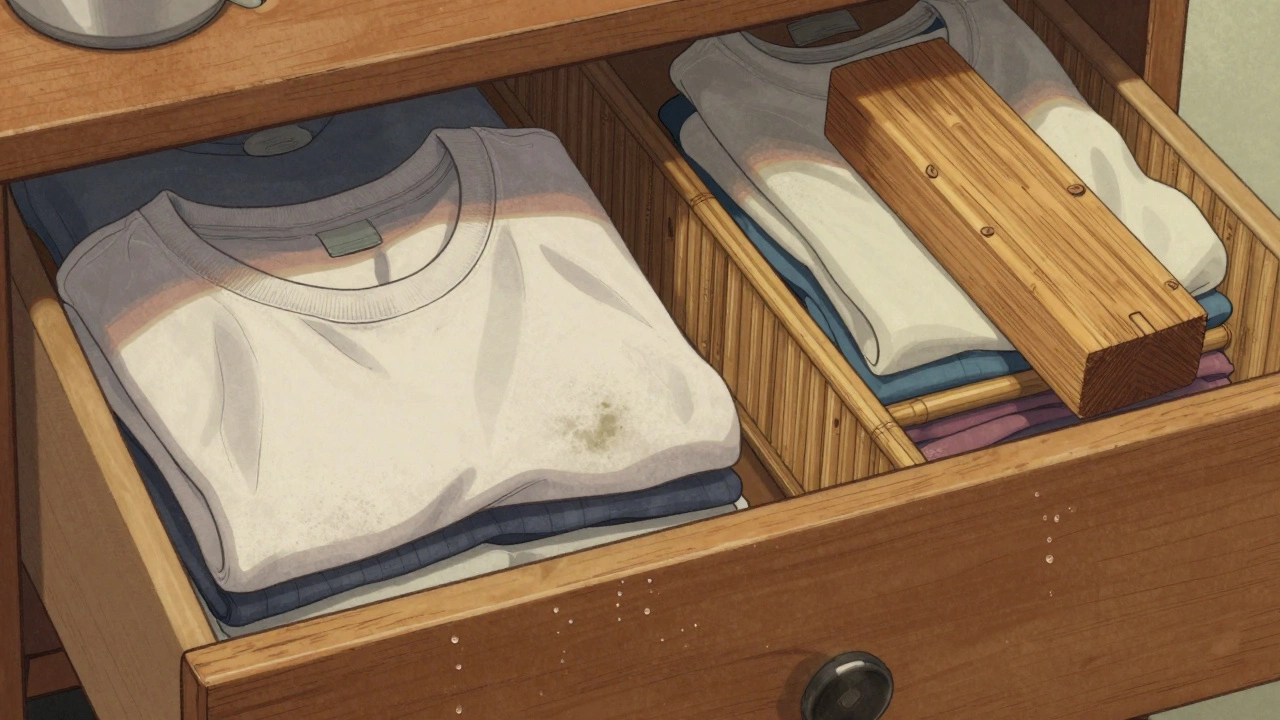
There are times folding is better. If you’re living in a small studio flat in Cork or a bedsit in Limerick with no hanging space, folding is your only option. In those cases, use the KonMari method: fold t-shirts into compact rectangles and stand them upright in a drawer like files. This prevents crushing and makes each shirt visible. Use drawer dividers made of bamboo-available at local stores like HomeSense or John Lewis in Dundrum-to keep them neat.
Also, if your t-shirts are thick, like those from Claddagh Ring or Irish Celtic Gear, which are often made with heavier cotton or fleece blends, they can handle folding better than thin, lightweight ones. These are the kind you wear under a wool jumper in late autumn, and they’re less likely to stretch. Folding them won’t ruin them-it’s just the reality of limited space in Irish housing.
What the Experts Say
Laundry professionals in Ireland don’t give one answer. Instead, they say: "It depends on your fabric and your home." A study by the Irish Textile Institute in 2024 tested 200 t-shirts stored under different conditions across 15 Irish households. The result? T-shirts hung in a well-ventilated room retained their shape 72% longer than folded ones. But in rooms with no airflow-like a basement flat in Belfast or a poorly insulated terraced house in Waterford-the difference vanished. Moisture, not storage method, was the real enemy.
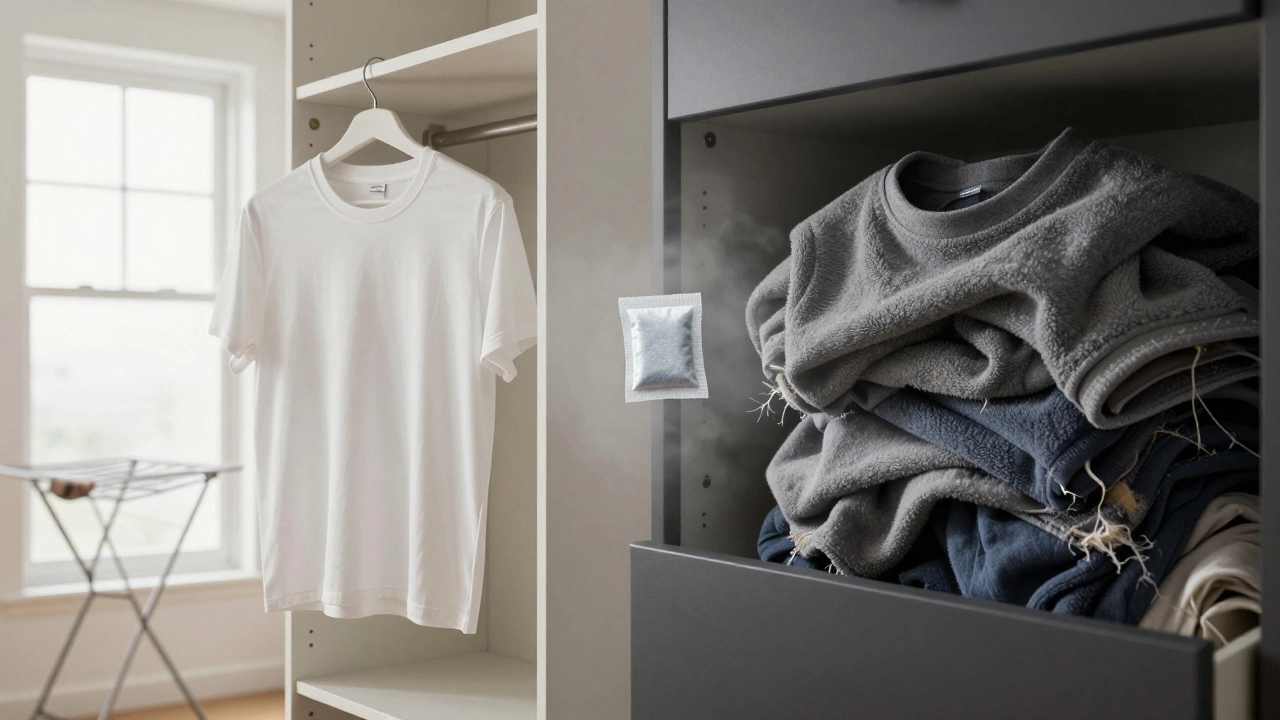
The takeaway? Airflow matters more than whether you hang or fold. If you hang, open the wardrobe door every few days. If you fold, add a silica gel packet to the drawer. You can buy them cheaply at SuperValu or Lidl in packs of 10. They’re not just for electronics-they’re lifesavers for cotton.
Practical Tips for Irish Wardrobes
- Hang lightweight, fitted t-shirts-especially those with logos or prints that can stretch or crack, like ones bought at Glastonbury or Electric Picnic.
- Fold thicker, heavier t-shirts, especially those made for cold weather or worn under jackets.
- Never store t-shirts while damp. Even if they feel dry, hang them for another hour after the spin cycle ends.
- Use cedar blocks instead of mothballs. They repel moths and absorb moisture naturally. Available at Clarecraft or Irish Made online.
- If you use a tumble dryer, take t-shirts out while slightly damp and hang them to finish drying. This reduces shrinkage and keeps the fabric soft.
- Rotate your t-shirts every season. Don’t keep last year’s festival tees in the drawer unless you plan to wear them again.
What About the Irish Way?
There’s no single "Irish way" to store t-shirts. But there’s a practical way-born from necessity. In rural areas, people still hang laundry outside even in November, just to get the damp out. In cities, people use dehumidifiers in bedrooms. Both are responses to the same problem: moisture. Your t-shirts are no different.
So don’t overthink it. If you have space and air, hang them. If you’re cramped and damp, fold them smartly. But whatever you do, don’t let your t-shirts sit in a drawer for months without seeing daylight. In Ireland, that’s not storage-it’s a slow decay.
Final Thought: It’s Not About Perfection
You don’t need a minimalist wardrobe or a designer closet to keep your t-shirts in good shape. You just need to respect the climate. In Ireland, your clothes live with the weather. They don’t fight it. And neither should you.
Should I hang all my t-shirts in Ireland?
No-only hang lightweight, fitted, or printed t-shirts that stretch easily. Thicker, heavier ones like hooded tees or festival tees made from dense cotton can be folded without damage. The key is matching the storage method to the fabric and your space.
Do Irish people hang their laundry indoors?
Yes, most do, especially from October to April. Outdoor drying is rare in cities due to space and rain. Indoor drying racks, dehumidifiers, and airing cupboards are common. Hanging t-shirts on a rail near a radiator or window helps them dry faster and stay fresher.
Why do my t-shirts smell musty even after washing?
Mildew grows in damp, dark places. If your t-shirts are stored folded in a drawer without airflow, moisture gets trapped. Even after washing, if they’re not fully dried before storage, the smell returns. Always hang them to dry completely, and consider adding silica gel packets to your drawers.
Are wooden hangers worth it in Ireland?
Yes, if you’re hanging lightweight or expensive t-shirts. Wooden hangers are wider than plastic ones and don’t trap moisture. They also last longer in damp conditions. Brands like Irish Linen Co. make them with natural finishes that resist mildew.
Can I use a dehumidifier for t-shirt storage?
Absolutely. A small dehumidifier in your bedroom or wardrobe space reduces moisture levels and prevents mildew. Look for models under €100 from Aldi or Lidl-they’re effective for small spaces and cost less than replacing ruined clothes.