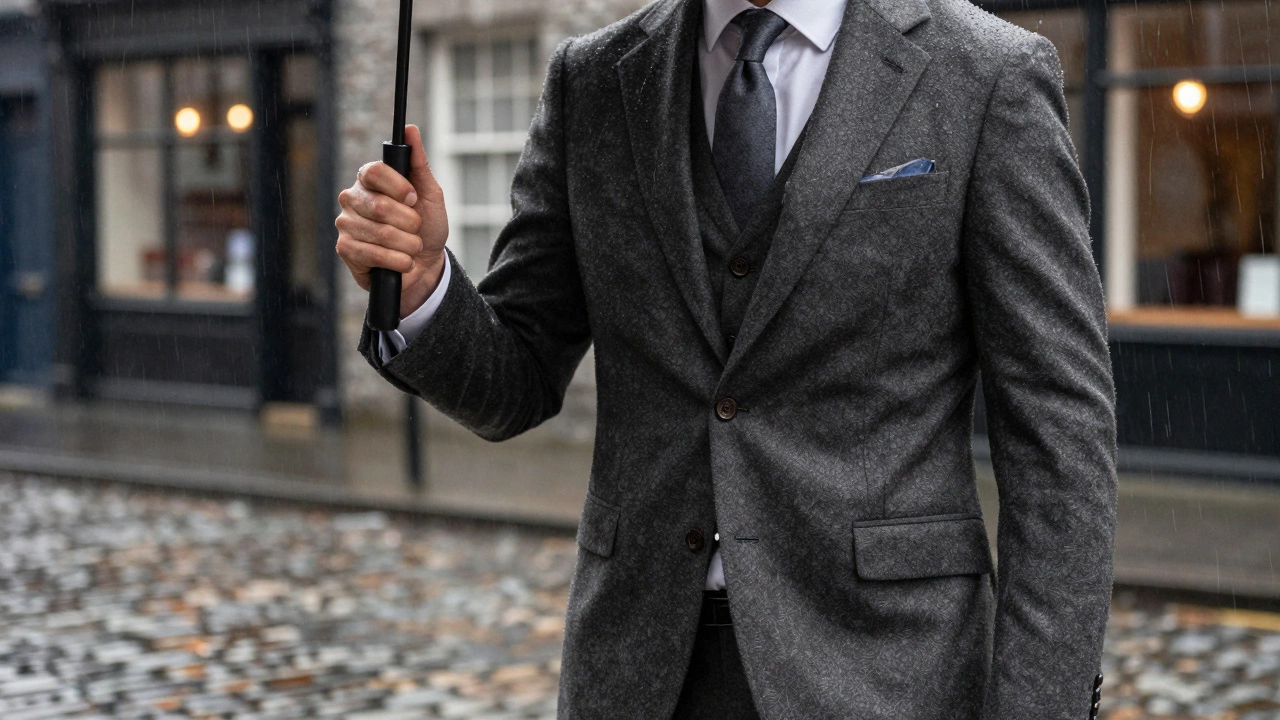
When you’re buying a suit in Ireland, whether you’re dressing for a wedding in Galway, a job interview in Dublin, or a funeral in Cork, the difference between a cheap suit and an expensive one isn’t just about price-it’s about how it holds up through Irish weather, how it looks under pub lights, and whether it lasts beyond one season. In a country where rain is a constant companion and social events are frequent, your suit needs to work harder than in drier climates. So how do you spot the real deal?
Look at the Fabric
The fabric is the first and most important clue. Cheap suits in Ireland often use polyester or polyester-blend materials imported from Asia. These feel stiff, shiny, and sometimes slightly plastic-like. Run your fingers over the material-real wool, especially from Italy or the UK, feels soft, slightly fuzzy, and has a natural depth of color. You’ll see this in suits from Irish tailors like McGee’s Tailors in Dublin or McDonagh’s in Limerick, who source from mills in Biella or Manchester. Look for labels that say ‘100% wool’ or ‘Super 110s’ or higher. The higher the Super number, the finer the wool. Super 130s or 150s are luxury, but Super 100s are the sweet spot for Irish winters-warm, durable, and breathable.
Test it. Pinch a small section of the fabric between your thumb and forefinger. A cheap suit will spring back quickly, looking like it’s been ironed by a machine. A good wool suit will hold the pinch for a second, then slowly return to shape. That’s the sign of natural fibers that move with you, not against you.
Check the Lining
Flip up the jacket. A cheap suit will have a cheap, flimsy polyester lining that’s glued in place. It might even have loose threads or bubbles where the glue failed. That lining won’t last through three rainy commutes on the Luas or a long evening at the Cork Jazz Festival. An expensive suit uses a silk or Bemberg cupro lining-smooth, lightweight, and stitched in. You can feel the difference when you slide your arms in. It glides. Cheap linings stick. In Ireland, where you’re often pulling a suit on over a thick sweater or damp shirt, that glide matters.
Examine the Stitching
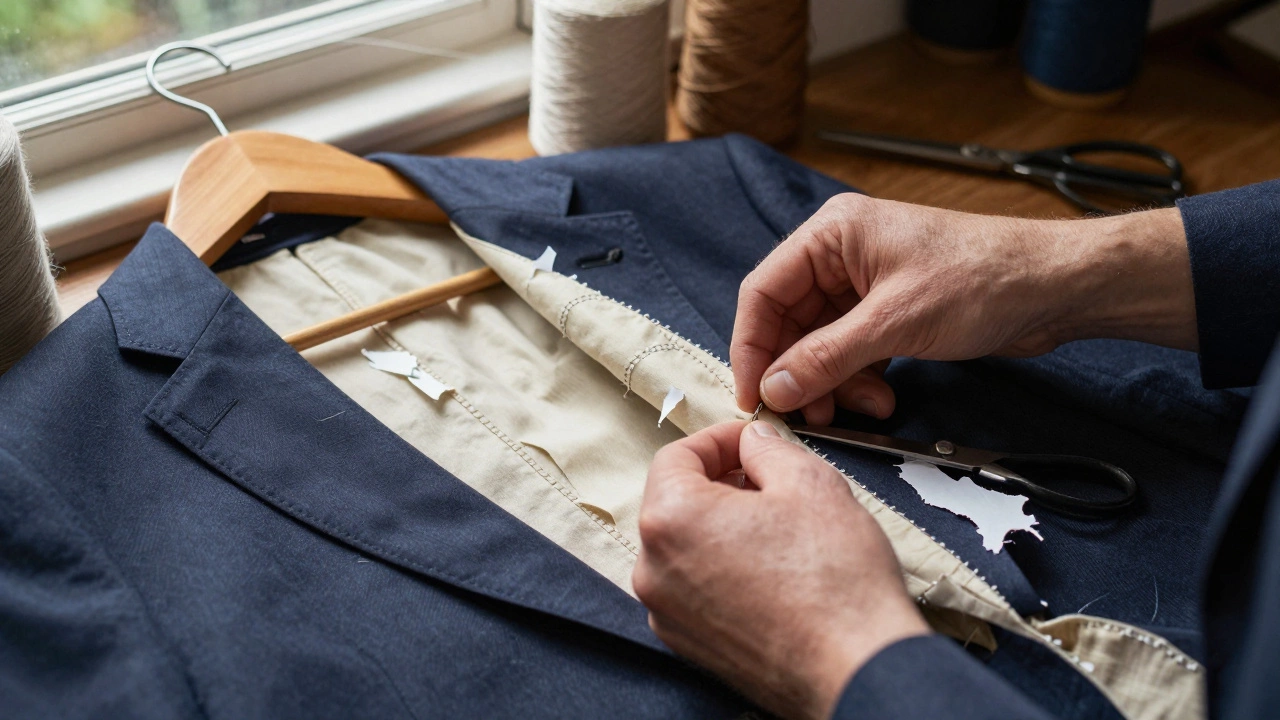
Look at the seams. On a cheap suit, the stitching is often uniform, machine-perfect, but too tight and rigid. It doesn’t flex. On a quality suit, the stitching is looser, especially around the lapels and pockets. That’s because it’s hand-basted in places to allow the fabric to drape naturally. Check the sleeve seams-on a good suit, you’ll see a few tiny, uneven stitches near the cuff. That’s a sign of hand-finishing. You won’t find that on a €199 suit from Primark or a fast-fashion online store shipping from China. Even in Dublin’s Temple Bar, where suits are bought for stag dos and christenings, the difference shows after the first wash.
Feel the Canvas
Reach inside the chest area of the jacket. You should feel a layer of horsehair or wool canvas-this is what gives the suit its structure. A cheap suit will have fused interlining: a thin, glued layer of synthetic material that stiffens the chest. Over time, especially with Irish humidity, that glue breaks down. You’ll see bubbling or peeling around the lapels. A proper canvas is stitched in. It moves with your body. It breathes. It lasts. Brands like Kilcullen & Co. in Kilkenny or Shane’s Bespoke in Belfast use full-canvas construction. They cost more upfront, but they’ll outlast three cheap suits.
Buttonholes and Buttons
Look at the buttonholes. On a cheap suit, they’re cut with a machine and often fray after a few uses. On a quality suit, the buttonholes are hand-sewn with a tiny, intricate stitch called a ‘buttonhole stitch.’ It looks like a delicate rope. You’ll see this on suits from John Rocha or Clare O’Neill in Galway. Buttons matter too. Cheap suits use plastic or low-grade resin buttons that chip or turn yellow. An expensive suit uses horn, mother-of-pearl, or genuine corozo nut buttons. They’re heavier. They feel substantial. They age gracefully.
Fit and Tailoring
Even the best fabric won’t save a badly fitting suit. In Ireland, where body types vary-from the slim frames of Dublin creatives to the broader builds of rural workers-a suit that’s off-the-rack without adjustment is a gamble. A cheap suit is cut for a generic body. A good suit is tailored to you. Ask for a half-canvas or full-canvas suit with adjustable side tabs. That way, you can take it to a local tailor in Limerick or Waterford for minor tweaks. Don’t buy a suit that’s too big hoping to ‘get it altered later’-if the shoulders don’t fit, nothing else will.
Price Isn’t Everything, But It’s a Clue
There’s a reason why a €300 suit from a chain store in Ireland looks good for one event and then looks tired. You’re paying for the fabric, the construction, and the time. A truly well-made suit costs €700-€1,200. That’s not a luxury-it’s an investment. In Ireland, where you might wear a suit for a wedding in May, a funeral in October, and a job interview in January, you need durability. A cheap suit might cost €150, but if it pills after one winter, frays after the first dry clean, and loses shape after two wears, you’ve spent more in the long run.
Compare that to a €900 suit from a reputable Irish tailor or a UK brand like Charles Tyrwhitt (which has outlets in Cork and Galway). It’ll last five years, if not more. You’ll find it still fits after you gain or lose a few kilos. It’ll survive the damp of a Dublin autumn and still look sharp under the lights of the National Concert Hall.
Where to Buy in Ireland
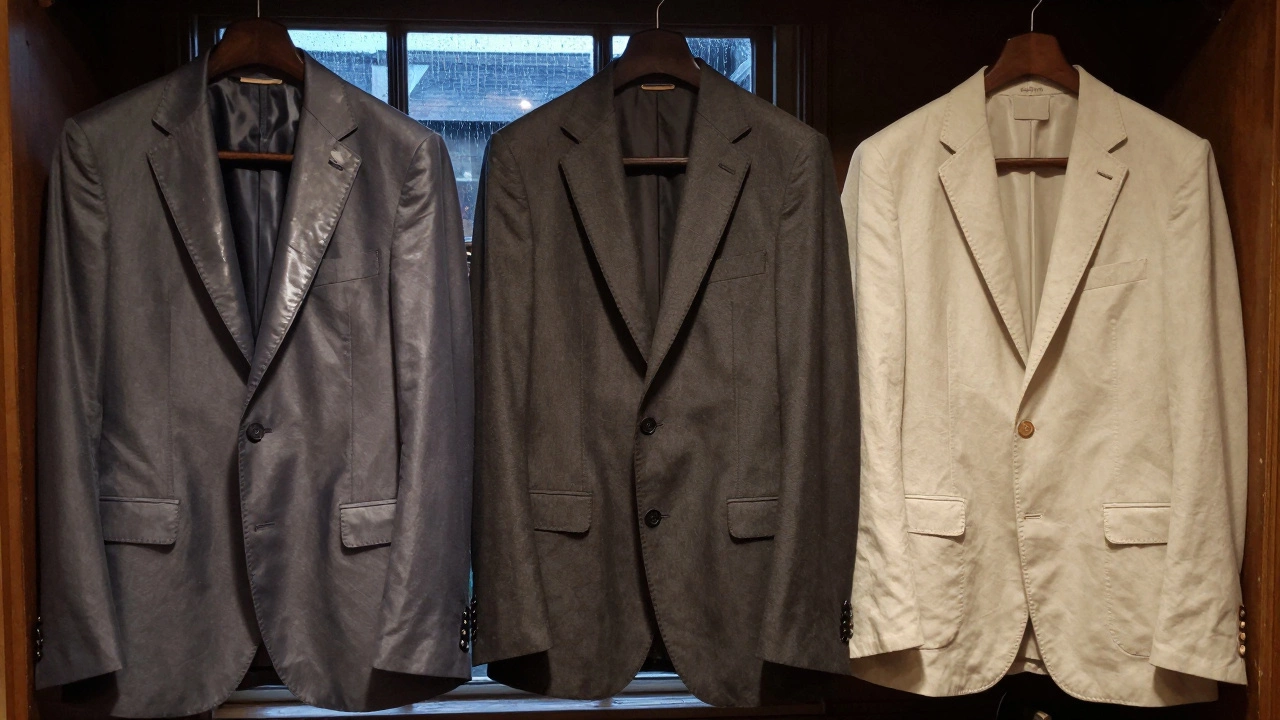
Don’t assume all suits in Ireland are cheap. There are places that know quality. In Dublin, try McGee’s Tailors on Grafton Street or Devenish on South William Street. In Cork, Barry’s on Oliver Plunkett Street has a solid selection of Italian wool suits. In Belfast, McDonagh’s offers bespoke options with full canvassing. Even John Rocha in Galway, known for fashion, has a tailored line that’s worth the splurge.
Online? Stick to Irish-based retailers with return policies. Avoid Amazon or AliExpress. You can’t feel the fabric, and returns cost more than the suit. Stick to Charles Tyrwhitt, ASOS Tailored (which sources from UK mills), or Brooks Brothers (which ships to Ireland and has a solid wool range).
What to Avoid
Steer clear of:
- Suits labeled ‘non-iron’-they’re treated with chemicals that break down in humidity
- Single-button jackets with no vents-these look flat and don’t move with you
- Dark navy with black buttons-this is a cheap trick to mimic black tie
- Any suit with shiny lapels or ‘peaked’ lapels on a casual cut-this screams mass-produced
In Ireland, your suit doesn’t need to be flashy. It needs to be reliable. It needs to survive the rain, the cold, and the pub crawl. The best suit you’ll ever buy won’t shout. It’ll whisper quality-through the weight of the wool, the hand-stitched buttonhole, the way it drapes over your shoulders when you walk into a room.
Final Tip: The Suit Test
Before you buy, do this: Put the suit on. Walk around the store. Sit down. Stand up. Raise your arms. Now, imagine doing that in a downpour on the way to a wedding in Sligo. If the fabric wrinkles like a paper bag, if the lining sticks to your shirt, if the buttons feel like they’ll pop off-walk away. A good suit doesn’t just look good. It feels good. And in Ireland, where the weather doesn’t wait for you to get dressed, that feeling matters more than the price tag.
Can I find a good suit under €500 in Ireland?
Yes, but you’ll need to be smart. Look for end-of-season sales at Charles Tyrwhitt or Devenish. Avoid polyester blends and fused construction. Stick to 100% wool, full-canvas if possible, and check the lining. A €450 suit from a reputable brand with good wool can outlast two €200 suits. It’s about value, not just price.
Should I buy a suit online or in-store in Ireland?
For your first suit, go in-store. You need to feel the fabric, check the fit, and see how it moves. Once you know your size and preferred style, online retailers like Charles Tyrwhitt or ASOS Tailored offer good returns and Irish shipping. But never buy a suit online without checking the return policy-especially in Ireland, where weather can affect how the suit drapes.
Is Irish wool better than Italian wool for suits?
Irish wool is warmer and more durable, ideal for wet, cool climates. Italian wool is finer and lighter, better for dry, formal settings. For Ireland, a blend of both works well-Italian wool with Irish tailoring. Brands like McGee’s and McDonagh’s often source Italian wool but cut and construct the suit locally, giving you the best of both.
How often should I dry clean my suit in Ireland?
Only when it’s visibly dirty or smells. Irish damp doesn’t mean you need to clean it after every wear. Use a suit brush after each use to remove dust and lint. Hang it on a wooden hanger for 24 hours to air out. Dry cleaning too often damages the fabric. Once a year is enough for most people, unless you’ve been caught in a storm.
What color suit works best in Ireland?
Dark navy or charcoal. These colors hide dampness, don’t show lint from wool coats, and work in both formal and casual settings. Avoid black-it’s too harsh for daytime and looks out of place in rural Ireland. Light grey can work in summer, but it shows every speck of dust. Stick to navy-it’s the Irish man’s secret weapon.