
Suit Value Calculator: Price vs. Value in Ireland
Calculate Your Suit's True Cost
Discover how much a suit really costs per wear. In Ireland, where suits are worn for weddings, funerals, and business events year-round, understanding long-term value is crucial.
Your Suit's Value Analysis
Cost Per Wear: €0.00
Total Cost Over 5 Years: €0.00
Value Comparison: This suit is worth €0.00 per wear compared to an expensive alternative
When you’re dressing for a wedding in Galway, a job interview in Dublin, or a funeral in Cork, your suit doesn’t just make a statement-it carries weight. In Ireland, where tradition meets practicality, a well-made suit says you respect the occasion, the people, and yourself. But with so many options on the high street and online, how do you spot the difference between a cheap suit and one that’s built to last? It’s not about the price tag. It’s about the details you can’t see at first glance.
The Fabric Tells the Story
Look at the fabric. An expensive suit in Ireland is almost always made from wool-preferably from a blend like Super 120s or higher. You’ll find this in tailors like John Rocha a Dublin-based designer known for classic Irish tailoring with modern cuts or McGee’s Tailors a family-run shop in Limerick that’s been fitting suits since 1972. The fabric feels dense, smooth, and slightly cool to the touch. It drapes naturally, even after sitting for hours in a pub or on a train to Belfast.A cheap suit? It’s often polyester, or a cheap wool-poly blend. It looks shiny under fluorescent lights-like the kind in Dunnes Stores or Primark. It wrinkles the second you sit down. You’ll notice it after a 20-minute walk from the LUAS to your meeting. In Ireland’s unpredictable weather, that kind of suit doesn’t hold up. Rain, wind, and damp air eat into synthetic fibres. Real wool breathes. It resists odours. It survives a wet Tuesday in Clontarf and still looks sharp by Thursday.
Stitching and Lining: The Hidden Clues
Flip up the lapel. Look at the inside. An expensive suit has a full canvas-layers of horsehair and cotton stitched between the outer fabric and the lining. This gives the suit structure. It moulds to your body over time. You’ll find this in bespoke tailors across Ireland, from Patrick O’Connell a Cork tailor who hand-pads every shoulder for a natural roll to Finch & Co. a small studio in Galway that uses traditional Italian techniques.A cheap suit? It’s fused. The canvas is glued on with heat and pressure. It looks flat. It starts to bubble after a few dry cleans. You’ll see it in suits bought from Penneys or online retailers that ship from China. In Ireland, where suits are worn year-round-from St. Patrick’s Day parades to Christmas parties-fused suits fall apart faster than you’d expect. They lose shape after one winter.
Buttons, Pockets, and the Little Things
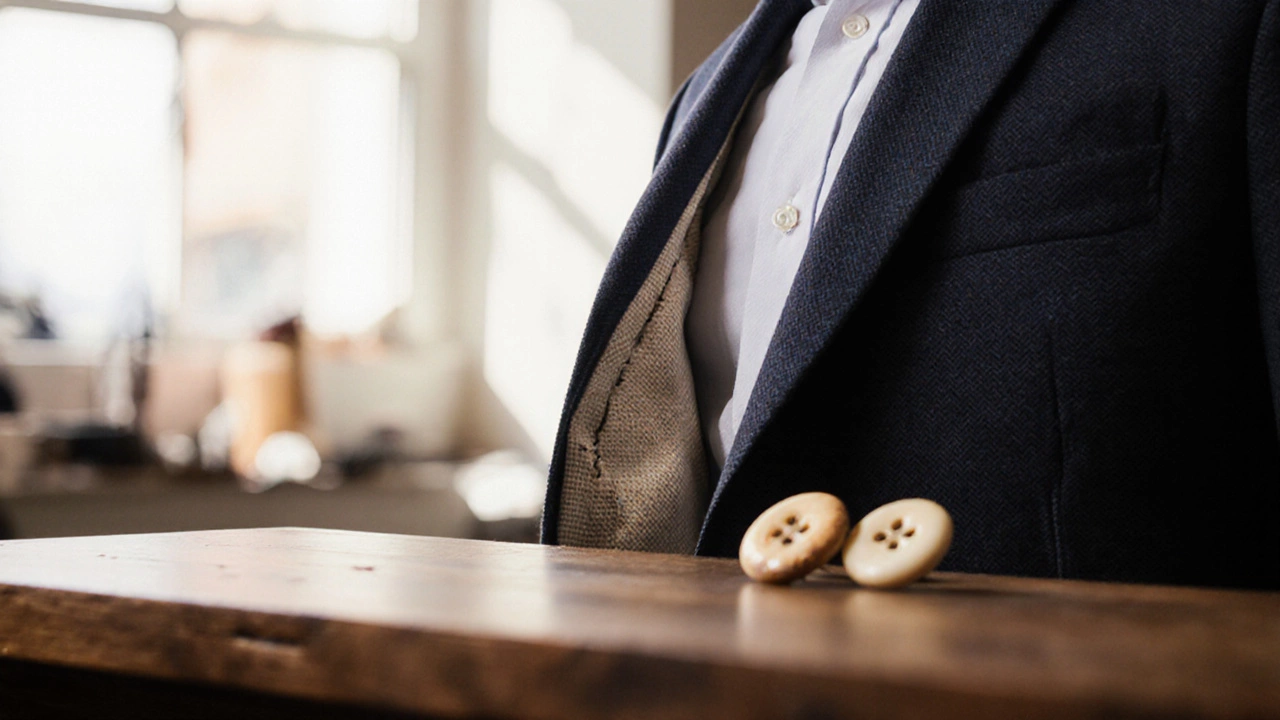
Check the buttons. On a quality suit, they’re made of horn, corozo nut, or mother-of-pearl. They’re sewn on with thread that matches the suit, not glued or stamped on. You’ll feel the difference when you button it up. An expensive suit’s buttons sit flush. They don’t pull. They don’t rattle when you walk.Cheap suits use plastic buttons-often the same kind you’d find on a children’s coat. They’re too thin. They crack after a few months. I’ve seen men in Louth wearing suits bought for €150 that lost a button during a wedding in Drogheda. The tailor who fixed it said, “That’s not even real horn. It’s just moulded plastic with a shine.”
Look at the pockets. On a good suit, the flap is stitched down on the sides, not the bottom. That means it won’t sag when you put your phone or wallet in. On a cheap suit, the flap flops open like a loose tongue. And the lining? An expensive suit has a silk or Bemberg lining. It glides over shirts and sweaters. A cheap suit uses polyester lining that sticks to your shirt and pulls when you move. In a cold Irish winter, that’s not just annoying-it’s uncomfortable.
Fit: The Irish Way
In Ireland, fit matters more than brand. You don’t need a Savile Row label to look sharp-you need a suit that fits your frame. A good tailor will measure your chest, shoulders, sleeve length, and rise. They’ll adjust the lapel width to match your face. They’ll make sure the jacket doesn’t pull when you raise your arms.Cheap suits come in standard sizes: Small, Medium, Large. They’re cut for a generic body. In Ireland, where body types vary-from the broad shoulders of rugby players in Munster to the slim builds of city professionals in Dublin-you’re lucky if the shoulders even line up. A cheap suit will bunch at the back. It’ll gap at the buttons. It’ll make you look like you borrowed it from your brother.
Don’t be fooled by “slim fit” labels. Many cheap brands just cut the waist narrower and call it “modern.” A real slim fit is tailored to your torso. It doesn’t squeeze. It doesn’t pinch. It lets you breathe.
Price vs. Value: What You Pay in Ireland
You can buy a suit in Ireland for €99. You can pay €800 for one. The difference isn’t just in the fabric. It’s in the life you get out of it.A cheap suit might last one season. It’ll fade after two washes. It’ll shrink in the dryer. You’ll replace it next year. That’s €99 every 12 months. That’s €495 over five years.
An expensive suit? It lasts 10, 15 years. It can be re-lined. It can be taken in. It can be dry-cleaned three times a year and still look new. You’ll wear it to your daughter’s wedding. Your son’s graduation. Your retirement party. That €800 suit? It’s €53 a year. That’s less than your monthly coffee habit.
And in Ireland, where events are frequent-weddings, wakes, christenings, corporate dinners-you’ll need to look your best often. A suit that holds up is an investment. Not a luxury.
Where to Buy in Ireland
If you want quality without bespoke prices, visit Harvey Nichols in Dublin’s Grafton Street, which stocks Italian brands like Zegna and Canali. Or check out Johnston’s of Elgin a Scottish brand with a Dublin outlet that uses premium wool, perfect for Ireland’s climate.For mid-range options, Charles Tyrwhitt offers British-made suits with real canvas and natural fibres, shipped to Irish addresses. Their suits are priced around €300-€500. They’re not bespoke, but they’re miles ahead of anything from the high street.
And if you’re serious? Go to a local tailor. Places like McGee’s in Limerick or Patrick O’Connell in Cork will make you a suit from scratch. You pick the fabric. You choose the buttons. You get a fit that’s yours alone. It takes three weeks. It costs €800-€1,200. But you’ll own it for life.
What to Do If You Already Bought a Cheap Suit
Don’t throw it out. Take it to a local tailor. A good one can replace the lining. Re-stitch the lapel. Add a canvas. Even fix the buttons. You might spend €100-€150, but you’ll turn a disposable suit into something wearable for years.And if you’re shopping online? Look for terms like “full canvas,” “100% wool,” “hand-stitched,” and “natural fibres.” Avoid anything that says “easy care,” “wrinkle-free,” or “machine washable.” In Ireland, those are red flags.
| Feature | Cheap Suit | Expensive Suit |
|---|---|---|
| Fabric | Polyester or low-grade wool blend | Super 120s+ wool, 100% natural fibres |
| Lining | Polyester, sticks to shirts | Silk or Bemberg, glides smoothly |
| Canvas | Fused (glued) | Full horsehair canvas |
| Buttons | Plastic, glued on | Horn or mother-of-pearl, hand-sewn |
| Stitching | Machine-stitched, loose threads | Hand-finished, even tension |
| Fit | Standard sizes, poor shoulder alignment | Tailored to body, natural drape |
| Price Range (EUR) | €50-€150 | €500-€1,500 |
Final Thought: Wear It With Pride
In Ireland, a suit isn’t just clothing. It’s a sign of respect-for the occasion, for the people you’re with, for the quiet dignity of showing up well-dressed in a country where rain is constant and style is understated. You don’t need to be rich to wear well. You just need to know what matters.Choose quality. Choose wool. Choose fit. Choose something that lasts. Because in the end, it’s not about looking expensive. It’s about looking like you belong-no matter where you are in Ireland.
Can I tell a good suit just by looking at it in a store?
Yes, but you need to look closely. Check the fabric texture-real wool feels slightly rough and warm, not shiny or plastic. Flip up the lapel to see if the inside has layers (canvas) or just a glued layer. Feel the buttons-are they solid, or do they feel hollow? And try moving your arms. A good suit moves with you. A cheap one pulls or wrinkles instantly.
Is it worth getting a suit tailored in Ireland?
Absolutely. Even a €300 suit becomes worth twice as much if it’s fitted properly. Tailors in Dublin, Cork, and Galway can adjust shoulders, taper the waist, and shorten sleeves for under €100. In Ireland, where body shapes vary and weather demands durability, a tailored fit makes all the difference between looking good and looking professional.
What’s the best wool for Ireland’s climate?
Super 120s to Super 150s wool is ideal. It’s light enough for spring and autumn, warm enough for winter, and breathable enough for damp days. Avoid heavy tweeds unless you’re in the countryside. For city wear, go for a fine, tightly woven wool. Brands like Zegna, Loro Piana, and Johnston’s of Elgin source wool that handles Irish rain without losing shape.
Are there Irish-made suits I should look for?
Yes. While most suits are made overseas, brands like Patrick O’Connell in Cork and McGee’s in Limerick offer full bespoke services using imported fabrics but Irish craftsmanship. You’re paying for local skill, not just a label. Some tailors even use Irish wool blends from Donegal for a truly local touch.
How often should I dry clean my suit in Ireland?
Only when it’s visibly dirty or smells. In Ireland’s damp climate, suits collect moisture, not sweat. Brush your suit after each wear with a clothes brush to remove dust and lint. Air it out overnight. Dry cleaning too often damages the fabric. Three times a year is plenty for regular wear.