Leather Shoe Lifespan Calculator
How Long Will Your Shoes Last?
Based on Irish weather conditions and your care habits.
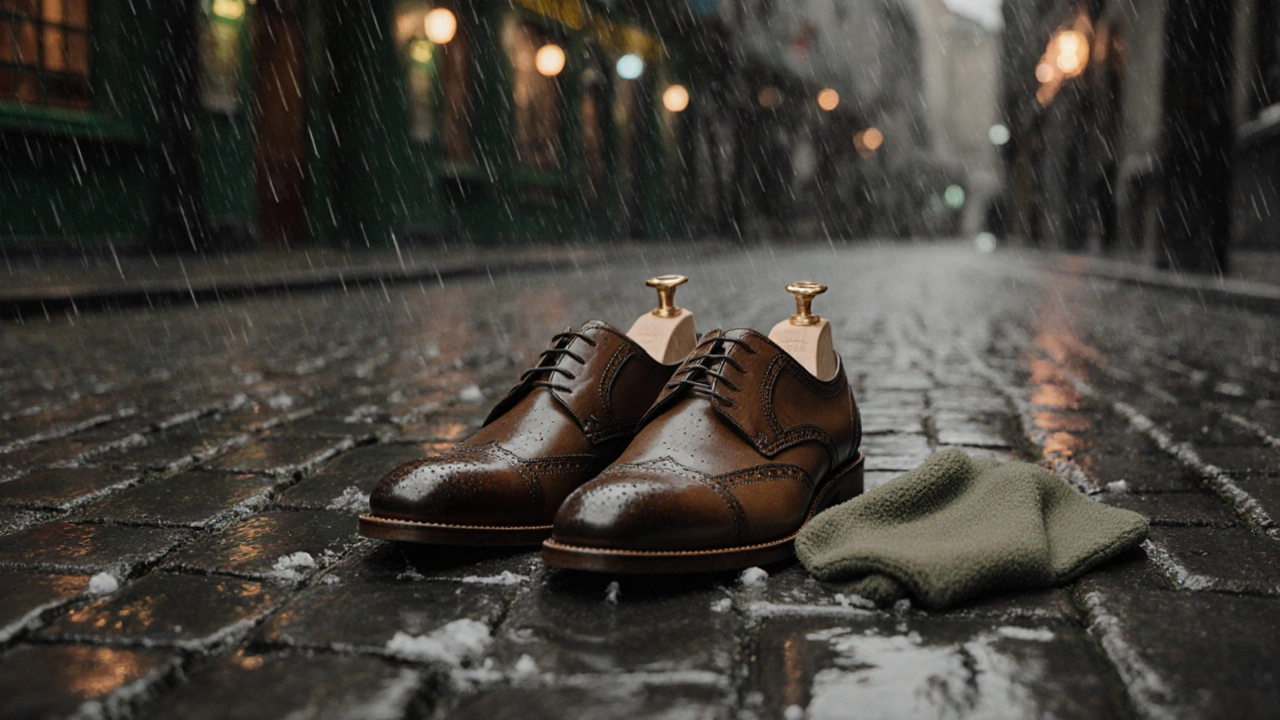
How long should a pair of leather shoes last in Ireland? If you’ve ever stepped out of a Dublin pub on a wet Thursday night, only to hear your sole squeak and peel away like wet wallpaper, you know this isn’t just a question-it’s a survival check. In Ireland, where rain falls more reliably than the tide, your shoes aren’t just fashion. They’re your first line of defense against puddles that stretch from Grafton Street to Galway’s Eyre Square, and sidewalks that turn into rivers after a 10-minute drizzle.
Realistic Lifespan: 2 to 5 Years, Maybe More
A good pair of full-grain leather shoes, properly cared for, should last at least three years in Ireland. That’s not a guess-it’s what you’ll hear from cobblers on Capel Street, repair shops in Limerick, and even the staff at Shoe Care Ireland in Cork. If you’re walking 5-7 kilometers a day on wet cobbles, commuting by bus through Belfast’s drizzle, or hiking the Cliffs of Moher on weekends, three years is the baseline. But with smart care, five years isn’t rare.
Shoes that last less than two years? Usually, they’re cheaply made. Think imported synthetic soles glued on with glue that dissolves in damp air. You’ll see them in discount stores like Dunnes Stores or Primark-bargain-priced, but they fall apart faster than a wet paper bag. Real leather shoes, the kind worn by Dublin lawyers, Galway artists, and Cork farmers, are built with Goodyear welting or Blake stitching. These methods don’t just look classy-they let the sole be replaced when it wears out.
Why Irish Weather Breaks Shoes Faster
It’s not just rain. It’s the mix. Ireland’s climate is a triple threat: constant moisture, cool temperatures that stiffen leather, and salt from coastal roads in places like Wexford and Donegal. Salt eats away at stitching and soles. Cold makes leather brittle. And when you walk from a warm pub into a freezing bus shelter, the leather expands and contracts-tiny cracks form over time. These aren’t just wear-and-tear issues. They’re climate-specific degradation.
Try this: leave your shoes on the porch after a rainy walk. By morning, they’re stiff as cardboard. That’s not normal. That’s Ireland. Leather needs moisture to stay flexible, but too much without drying breaks it. That’s why shoe trees aren’t a luxury here-they’re essential. Cedar shoe trees pull moisture out, hold shape, and even repel moths that love damp leather.
How to Make Them Last: The Irish Way
You don’t need fancy products. You need consistency. Here’s what works in practice across the country:
- Wipe them down after every wet walk. Use a dry microfiber cloth. Don’t wait until they’re muddy. Salt residue is the silent killer.
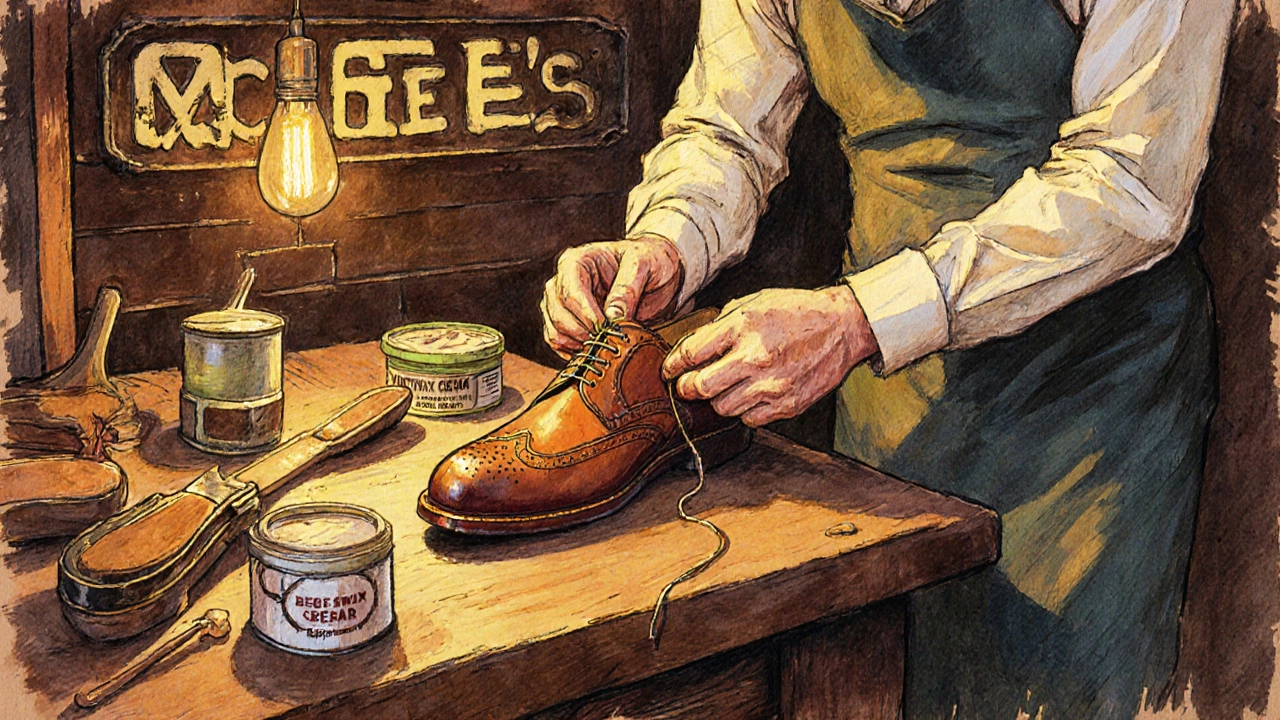
- Condition every 4-6 weeks. Use a beeswax-based cream like Cherry Valley or Obenauf’s-both sold at Irish Leather Works in Kilkenny and online. Avoid silicone sprays. They trap moisture.
- Let them rest. Rotate your shoes. Don’t wear the same pair two days in a row. Leather needs 24 hours to dry out fully. If you wear them Monday to Friday, you’re asking for trouble.
- Resole before the upper wears. Get them resoled when the tread is gone but the leather upper still looks good. A good cobbler in Dublin (like McGee’s Shoe Repair on South Richmond Street) can replace the sole for €45-€70. That’s cheaper than buying new-and keeps your shoes alive for another 2-3 years.
Some Irish walkers swear by a simple trick: after cleaning, rub a bit of Dublin Bay mutton tallow (yes, the real stuff) on the seams. It’s old-school, smells a bit like a 1980s pub, and seals stitching better than most commercial products. You can buy it at Wicklow Leather Co. or order it online from small Irish makers.
What to Look for When Buying
Don’t buy just any leather shoe. Look for these features:
- Full-grain leather-not corrected or bonded. It’s the top layer, with natural fibers that breathe and heal minor scratches.
- Goodyear welted construction-you’ll see a visible stitch around the sole. It means the sole can be replaced without destroying the shoe.
- Rubber outsole-not leather. Leather soles are elegant but useless in Irish rain. Look for Vibram or Dainite soles. They grip wet stone and last longer.
- Brands made or sold locally-Irish Leather Co. (Cork), Shoes of Ireland (Galway), and Claddagh Footwear (Dublin) all use local tanneries and design for damp conditions.
Brands like Church’s or Tricker’s are great, but they’re designed for English winters. Irish-made shoes are built for the wetter, milder, saltier climate. You’ll notice the difference after six months.
When to Say Goodbye
It’s not just about the sole. Watch for these signs:
- The leather around the toe box is cracking, not just scuffed.
- The heel is leaning sideways-you can’t walk straight without your ankle rolling.
- The insole has compressed into a permanent dent shaped like your foot. That means the cushioning is gone.
- You’ve had it resoled twice and the upper is still worn. At that point, the leather’s structure is compromised.
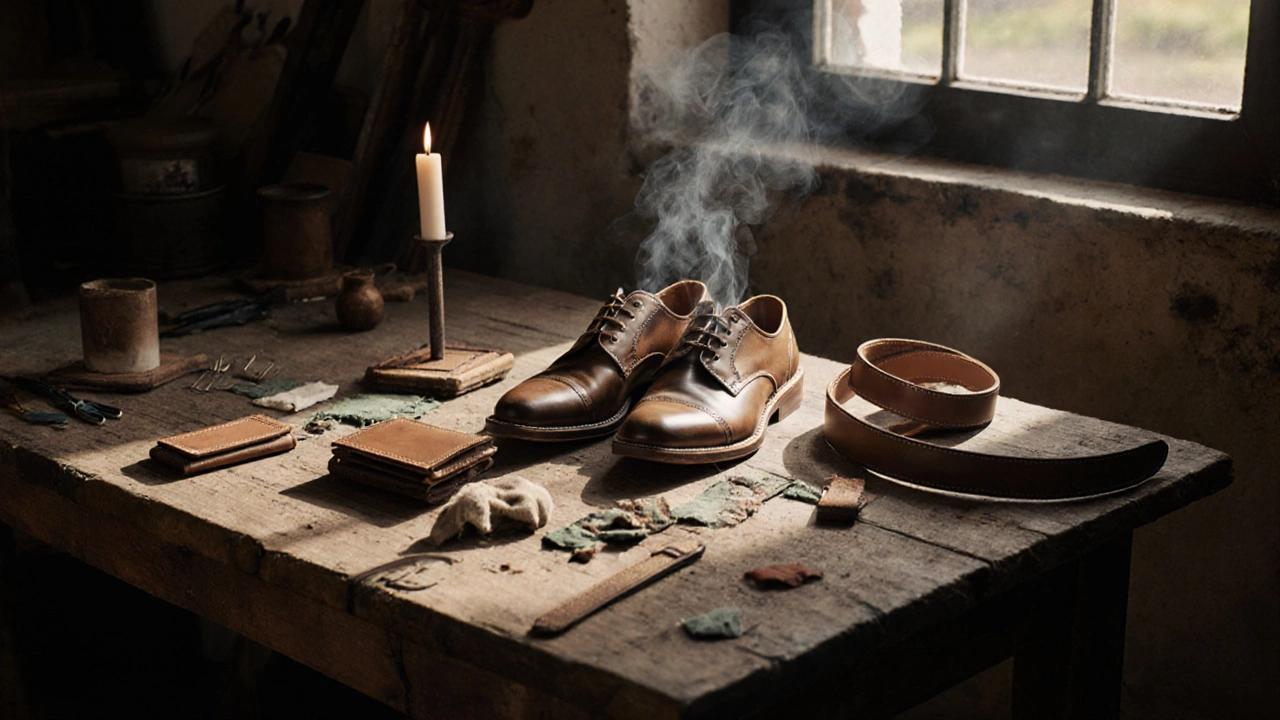
If you’re still attached to them, turn them into something else. Irish artisans in Galway and Kilkenny turn old dress shoes into wallets, belts, or even coasters. Re:Make Ireland in Dublin runs workshops on upcycling footwear. It’s not just eco-friendly-it’s cultural. In Ireland, we don’t throw things away. We repurpose them.
What Happens When You Ignore Care
I’ve seen it too many times. A man buys a pair of €200 leather shoes in October. Wears them daily through winter. Doesn’t clean them. By March, the leather is stiff, the stitching is unraveling, and the sole is peeling like a sunburn. He throws them out and buys another pair. Same cycle next year.
That’s not just wasteful. It’s expensive. Over five years, buying new shoes every 18 months costs €1,000+. Care for one pair properly, and you spend €300 total-€200 for the shoes, €100 for repairs and products. That’s not a luxury. That’s smart.
Final Thought: Shoes Are Part of Your Story
In Ireland, your shoes carry more than your weight. They carry you through rainy Tuesdays in Belfast, wedding days in Kilkenny, and long walks along the Wild Atlantic Way. A good pair of leather shoes doesn’t just protect your feet-it holds memories. That’s why we take care of them. Not because it’s trendy. Because here, in this damp, beautiful place, we don’t rush things. We hold on. And we fix what matters.