Irish Boot Fit Calculator
Answer the questions below to find out if you should stick with your usual size or adjust by a half-size. This tool accounts for Irish weather conditions, common brand variations, and foot physiology.
Your Recommended Fit Strategy
Recommended UK Size
Quick Tips for Your Purchase
You’re standing in a fitting room in Grafton Street, trying on a pair of leather ankle boots that look perfect. But there’s that nagging question: should you go for the size 6 or the 6.5? In Ireland, where our weather demands versatile footwear and our cobblestone streets punish poor fits, this isn’t just about preference-it’s about survival from Dublin rain to Galway wind. The short answer is yes, 0.5 shoe size makes a massive difference, especially when dealing with structured footwear like women’s boots.
Most people underestimate how much a few millimeters matter until they’re three hours into a walk through Temple Bar or hiking up Howth Head. A half-size can be the line between a day of blister-free joy and an evening spent nursing sore heels. Let’s break down why this tiny gap matters so much for your feet, your wallet, and your sanity.
The Anatomy of Fit: Why Millimeters Matter
Shoe sizing isn’t arbitrary; it’s based on the Brannock Device, a standard measuring tool used by most reputable retailers. One full US size equals roughly 8.46mm (1/3 inch) in length. Therefore, a half-size difference is about 4.23mm. That might sound negligible, but inside a boot, that space dictates how your foot moves.
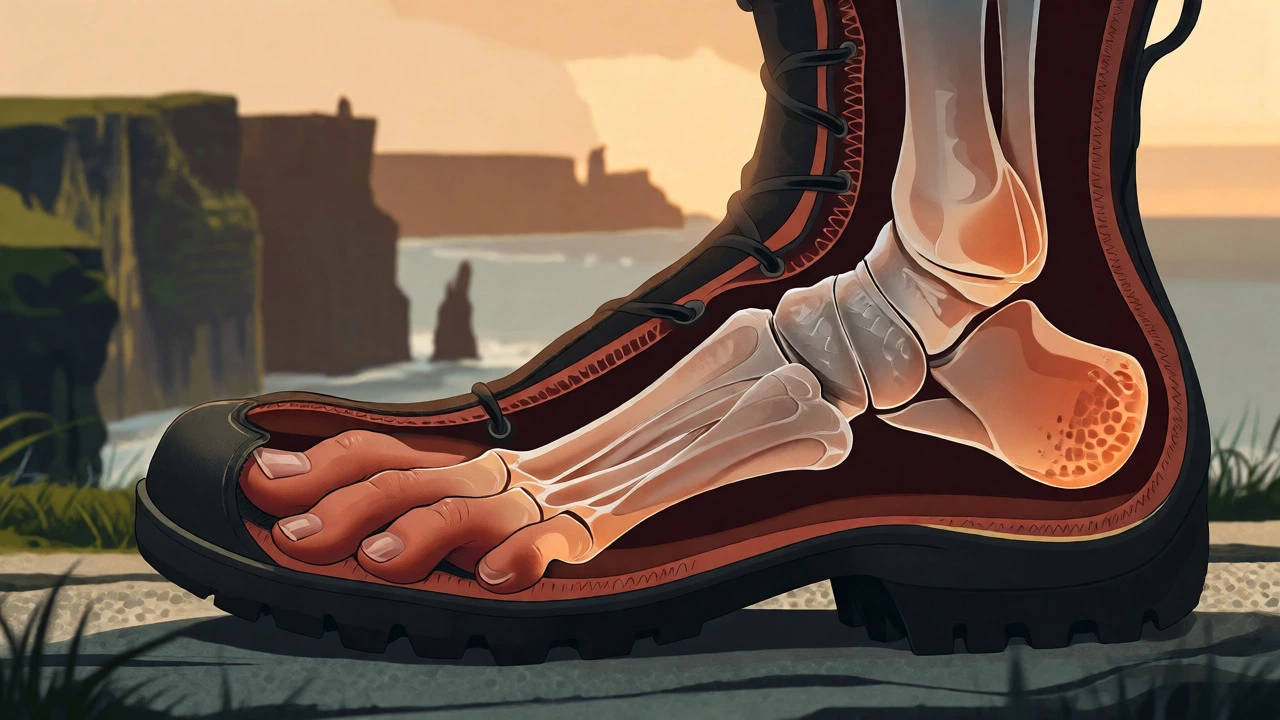
If a boot is too small by half a size, your toes hit the front wall every time you walk downhill-common on the sloped streets of Cork or Limerick. This causes bruising and black toenails. If it’s too big by half a size, your heel slips out with every step. This friction leads to blisters, which are notoriously painful in damp Irish conditions because moisture softens skin, making it more prone to tearing.
| Fitting Issue | Cause | Physical Consequence | Suitable For |
|---|---|---|---|
| Too Tight (-0.5) | Toes compressed against toe box | Numbness, bunions aggravation, restricted circulation | Very narrow feet, no socks |
| Perfect Fit | Thumb width at heel, toes not touching front | Optimal support, natural gait | All-day wear, active use |
| Too Loose (+0.5) | Excess space causing heel slip | Blisters, Achilles tendon strain, unstable walking | Thick wool socks, wide feet |
Irish Weather and Sock Thickness
In Ireland, we don’t just buy shoes for aesthetics; we buy them for utility. Our climate is mild but wet, with average rainfall exceeding 750mm annually in many parts of the country. This means you’re often wearing thicker socks than someone in a warmer climate. A size 6 that feels perfect with thin cotton socks in summer might feel painfully tight when paired with merino wool hikers in November.
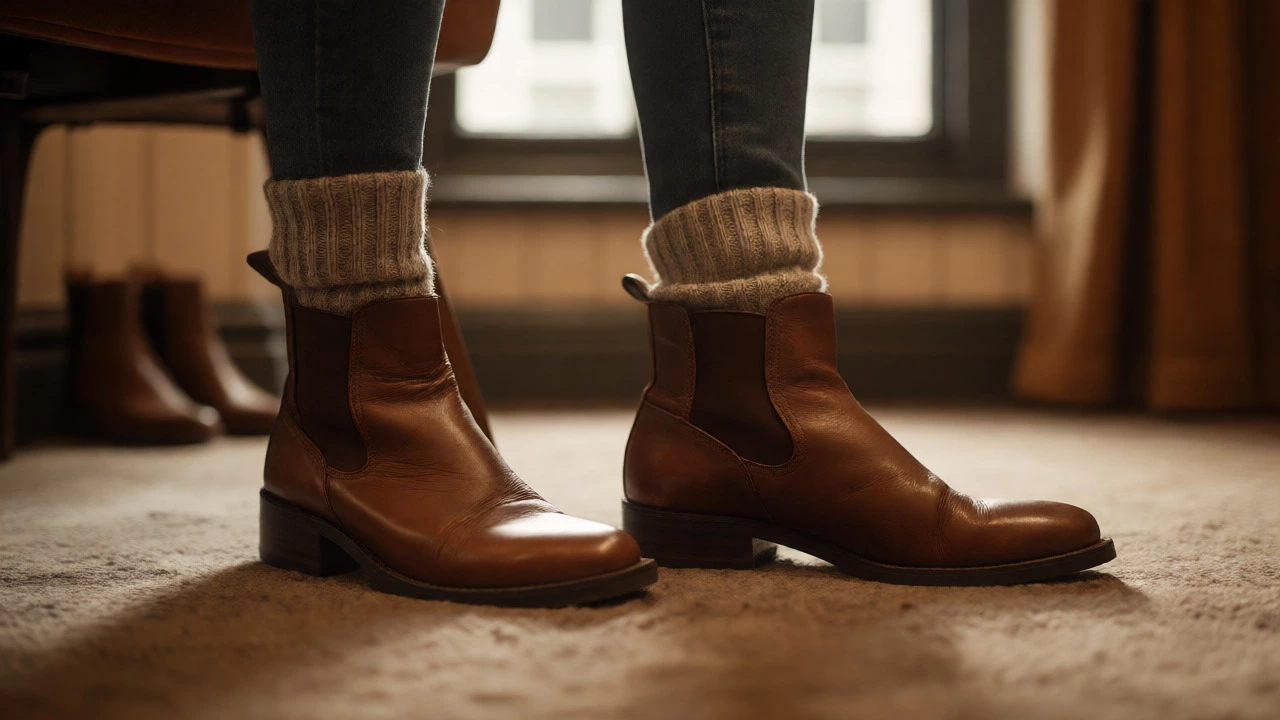
When shopping for women’s boots here, always try them on with the thickest socks you plan to wear. Brands like Clarks or ECCO, widely available in Irish high streets, often have specific lasts (foot molds) that run narrower. If you usually wear a 6, but you’re buying winter boots for damp days in Connemara, going up to a 6.5 allows room for insulation without cutting off circulation. Conversely, if you’re buying stylish Chelsea boots for city wear, sticking to your true size prevents the heel slip that ruins the sleek silhouette.
Brand Variations Across the Irish Market
Not all sizes are created equal. A size 6 in a Spanish brand like Camper will feel different from a size 6 in a British brand like Dune London, even though both are sold in Dublin. European sizing tends to be slightly longer and narrower than UK sizing. Since Ireland uses UK sizing conventions, but many brands import from Europe, this discrepancy confuses many shoppers.
For instance, Italian-made boots often run smaller. If you’re eyeing a pair of designer boots from a boutique in Ranelagh, check the conversion chart. Often, adding a half-size compensates for the tighter European last. Always prioritize the fit over the number on the tag. If the label says 39 but it feels like a 38, trust your feet, not the sticker.
The Break-In Myth: Do Boots Stretch Enough?
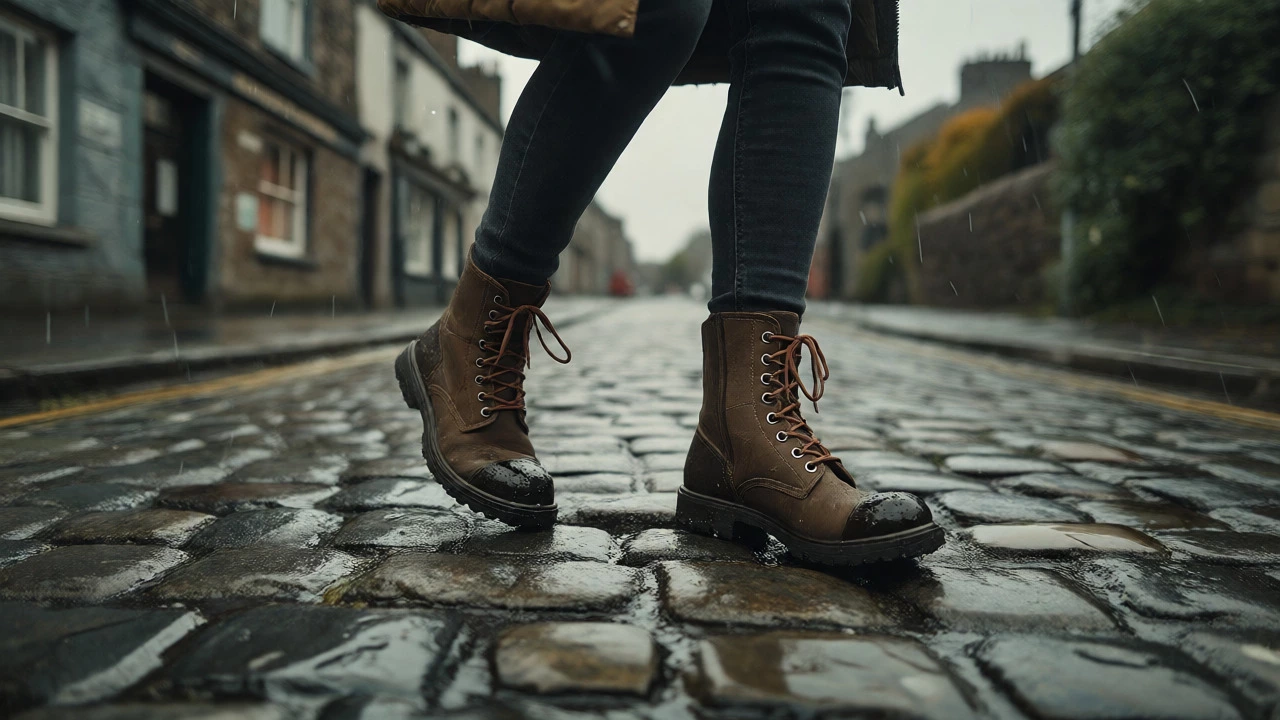
A common piece of advice passed down in Irish households is, "Buy them tight; they’ll stretch." While leather does give, it rarely gives enough to correct a significant sizing error. Leather stretches primarily in width, not length. If your toes are hitting the end cap of a new boot, no amount of breaking-in will push that toe box forward.
However, if the issue is slight tightness across the instep, a half-size larger might feel sloppy initially but could settle nicely after two weeks of wear. Synthetic materials, increasingly popular in eco-friendly Irish footwear lines, do not stretch significantly. So, if you’re buying vegan leather boots, get the fit right immediately. There’s no magic stretching spell for polyurethane.
How to Test the Perfect Half-Size
Don’t just stand still in the shop. Walk around. Stomp a little. Here is a practical checklist for testing boots in any Irish store:
- The Finger Test: With the boot laced up, try to slide one finger between your heel and the back of the boot. It should be snug but possible. If you can fit two fingers, it’s likely half a size too big.
- The Toe Box Check: Stand up. Your longest toe should have about a thumb’s width of space from the front. If it touches, go up a half-size.
- The Slope Simulation: Lean forward as if walking downhill. Does your foot slide forward? If your toes jam into the front, the boot is too long or lacks proper heel grip.
- The Time of Day Rule: Feet swell throughout the day. Try boots on in the afternoon or evening, never first thing in the morning. By 5 PM, your feet are at their largest, giving you the most accurate fit.
Special Considerations for Wide and Narrow Feet
Ireland has a diverse population, and foot shapes vary wildly. If you have wide feet, a half-size up might solve width issues without compromising length too much. However, this can lead to heel slip. A better solution is to look for brands offering "Wide" or "Extra Wide" fittings, such as New Balance or certain lines from Skechers, which are stocked in Irish sports stores like Sports Direct or independent family-run shops in towns like Kilkenny.
Conversely, if you have narrow feet, a standard size might feel loose. Adding an insole can take up volume, effectively shrinking the shoe by a half-size. This is a cost-effective trick favored by savvy shoppers who want to make expensive boots fit perfectly without returning them.
Cost of Getting It Wrong
Buying the wrong size isn’t just uncomfortable; it’s expensive. Returning online orders to international sites can incur shipping fees, and local exchanges require travel time. More importantly, ill-fitting boots wear out unevenly. Heel slippage wears down the inner lining faster, while cramped toes distort the upper leather. Investing ten minutes in proper sizing saves hundreds of euro in premature replacements.
Consider the health costs too. Chronic pressure points can lead to plantar fasciitis, a condition affecting thousands of Irish adults annually. Proper arch support and correct length reduce strain on the fascia. When you spend €150 on quality boots, ensuring the half-size is correct protects your investment and your physical well-being.
Is it better to go up or down a half size for boots?
It is generally safer to go up a half size. You can adjust a slightly large boot with thicker socks or insoles, but you cannot easily fix a boot that is too small. Too-small boots cause permanent damage to toes and nails, whereas too-large boots cause friction issues that can be mitigated with accessories.
Do Irish shoe sizes differ from US or EU sizes?
Ireland primarily uses UK sizing. UK sizes are different from US and EU sizes. A UK size 6 is roughly a US women's size 8 or EU 39. Always check the specific brand's conversion chart, as manufacturing locations (e.g., Italy vs. China) can affect the final fit despite identical labeling.
Can I stretch leather boots by half a size?
Leather can stretch in width, but rarely in length. Using a shoe stretcher can help widen a tight boot, but it won't add significant length. If your toes are hitting the front, stretching won't solve the problem. You need a longer boot.
Why do my boots feel bigger when I wear thick socks?
They shouldn't feel bigger; they should feel tighter. Thick socks fill the internal volume of the boot. If a boot feels comfortable with thin socks, it will likely feel tight with thick ones. Always test-fit boots with the socks you intend to wear regularly.
What if I'm between sizes?
If you are strictly between sizes, consider the type of boot. For lace-up boots, choose the larger size and tighten the laces. For slip-on boots like Chelsea styles, choose the smaller size to ensure they stay on your feet, provided your toes aren't crushed. Custom insoles can also bridge the gap.