Leather Shoe Aging & Durability Calculator
Select Your Shoe Profile
Natural grain, ages best
Sanded, uniform finish
Lower quality, cracks easily
Soft, high maintenance
Analysis Results
Pending AnalysisPatina Development Score
Recommended Actions:
- Choose inputs to generate personalized tips.
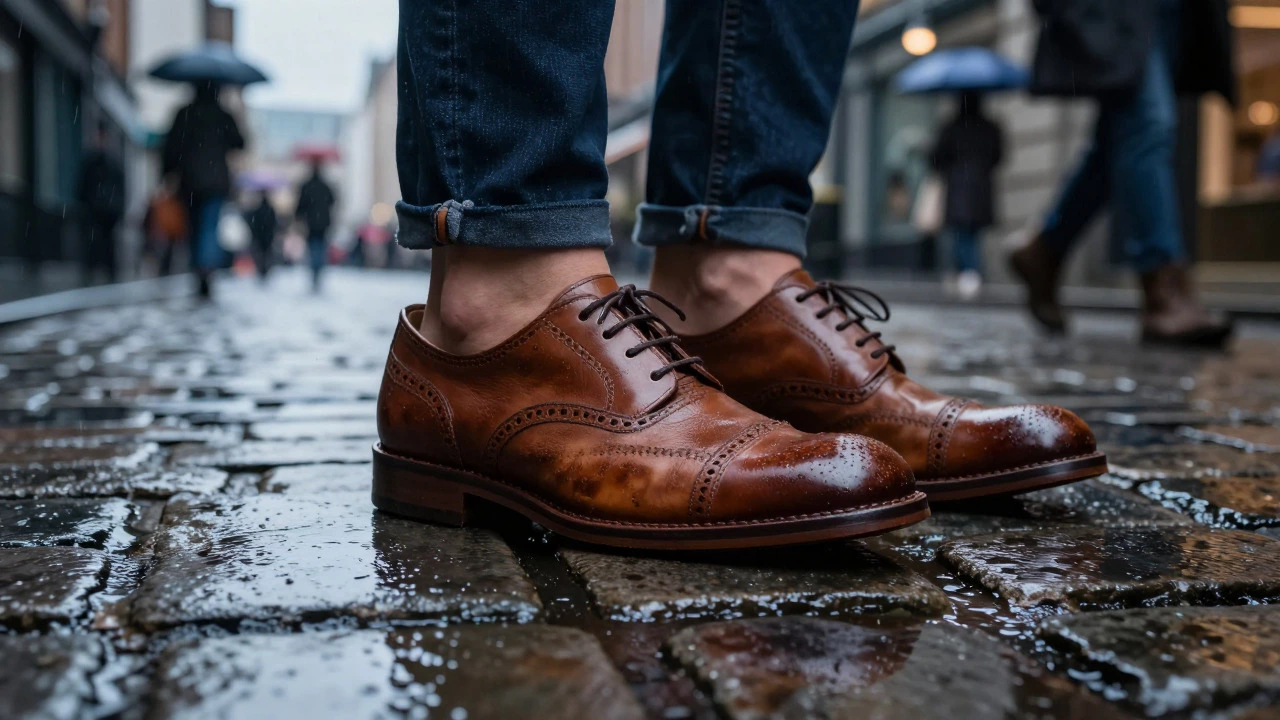
Walking down Grafton Street in Dublin during a typical November rainstorm is not exactly the ideal scenario for testing footwear durability. Yet, if you own a decent pair of leather shoes is footwear made from animal hide that develops character over time through wear and exposure, you might notice something interesting after the storm clears: they don’t look ruined. They look lived-in. The question "do leather shoes age well" isn't just about fashion; it’s about chemistry, physics, and how we treat our belongings in a country where the weather changes four times before lunch.
The Science of Aging: Why Leather Changes
To understand why your boots or dress shoes change appearance, you have to look at what leather actually is. It’s not plastic. It’s not synthetic rubber. It’s collagen fibers treated with tannins. When you buy a new pair of full-grain leather is the highest quality leather that retains the natural grain and imperfections of the hide, you are buying a material that breathes. Over time, oils from your feet, moisture from the air, and UV light interact with those fibers.
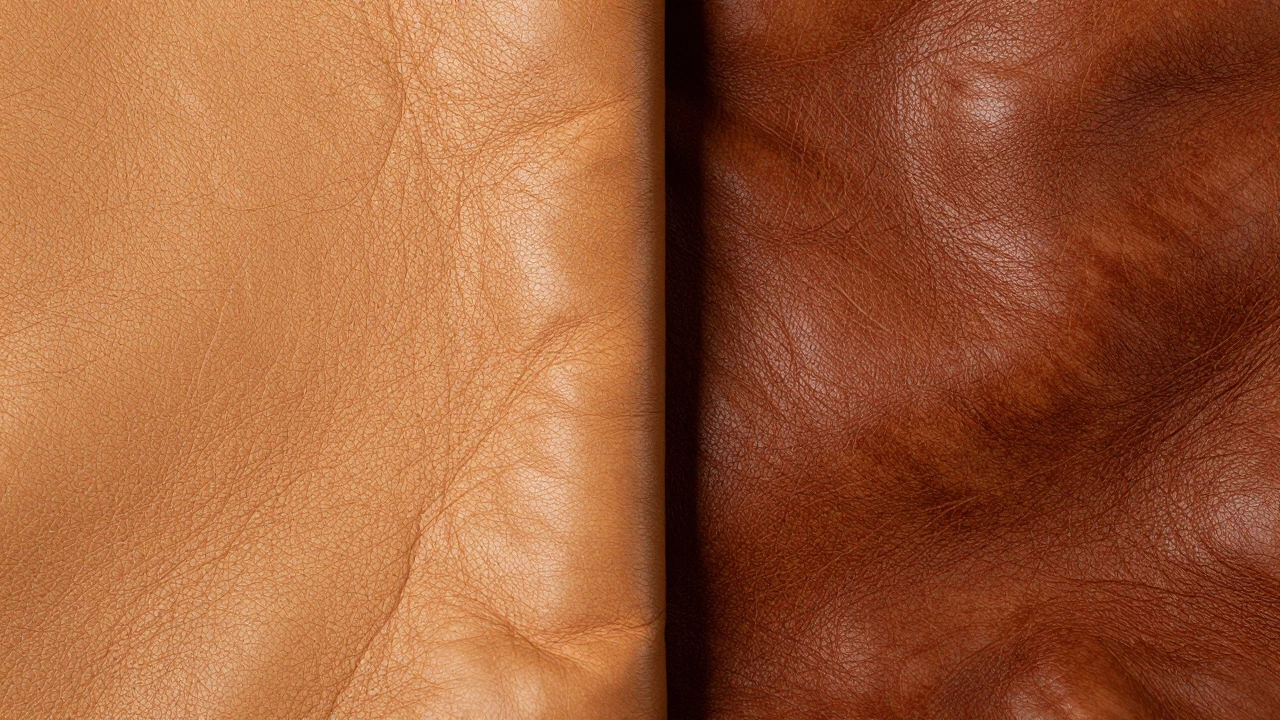
This process creates what enthusiasts call a patina is a sheen or luster on leather caused by oxidation, wear, and conditioning over time. In Ireland, where humidity often hovers around 80%, this happens faster than in drier climates. A pair of brown brogues bought in Temple Bar might darken significantly within six months. This isn’t damage-it’s the leather telling its story. If you’ve ever seen an old saddle in a Galway museum, you know that darkened, rich texture is considered beautiful, not broken.
Types of Leather and Their Aging Potential
Not all leather ages equally. If you want your shoes to look better with every passing year, the type of leather matters more than the brand name stitched on the tongue.
| Leather Type | Aging Quality | Maintenance Needs | Best For |
|---|---|---|---|
| Full-Grain Leather | Excellent (Develops deep patina) | Low to Moderate | Daily wear, formal occasions |
| Top-Grain Leather | Good (Uniform finish) | Moderate | Office wear, polished looks |
| Genuine Leather | Poor (Cracks easily) | High | Budget options, short-term use |
| Suede | Moderate (Fades but softens) | High (Requires brushing) | Casual autumn/winter styles |
If you’re walking the cobblestones of Kilkenny City Centre, full-grain leather is your best friend. It has the tightest fiber structure, meaning it resists water penetration better than cheaper alternatives. Cheaper leathers, often labeled simply as "genuine leather," usually have the top layer sanded off. Without that protective grain, they crack rather than shine when exposed to Ireland’s damp winters.
The Irish Weather Factor
Let’s be honest: Ireland is wet. From the Atlantic storms battering the west coast to the persistent drizzle in the east, moisture is the biggest enemy of aging leather. Water doesn’t just stain leather; it strips away natural oils. Once those oils are gone, the leather becomes brittle. Brittle leather cracks. Cracked leather looks old in a bad way.
However, rain itself isn’t fatal. Salt is. In winter, roads in Dublin and Cork are treated with grit and salt to prevent ice. Salt crystals absorb moisture from the leather, accelerating drying and causing white stains that can become permanent if not removed quickly. If you live in a rural area like Mayo or Sligo, mud is also a concern. Dried mud acts like sandpaper against the grain of your shoes every time you walk.
The key is immediate action. Never let wet shoes dry near a radiator or fire. Heat shrinks the fibers and causes warping. Instead, stuff them with newspaper to absorb moisture and let them air dry at room temperature. This simple step can extend the life of your shoes by years.
How to Make Your Shoes Age Gracefully
Aging well requires effort. You can’t just throw them in the closet and expect them to improve. Here is a practical routine for maintaining leather shoes in the Irish climate:
- Clean After Every Wear: Use a damp cloth to wipe off dirt and salt. Don’t wait until the end of the week. Daily cleaning prevents abrasive particles from grinding into the leather.
- Condition Monthly: In Ireland, apply a high-quality leather conditioner (like beeswax-based products) once a month during winter and every two months in summer. This replenishes the oils lost to humidity and cold.
- Polish for Protection: Wax polishes create a barrier against water. Apply a thin layer before rainy seasons. Brands available in local cobbler shops across Ireland often contain higher wax content than mass-market supermarket brands.
- Rotate Your Pairs: Leather needs 24 hours to dry out completely after being worn. If you wear the same pair every day, they never recover. Own at least two pairs and alternate them.
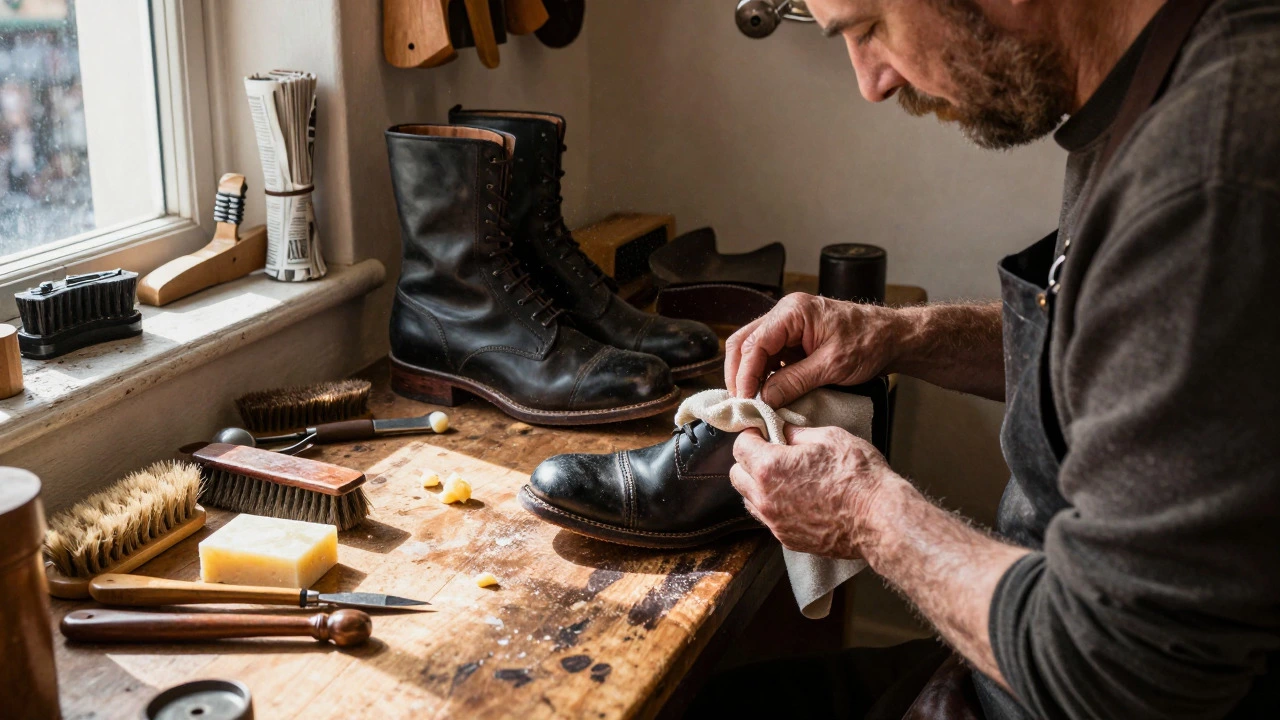
Consider visiting a traditional cobbler in areas like Rathmines in Dublin or the English Market in Cork. These artisans understand the specific needs of leather in our climate. They can re-sole your shoes, replace heels, and even restore faded colors, making your shoes last decades rather than years.
When Aging Goes Wrong
Not all aging is good. There are signs that your shoes are deteriorating beyond repair:
- Deep Cracking: If the leather splits open, especially around the toe box or heel counter, the structural integrity is compromised. No amount of polish will fix this.
- Permanent Stains: Some dyes from jeans or red wine can bond permanently with certain types of leather. Test any cleaner on a small area first.
- Delamination: If the sole separates from the upper part of the shoe repeatedly, the adhesive has failed. This is common in cheaper construction methods.
If you see these signs, it might be time to retire the shoes. But remember, a well-cared-for pair of leather shoes can often be repaired multiple times. The saying "if you take care of your shoes, they’ll take care of you" holds true here.
Sustainable Fashion in Ireland
In a world of fast fashion, buying fewer, better-quality items is becoming a cultural shift in Ireland. Consumers are increasingly aware of the environmental impact of disposable clothing. Leather shoes that age well fit perfectly into this sustainable model. Instead of buying three pairs of cheap shoes that fall apart in two years, investing in one high-quality pair that lasts ten years reduces waste and saves money in the long run.
Local Irish designers and manufacturers are also embracing this trend. Brands focusing on durability and repairability are gaining popularity. By choosing leather shoes that age well, you’re supporting a cycle of craftsmanship and sustainability that aligns with modern values.
Conclusion: Embrace the Patina
So, do leather shoes age well? Yes, if you choose the right type and care for them properly. In Ireland, where the weather tests everything, a well-maintained pair of leather shoes becomes a companion. The scratches, the darkening, the slight wear-they’re not flaws. They’re proof of your journey. Whether you’re commuting on the Luas, hiking the Cliffs of Moher, or attending a wedding in County Wicklow, your shoes tell a story. Let them tell a good one.
How often should I condition my leather shoes in Ireland?
Due to the high humidity and frequent rain in Ireland, you should condition your leather shoes every 4-6 weeks during the winter months. In the drier summer months, conditioning every 8-12 weeks is sufficient. Always clean the shoes before applying conditioner.
Can I wear leather shoes in the rain?
Yes, but only if they are treated with a waterproofing wax or spray beforehand. Full-grain leather handles light rain well, but heavy downpours can saturate the material. Always dry them naturally away from direct heat sources after getting wet.
What is the difference between full-grain and genuine leather?
Full-grain leather is the highest quality, retaining the natural grain and strength of the hide. It ages beautifully and develops a patina. Genuine leather is a marketing term that often refers to lower-quality layers of the hide that have been sanded and coated. It tends to crack and peel rather than age gracefully.
How do I remove salt stains from leather shoes?
Mix equal parts white vinegar and water. Dip a soft cloth in the solution, wring it out so it’s damp but not dripping, and gently rub the stained area. Wipe with a clean, damp cloth afterward and let the shoes dry naturally. Apply conditioner once dry to restore oils.
Is it worth repairing old leather shoes?
Absolutely. High-quality leather shoes can be re-soled, re-heeled, and polished multiple times. Repairing them is often cheaper than buying new ones and maintains the unique patina you’ve developed over years. Visit a professional cobbler for best results.