Irish Suit Color Advisor
Select your occasion and season to get tailored advice on the best suit color for the Irish climate and culture.
Walk into any office building on Merrion Road or attend a wedding in rural Clare, and you’ll notice a pattern. Men are often stuck between looking too corporate or too casual. The biggest mistake? Picking a suit color that fights against the Irish weather and light. You might think black is safe, but under the grey skies of Dublin or Cork, it can look harsh and overly formal for daytime events. Choosing suit color isn’t just about fashion trends; it’s about matching your outfit to the occasion, the season, and yes, the specific lighting conditions we get here on the island.
If you’re buying a new jacket from a local tailor on Grafton Street or browsing online retailers shipping to Galway, this guide will help you pick the right shade. We aren’t talking about vague advice like "wear what makes you happy." We’re talking about navy versus charcoal, when to wear brown, and why beige rarely works outside of summer weddings in Kildare.
The Reality of Irish Light and Weather
Here is a fact most style guides ignore: Ireland has low-contrast natural light for much of the year. The sky is often overcast, which flattens out colors. If you wear a bright blue or a stark white shirt with a pitch-black suit, you might look washed out. Conversely, earthy tones like olive green or deep browns absorb the muted light better, making you look more grounded and less like you’re wearing a uniform.
Consider the geography. If you’re working in tech in Dublin, the dress code leans smart-casual. A dark grey suit breaks up the monotony of the rainy commute better than black. Black absorbs moisture and looks heavier when wet. Charcoal grey, however, maintains its structure and looks sharp even if you’ve had to run for the Luas because the bus was delayed. It’s practicality meeting style.
Navy Blue: The Safe Bet That Isn’t Boring
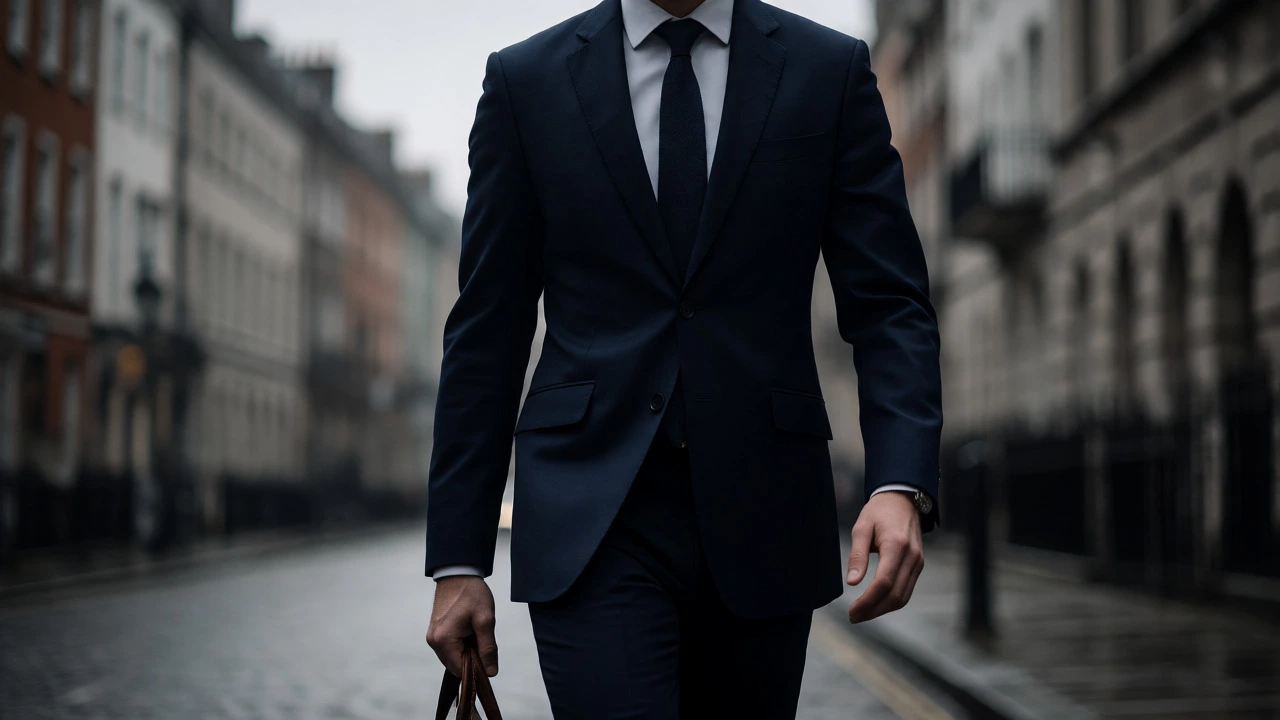
Navy Blue is the most versatile suit color for men, suitable for almost all professional and social occasions except very formal evening events. In the Irish market, navy dominates for a reason. It works in the boardroom at the IFSC and at a family christening in Donegal.
Why does it work so well here? Navy contrasts nicely with the pale skin tones common among many locals without being as severe as black. It also hides rain spots better than lighter blues. If you buy one suit, make it navy. Look for a mid-tone navy rather than midnight blue. Midnight blue can look black indoors, defeating the purpose of having variety. A standard navy allows you to pair it with brown shoes, which are increasingly popular in Irish offices where the vibe is shifting away from strict corporate rigidity.
Charcoal Grey: The Professional Powerhouse
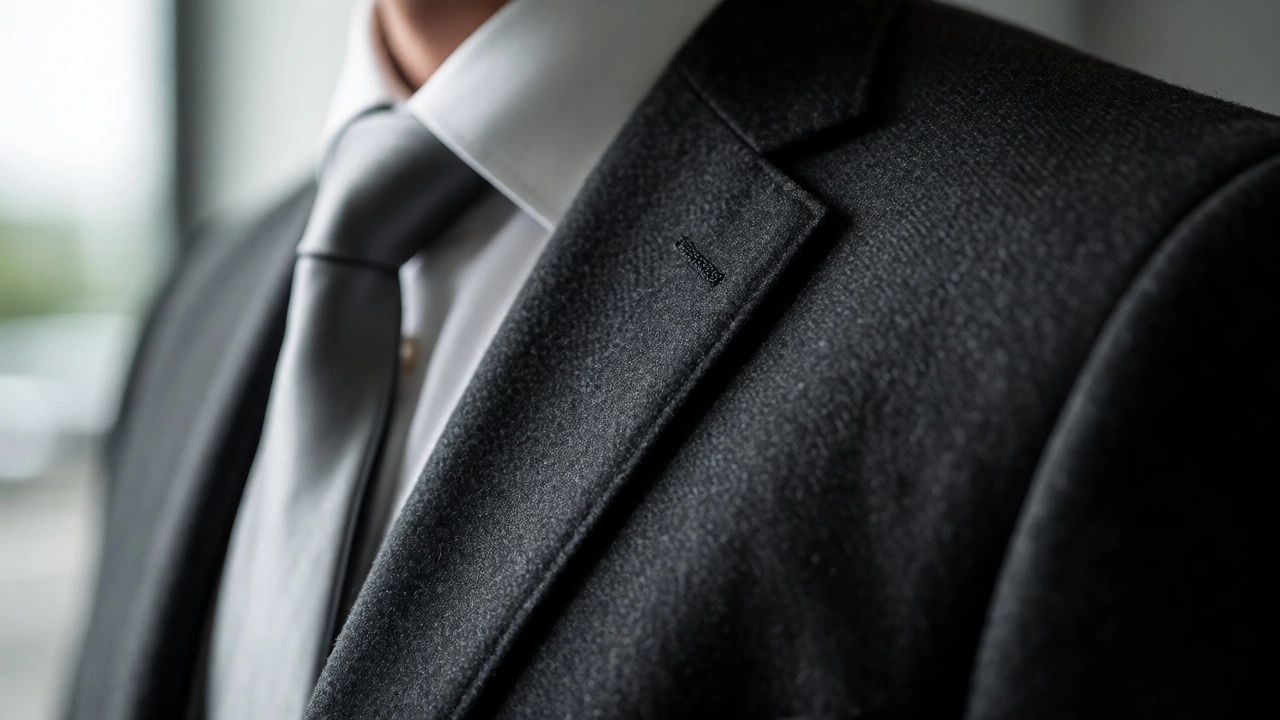
If navy is the friendly colleague, Charcoal Grey is a serious, authoritative suit color ideal for important meetings, funerals, and formal business settings. It sits comfortably between black and light grey.
In cities like Belfast or Limerick, where traditional industries still hold sway, charcoal is respected. It signals seriousness without the funeral-home association of black. For interviews, especially in finance or law firms near St Stephen’s Green, charcoal is unbeatable. It pairs perfectly with crisp white shirts and silver ties. However, avoid charcoal if you have a very fair complexion and cool undertones; it can sometimes drain color from your face. In those cases, a medium grey is a softer alternative that still looks professional.
Black: When Less Is More (And When It’s Wrong)
There is a persistent myth that black is always appropriate. In Ireland, context matters heavily. Wearing a black suit to a daytime wedding in May can feel out of place, almost like you’re going to a wake. Black is reserved for specific scenarios:
- Funerals: This is non-negotiable in Irish tradition. Dark, somber, and respectful.
- Evening Events: After 6 PM, black gains acceptance. Think galas in Dublin Castle or late-night networking drinks.
- Tie-Dye/Fashion Contexts: If you’re in the creative sector in Temple Bar, a black suit with no tie and sneakers might work. But don’t try this in a bank.
For most Irish men, a black suit is a low-frequency purchase. You likely only need it for occasional formal duties. Don’t spend your entire budget on it unless you know you’ll use it regularly.
Brown and Earth Tones: Breaking the Mold
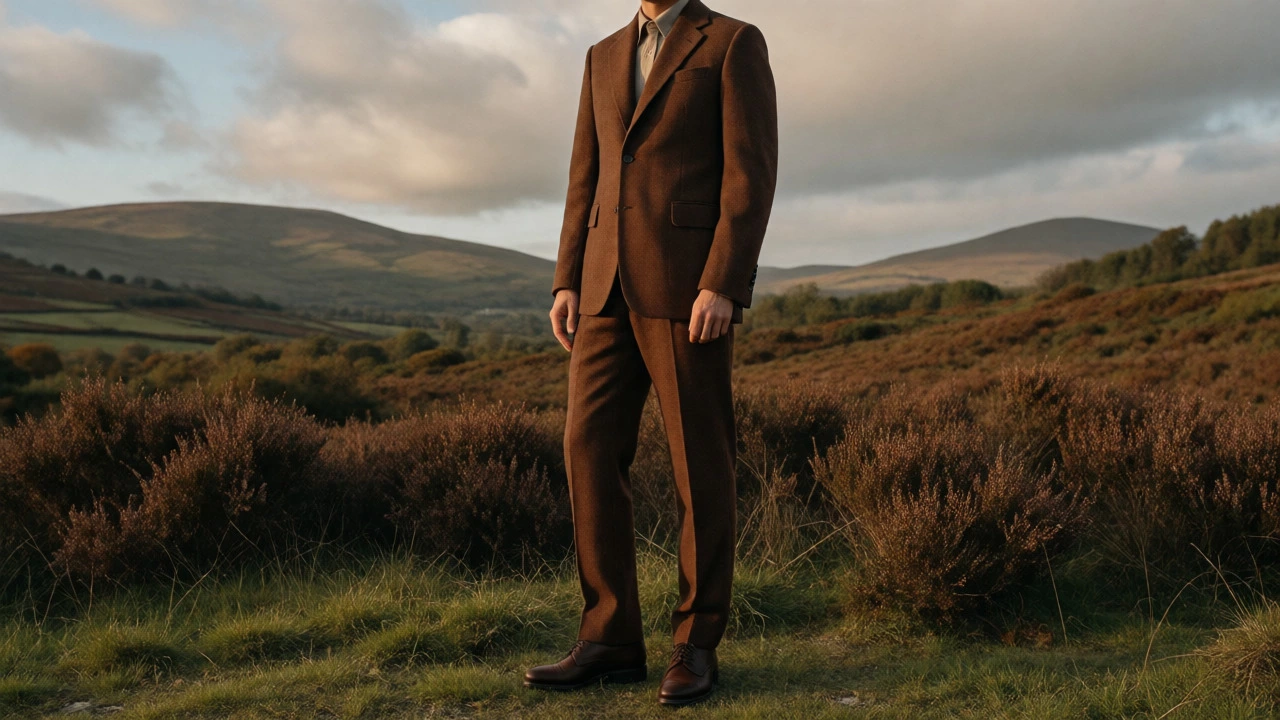
This is where things get interesting. While London and New York stick to greys and blues, there’s a growing trend in Ireland toward warmer tones. Why? Because they reflect our landscape. A Brown Suit is an unconventional choice that offers warmth and approachability, particularly effective in autumn and winter months.
Think of the heather on Wicklow Mountains or the mud flats in Wexford. These colors translate beautifully into menswear. A chocolate brown suit in wool flannel looks incredible in October or November. It feels cozy yet sophisticated. Pair it with cream or light blue shirts. Avoid pairing brown suits with black shoes; brown shoes are essential here. If you’re attending a country wedding in Tipperary, a tan or camel-colored suit stands out positively without shouting for attention.
Seasonal Choices for the Irish Climate
Ireland doesn’t have four distinct seasons like continental Europe. We have "wet" and "slightly less wet," with temperature fluctuations. Your suit fabric weight should match the color’s perception.
| Season | Recommended Colors | Fabric Weight | Best Occasion |
|---|---|---|---|
| Spring (March-May) | Light Grey, Pale Blue, Tan | Medium (9-10 oz) | Garden Weddings, Daytime Meetings |
| Summer (June-Aug) | Navy, Medium Grey, Olive | Light (7-8 oz) Wool/Linen Blend | Outdoor Events, Travel |
| Autumn (Sept-Nov) | Charcoal, Brown, Dark Green | Heavy (11-13 oz) Flannel/Tweed | Office Work, Evening Dinners |
| Winter (Dec-Feb) | Midnight Blue, Black, Deep Grey | Heavy (13+ oz) Wool | Holiday Parties, Funerals |
Notice how linen blends are suggested for summer. Pure linen wrinkles instantly in humidity. A blend holds shape better during a walk along the Cliffs of Moher or a stroll through Phoenix Park. For winter, tweed isn’t just for tourists. Local mills produce excellent tweed suits that keep you warm while looking distinctly Irish.
Cultural Nuances: Weddings and Funerals
Irish social calendar revolves around two major events involving suits: weddings and funerals. Getting the color wrong here can cause subtle social friction.
Weddings: If you’re a guest, check the invitation. If it’s a church ceremony followed by a reception in a hotel, navy or grey is safe. If the couple specifies "black tie," go with a tuxedo or a very dark suit. Never wear white or cream unless explicitly told to. And please, do not wear a beige suit to a winter wedding in December. It looks like you forgot to change clothes after a beach holiday.
Funerals: Stick to dark colors. Black is traditional, but dark navy or charcoal is acceptable if black feels too heavy emotionally. The key is subtlety. You want to show respect, not draw eyes. In rural areas, older generations may still expect strict black. In urban centers, dark grey is widely accepted. When in doubt, ask the immediate family quietly before the event.
Shoe Pairing Rules for Each Color
Your suit color dictates your shoe color. Ignoring this ruins the whole look.
- Navy Suit: Brown shoes (dark brown for formal, tan for casual). Black shoes can work but create a high-contrast break at the ankle.
- Charcoal/Grey Suit: Black shoes are best. Dark brown can work for less formal settings.
- Black Suit: Black shoes only. No exceptions.
- Brown Suit: Darker brown shoes. Avoid black.
In Dublin, cobblestones are unforgiving. Invest in good leather soles or rubber hybrids that offer grip. A nice suit won’t save you if you slip on wet pavement near Ha’penny Bridge.
Where to Buy Locally vs. Online
You don’t need to fly to Milan for a good suit. Irish tailors understand fit issues related to our typical body types better than mass-produced European cuts. Stores like Mullins or Kavanagh & Co in Dublin offer bespoke services that account for posture and movement.
However, if you’re on a budget, high-street brands available in Ireland like Reiss or Massimo Dutti offer decent off-the-rack options. Just remember: fit trumps color. A cheap suit tailored well looks better than an expensive suit that fits poorly. Spend your extra money on alterations, not on a third suit color.
Final Thoughts: Building a Capsule Wardrobe
You don’t need ten suits. You need three. One navy, one charcoal, and one seasonal wildcard (like brown or green). This covers 90% of situations in Ireland. From job interviews in Cork to weekend dinners in Galway, these colors adapt. Keep it simple, respect the weather, and let the cut do the talking.
Can I wear a black suit to a daytime wedding in Ireland?
It is generally discouraged unless the wedding is very formal or specified as black-tie optional. For most daytime weddings, especially in spring or summer, navy or grey is preferred as black can appear too somber or funeral-like in daylight.
What suit color is best for job interviews in Dublin?
Navy blue or charcoal grey are the top choices. They convey professionalism and trustworthiness without being as intimidating as black. Ensure the suit fits well and pair it with a conservative shirt and tie.
Is a brown suit appropriate for business in Ireland?
Brown suits are becoming more acceptable, particularly in creative industries or tech sectors. However, for traditional finance, law, or government roles, stick to navy or grey. Use brown for less formal business lunches or client meetings where approachability is valued.
How do I choose a suit color based on my skin tone?
If you have cool undertones (veins look blue), navy and grey suit you well. If you have warm undertones (veins look green), earth tones like brown, olive, and warmer greys can be flattering. Test colors in natural light if possible, as indoor shop lighting can be misleading.
Do I need different suits for different seasons in Ireland?
Not necessarily different colors, but different fabrics. A lightweight wool navy suit works year-round. For winter, a heavier flannel charcoal suit provides warmth. For summer, a linen-blend navy or grey keeps you cool. Focus on fabric weight rather than changing colors frequently.