Summer Dress Style Finder
Not sure which dress to choose for your next outing? Select the silhouette that matches your needs to see why it works and the best way to wear it.
Styling Tip:
Quick Wins for Tummy Camouflage
- Empire Waist: Hits just below the bust, the narrowest part of the torso, and flows out.
- A-Line Cut: Gradually widens from the waist, creating a balanced shape.
- Wrap Styles: Creates a diagonal line across the body, which breaks up the visual area of the stomach.
- Ruched Fabric: Built-in folds that mask lumps and bumps naturally.
- Darker Tones: Deep greens or navy blues that absorb light and soften silhouettes.
The Magic of the Empire Waist
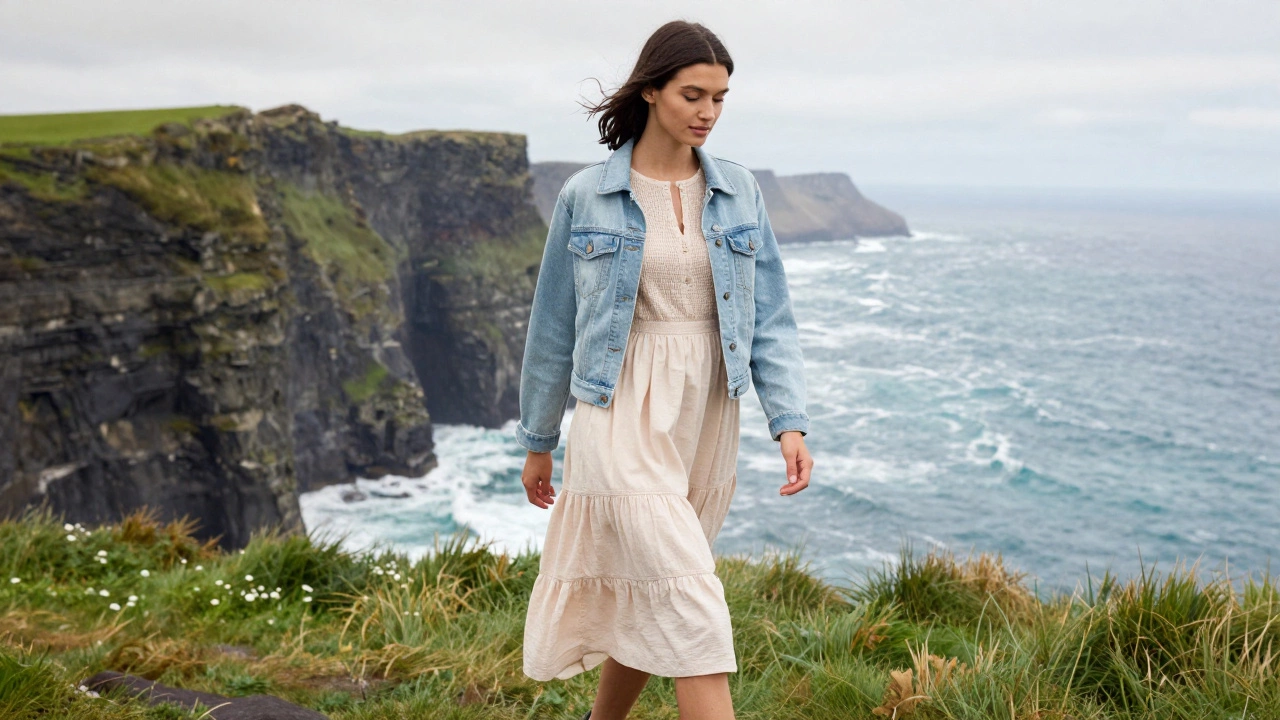
If you want a dress that feels airy for a sunny day at the Cliffs of Moher but doesn't cling to your stomach, the Empire Waist Dress is your best friend. This style is defined by a waistline that sits significantly higher than your natural waist, usually right under the bust. Because the fabric drops from the highest point of the torso, it skips over the stomach entirely.
For those of us in the Irish market, we often pair these with a light cardigan or a denim jacket because, let's be honest, a "summer" day in Dublin usually involves at least one sudden drizzle. The key here is to ensure the skirt isn't too voluminous; you want a gentle flow, not a ballroom gown. Look for materials like cotton blends or viscose that hold their shape but still breathe during those rare 20-degree heatwaves.
Why the A-Line is a Wardrobe Staple
The A-Line Dress is essentially the gold standard for flattering almost every body type. It mimics the shape of a capital 'A', fitting snugly at the top and widening toward the hem. This prevents the fabric from hugging the midsection, instead creating a smooth transition from the waist down.
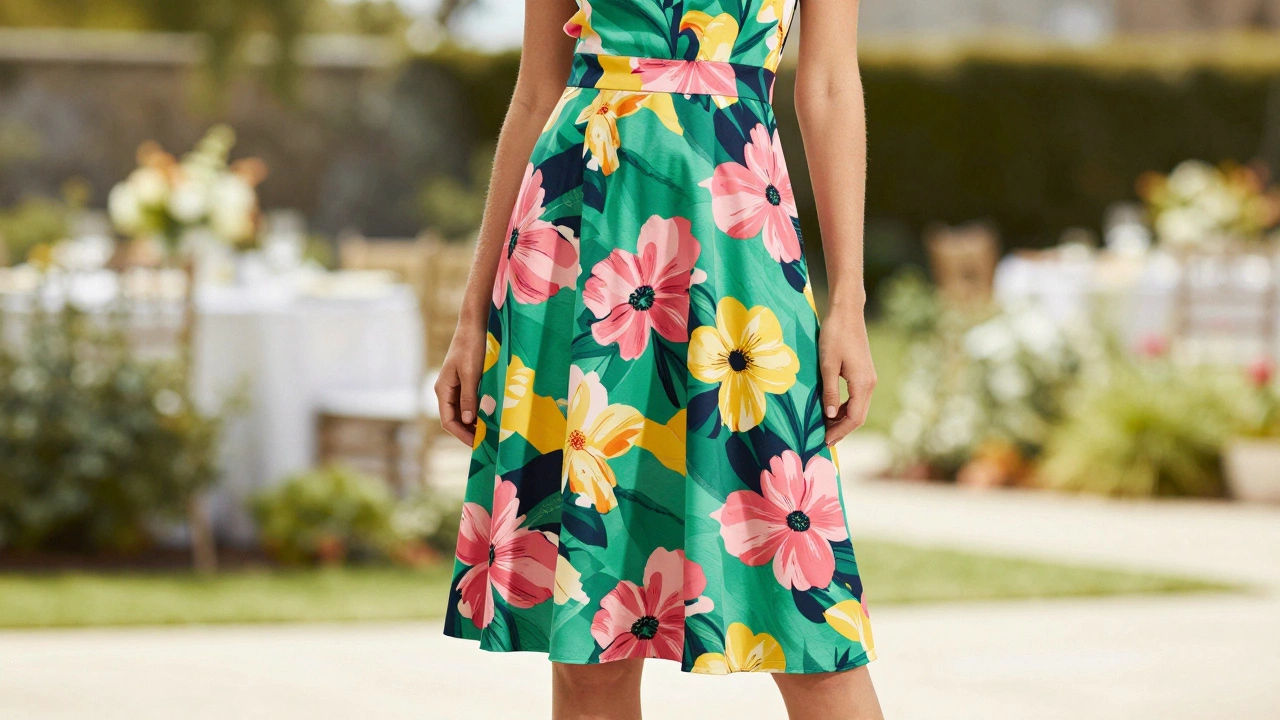
Think of it as a structural trick. By adding a bit of volume to the hips and thighs, you're visually balancing out a larger stomach. If you're heading to a garden party or a casual lunch in Kinsale, an A-line midi dress in a bold floral print works wonders. Prints are actually a great tool here-small to medium patterns can camouflage the contours of the stomach much better than a solid, light-colored fabric like beige or pale pink.
Mastering the Wrap Dress
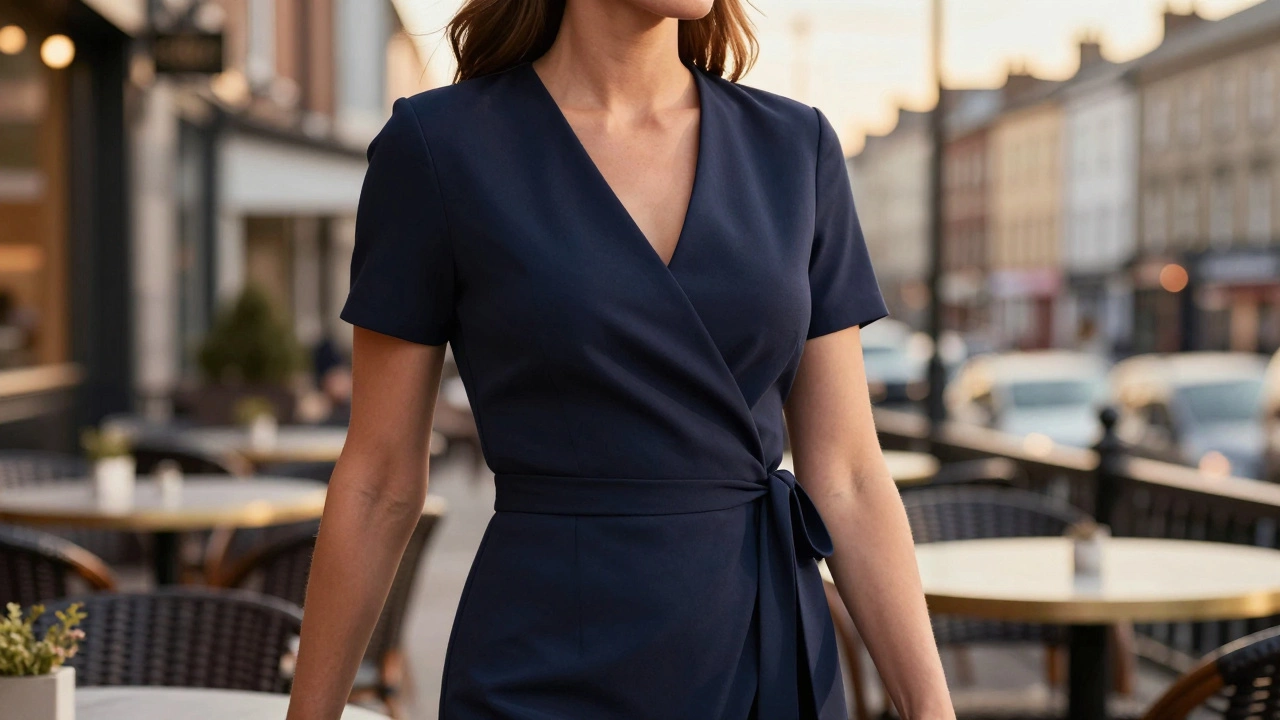
Few things are as versatile as a Wrap Dress. Unlike a "faux wrap" which is just sewn in place, a true wrap dress allows you to adjust the tightness exactly where you need it. By tying the belt slightly higher or lower, you can control where the fabric cinches and where it drapes.
The diagonal line created by the wrap is a powerful visual tool. It draws the eye across the body rather than straight across the stomach. If you're wearing one to a business casual event in Cork or a semi-formal gathering, opt for a jersey fabric. Jersey is stretchy and forgiving, meaning it moves with you without pulling tight against your belly when you sit down for a meal.
| Style | Best For | Effect on Midsection | Ideal Irish Occasion |
|---|---|---|---|
| Empire Waist | Short torsos / High busts | Completely bypasses stomach | Coastal walks / Casual brunch |
| A-Line | All body types | Balances hips with stomach | Garden parties / Weddings |
| Wrap Dress | Hourglass or Apple shapes | Creates diagonal distraction | Office wear / Dinner dates |
| Shift Dress | Straight figures | Hangs loose from shoulders | Quick city trips / Museum visits |
The Secret Weapon: Ruched Fabrics
Ever notice how some dresses have those little gathered folds of fabric on the side or across the front? That's called ruching. Ruching is essentially a built-in camouflage system. Because the fabric is intentionally wrinkled and folded, it hides the actual curve of the stomach. If the dress is flat, every bump shows; if the dress is already "bumpy" by design, your stomach just blends into the pattern.
This is a fantastic choice for those who want a more fitted look without the discomfort of shapewear. If you're visiting a high-street shop in Galway, look for dresses with side-ruching. This technique pulls the fabric slightly tighter in some areas and looser in others, creating an optical illusion of a smoother midsection.
Fabrics That Help (and Those That Hurt)
The material of your dress is just as important as the cut. If you choose a thin, clingy polyester, it will act like a second skin and highlight everything. Instead, look for fabrics with a bit of "body" or structure. A heavier linen is perfect for the Irish summer-it's breathable but doesn't cling to the skin.
Avoid fabrics like satin or thin silk if you're worried about your stomach. These materials reflect light, and since light hits the highest point of a curve, a big stomach will practically glow under bright lights. Matte fabrics, like cotton or crepe, absorb light and keep the silhouette looking flat and streamlined.
Practical Tips for the Perfect Fit
Sometimes the dress is great, but the undergarments are the problem. While you don't need to suffer in a restrictive corset, a light Control Top or smoothing brief can help the fabric of an A-line or empire dress hang more naturally. The goal isn't to change your shape, but to prevent the fabric from "catching" on your skin.
Also, pay attention to the length. A midi length (hitting between the knee and ankle) is generally the most flattering for those hiding a stomach. It creates a longer vertical line, which makes you look taller and leaner. If you're wearing a shorter dress, pair it with a nude-colored heel or wedge to extend the leg line further.
Do dark colors really make a stomach look smaller?
Yes, because dark colors like navy, charcoal, and forest green absorb light instead of reflecting it. This reduces the visibility of shadows and highlights created by the curves of the stomach, making the area appear flatter and more streamlined.
Can I wear a shift dress if I have a big stomach?
Yes, but be careful with the fit. A shift dress hangs straight down from the shoulders. If it's too tight, it will cling to the stomach; if it's too loose, it can make you look boxy. The trick is to find one that skims the body without hugging it, and perhaps add a thin belt just above the widest part of your belly to create a hint of a waist.
Are floral prints better than solid colors?
Generally, yes. Busy prints distract the eye. While a solid white dress will show every fold and bump, a floral or geometric print breaks up the visual surface, making it harder for someone to pinpoint exactly where the stomach begins and ends.
What is the best neckline to balance a larger midsection?
V-necks and scoop necks are excellent because they draw the eye upward and create a vertical line. By focusing attention on your face and neckline, you're naturally taking the focus away from the stomach area.
Should I avoid belts entirely?
Not necessarily. The key is belt placement. Avoid belts that sit directly on the widest part of your stomach. Instead, place a belt slightly higher (empire style) or use a loose, tie-style belt that doesn't cinch too tightly, providing a suggestion of a waist without squeezing the midsection.
Next Steps for Your Summer Wardrobe
If you're feeling overwhelmed, start by auditing your current wardrobe. See if you have any A-line or wrap dresses that you've avoided. Try them on with different undergarments or a light jacket to see how the silhouette changes. If you're heading out to shop in Dublin, Cork, or Belfast, bring a few different types of bras and underwear to ensure the fit is perfect in the changing room.
Remember, the most important thing is how you feel. Whether you're attending a summer festival in the west of Ireland or just enjoying a walk through St. Stephen's Green, confidence is the best accessory. Choose the cut that makes you feel most like yourself, and don't be afraid to experiment with layers to keep the chill off while staying stylish.