Irish Home Footwear Recommendation Tool
Your Home Profile
Recommendation
Key Factors:
Select your home details and click "Analyze" to get a personalized recommendation.
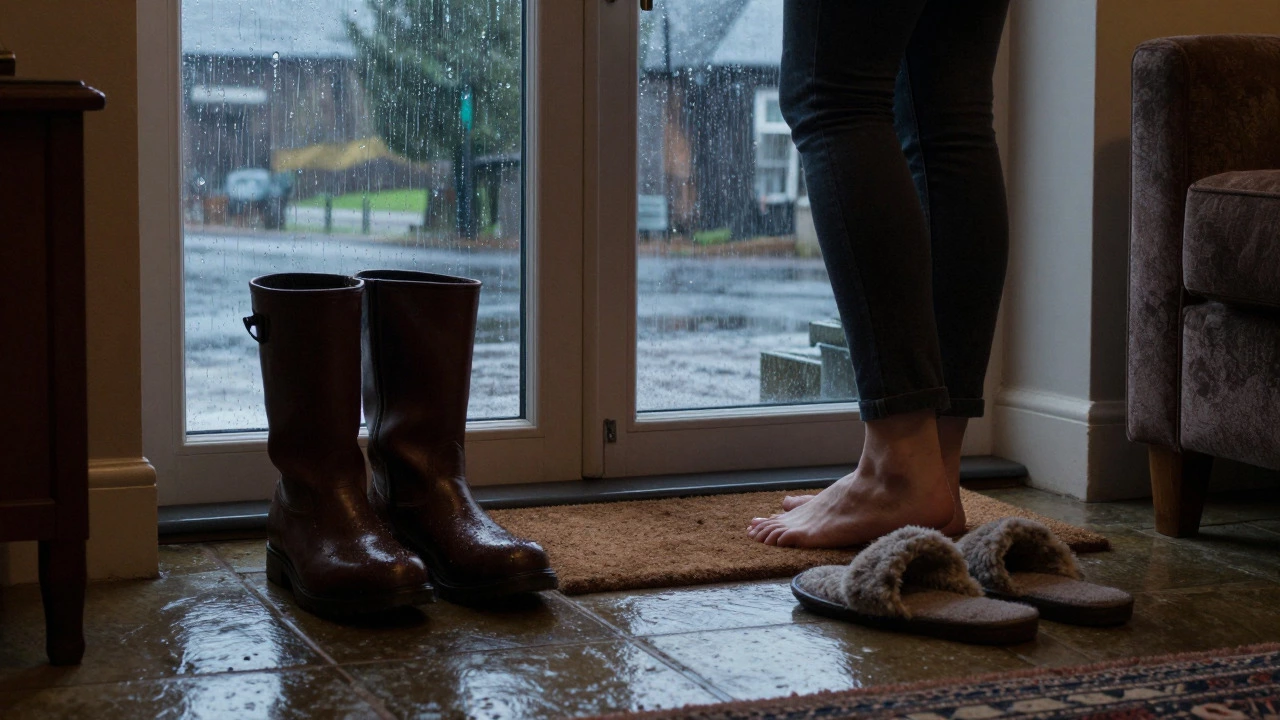
It’s a Tuesday evening in Dublin. The rain is lashing against the windowpane-that relentless, horizontal wind-driven rain that seems to define our climate-and you’ve just kicked off your wet boots by the door. Now comes the daily dilemma: do you keep them off and walk around on the cold stone floor, or do you put on those fluffy slippers gathering dust in the hallway? This isn’t just about comfort; it’s a question of foot health, safety, and even energy bills in Irish households.
In Ireland, where dampness is practically part of our national identity, the choice between going barefoot and wearing slippers carries more weight than it might in drier climates. We’re not just talking about keeping warm; we’re talking about preventing fungal infections, protecting your joints from hard flooring, and maintaining hygiene in a house that shares air with the outside world. Let’s break down why one option might be significantly better for you than the other, especially if you live in an older property with solid floors or a newer build with underfloor heating.
The Irish Climate Factor: Why Cold Floors Matter
You can’t talk about indoor footwear in Ireland without addressing the temperature. Our average winter temperatures hover around 5°C to 7°C, but inside many homes, especially those built before the 1990s, the internal surface temperature of walls and floors can feel much colder due to poor insulation and thermal bridging.
If you are walking barefoot on slate, concrete, or old wooden floorboards, your body loses heat rapidly through your feet. Your feet have a high surface-area-to-volume ratio, meaning they act as radiators. When your feet get cold, your body diverts blood flow away from extremities to keep your core warm. This vasoconstriction doesn’t just make you shiver; it can lead to stiffness in your toes and ankles over time. For anyone living in places like Galway, Cork, or rural counties where drafts are common, walking barefoot during the cooler months (October through April) is essentially asking your circulatory system to work overtime.
However, summer changes the equation. During the brief but precious warm spells in June and July, when temperatures occasionally climb past 20°C, walking barefoot on heated floors or cool tiles can actually help regulate body temperature. It’s about reading the room-or rather, reading the weather outside your window.
Hygiene and Fungal Risks in Damp Environments
Ireland’s humidity creates the perfect breeding ground for fungi and bacteria. If you’ve ever noticed a musty smell in your bathroom or bedroom, you know what I mean. Walking barefoot increases your direct contact with these microbes.
Athlete’s Foot is a common fungal infection caused by dermatophytes that thrive in warm, moist environments. While often associated with sports, it frequently starts at home. If you wear sandals or go barefoot in shared bathrooms, kitchens, or even on carpets that haven’t been deep-cleaned recently, you risk picking up tinea pedis. Once you have it, it spreads easily to other family members through shared towels or floor surfaces.
Slippers, particularly those with closed toes and breathable materials, create a barrier between your skin and potentially contaminated surfaces. In multi-generational households-common in many Irish families where grandparents or adult children live together-this barrier is crucial for public health within the home. Open-backed slippers or flip-flops offer less protection, leaving your heels and sides exposed to germs.
Flooring Types and Joint Health
The type of flooring in your home dictates how much support your feet need. Many traditional Irish homes feature solid stone, tile, or hardwood floors. These surfaces are unforgiving. They don’t compress when you step on them, which means all the impact from your stride goes straight into your knees, hips, and lower back.
Walking barefoot on hard surfaces forces your foot muscles to work harder to stabilize your arches. For people with flat feet or plantar fasciitis, this can exacerbate pain. Over time, the lack of cushioning can contribute to joint degeneration. On the other hand, modern Irish homes increasingly feature carpet or laminate with underlay, which offers some natural shock absorption. Even then, a good pair of slippers provides additional cushioning that protects your joints during long days spent standing in the kitchen or pacing while watching the GAA matches.
Consider the difference between walking on a tiled kitchen floor versus a carpeted living room. In the kitchen, where spills happen and floors are slippery, bare feet are a recipe for disaster. A slip on a wet tile can lead to serious injury, especially for older adults. Slippers with non-slip soles provide essential traction.
Safety Concerns: Slips, Trips, and Burns
Safety is perhaps the most overlooked aspect of this debate. Bare feet are sensitive to temperature changes. If you have underfloor heating-a growing trend in new builds across Dublin and suburban areas-your floors can get surprisingly hot. Prolonged exposure to heated floors can cause discomfort or even mild burns if the thermostat is set too high. Slippers act as an insulator, protecting your skin from excessive heat.
Conversely, in older homes without central heating, floors can be ice-cold. Stepping onto a cold floor first thing in the morning can trigger a startle reflex, leading to loss of balance. More importantly, bare feet are vulnerable to cuts and punctures. Have you ever stepped on a Lego brick, a dropped needle, or a sharp piece of glass? Slippers protect against these everyday hazards.
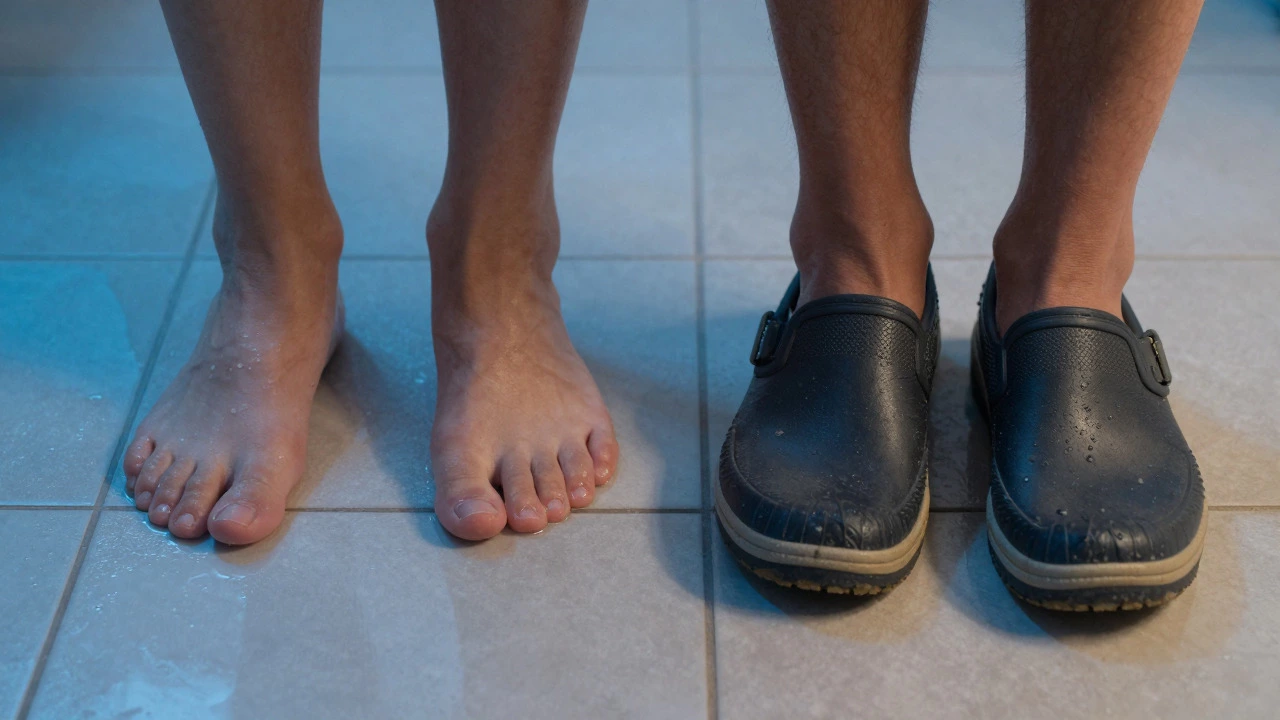
Slip resistance is critical. Many Irish bathrooms have smooth ceramic tiles. Water from showers makes these surfaces incredibly slick. Walking barefoot reduces friction, increasing the risk of slipping. Slippers designed with rubberized grips or textured soles significantly reduce this risk. Look for brands that advertise anti-slip properties, especially if you have elderly relatives visiting.
Choosing the Right Slippers for Irish Homes
Not all slippers are created equal. To maximize benefits and minimize risks, you need to choose wisely based on material, fit, and sole design.
| Type | Material | Best For | Pros | Cons |
|---|---|---|---|---|
| Memory Foam Clogs | EVA foam, fabric upper | Hard floors, standing all day | Excellent arch support, durable | Can retain heat in summer |
| Wool Slippers | Merino wool, leather sole | Cold winters, eco-friendly homes | Natural insulation, moisture-wicking | Requires careful cleaning |
| Rubber-Soled House Shoes | Cotton, synthetic rubber | Bathrooms, kitchens, safety | Non-slip, easy to clean | Less aesthetic appeal |
| Open-Back Mules | Faux fur, soft fabric | Short-term lounging | Easy to slip on/off, stylish | Poor stability, tripping hazard |
For most Irish households, a hybrid approach works best. Keep a pair of supportive, closed-toe slippers with non-slip soles for general use, especially in kitchens and bathrooms. Reserve barefoot time for dry, carpeted areas during warmer months. Avoid open-back slippers if you have mobility issues or if your home has uneven flooring.
Local brands like Dunlop, a historic Irish manufacturer known for its rubber goods, has produced durable house shoes for decades. Their designs often prioritize function over fashion, making them ideal for practical, everyday use. Similarly, international brands available in Irish stores like Boots or Superdrug offer affordable options with varying levels of support.
When Barefoot Might Be Better
Despite the arguments for slippers, there are scenarios where going barefoot is beneficial. Grounding, or earthing, suggests that direct contact with the earth’s surface can reduce inflammation and improve sleep. While scientific evidence is mixed, many people report feeling more relaxed and connected to their environment when barefoot.
In summer, if your home is well-insulated and you have carpeted rooms, walking barefoot can promote natural foot muscle development. It encourages proper posture and balance as your feet adapt to the terrain. Just ensure your floors are clean and free of debris. Regular vacuuming and mopping are essential if you plan to go barefoot regularly.
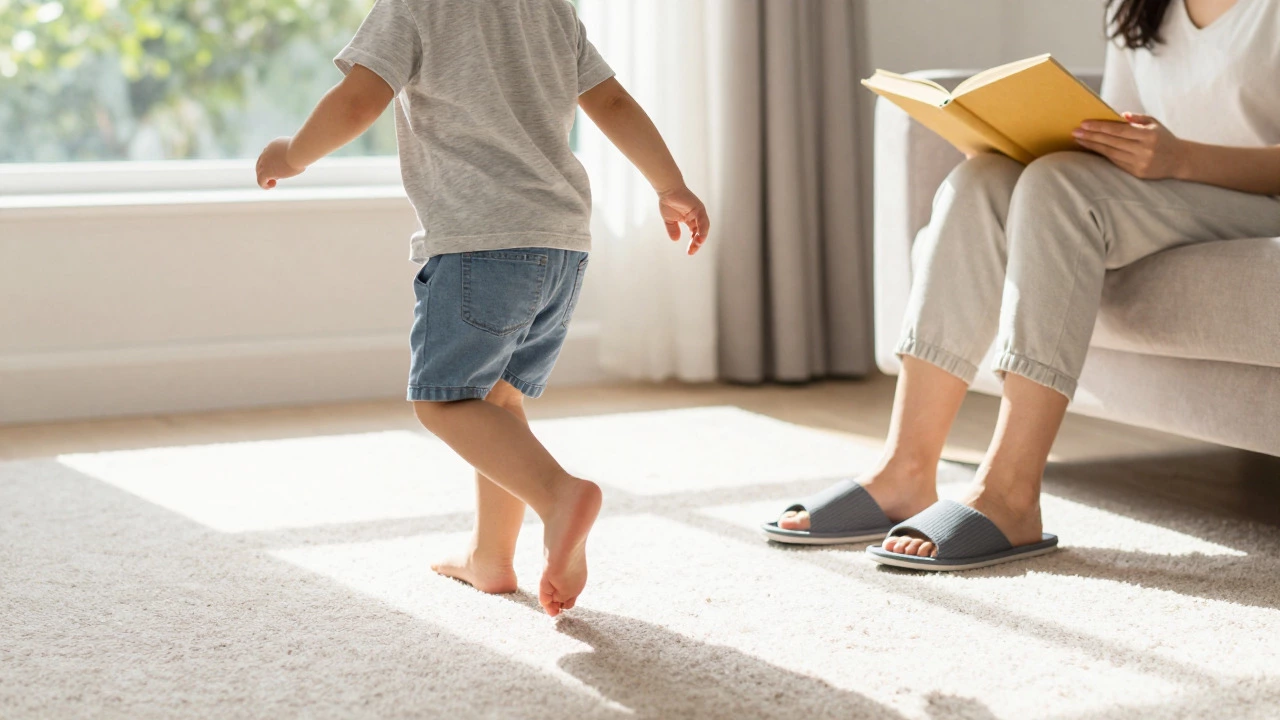
Children benefit greatly from being barefoot indoors. It helps develop strong arches and improves coordination. As long as the environment is safe-no sharp objects, no extreme temperatures-letting kids run around barefoot is generally recommended by pediatricians.
Practical Tips for Irish Residents
- Inspect your floors: Check for loose tiles, splintered wood, or hidden hazards before walking barefoot.
- Choose breathable materials: Wool and cotton allow your feet to breathe, reducing sweat and odor.
- Replace worn-out slippers: If the sole is smooth or the cushioning is flattened, it’s time for a new pair.
- Keep slippers clean: Wash fabric slippers regularly to prevent bacterial buildup.
- Adapt to seasons: Switch to heavier, insulated slippers in winter and lighter, breathable ones in summer.
Ultimately, the decision depends on your specific circumstances. If you have diabetes, neuropathy, or circulation issues, consult your doctor before deciding to go barefoot. For most healthy individuals, a balanced approach-wearing supportive slippers in high-risk areas and going barefoot in safe, comfortable spaces-is the way to go.
Conclusion: Finding Your Balance
There’s no one-size-fits-all answer. In Ireland’s damp, chilly climate, slippers offer protection, warmth, and safety. But barefoot walking has its place too, particularly in summer or in well-maintained, carpeted homes. Listen to your body. If your feet ache after a day of barefoot walking, switch to slippers. If you feel restricted and sweaty in slippers, take them off. The goal is comfort, health, and peace of mind in your own home.
Is it healthier to walk barefoot or wear slippers at home?
It depends on your health and home environment. Wearing slippers is generally healthier in Ireland due to cold floors and humidity, which can lead to fungal infections and joint strain. Barefoot walking is healthier only in warm, clean, and safe environments, promoting natural foot muscle development.
Do slippers prevent athlete's foot?
Yes, closed-toe slippers create a barrier between your feet and potentially contaminated surfaces, reducing the risk of picking up fungal spores. However, slippers must be kept clean and dry to be effective.
What type of slippers are best for hard floors?
Slippers with memory foam insoles and rubberized, non-slip soles are best for hard floors. They provide cushioning to absorb impact and grip to prevent slipping on tiles or wood.
Should children walk barefoot at home?
Yes, children benefit from walking barefoot as it helps develop strong arches and improves balance. Ensure the home environment is safe, free from sharp objects and extreme temperatures.
Are wool slippers good for Irish winters?
Absolutely. Wool is naturally insulating and moisture-wicking, making it ideal for cold, damp Irish winters. It keeps feet warm without trapping excess sweat, reducing the risk of odors and fungal growth.