Women's T-Shirt Size Converter & Fit Checker
Enter your bust measurement in centimeters to find your equivalent sizes across different regions. This tool helps navigate the confusion between UK, US, and EU sizing often encountered by shoppers in Ireland.
Enter your measurement and click Calculate to see results.
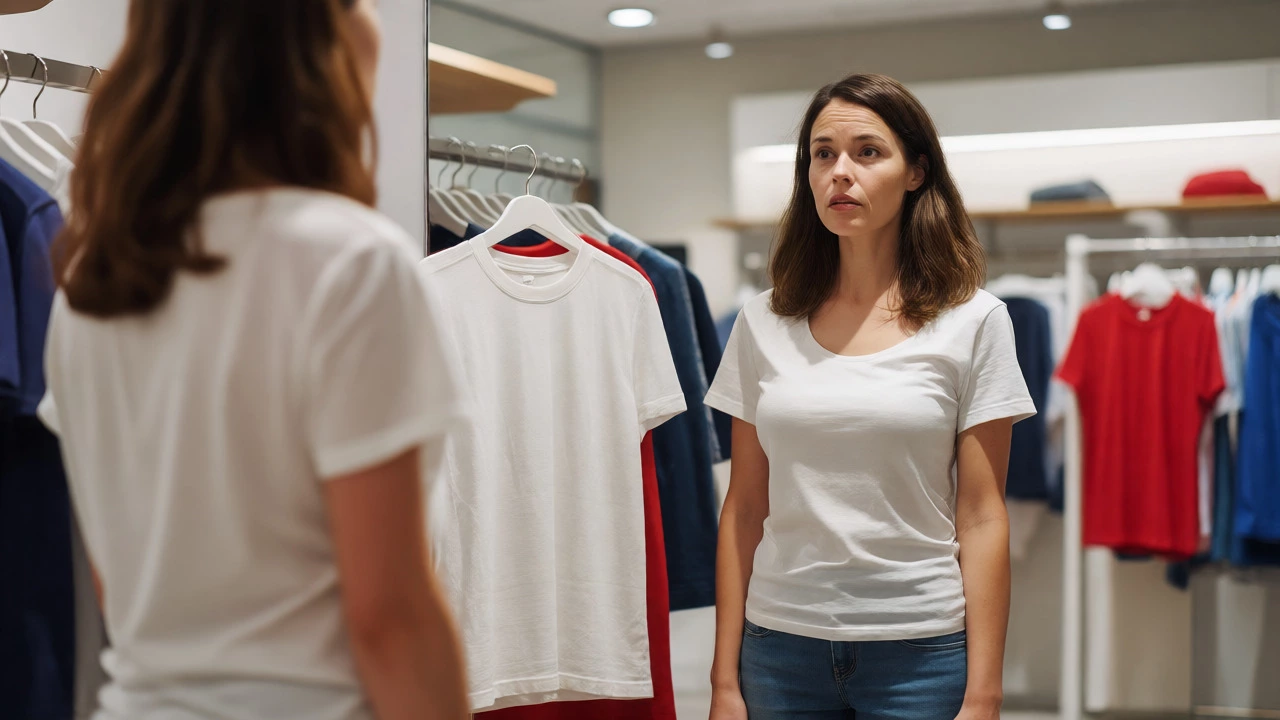
You walk into a shop on Grafton Street or browse an online retailer shipping to Dublin, and you see it: average women's size. But what does that actually mean for your body? If you’ve ever stood in a fitting room at Penneys or Brown Thomas wondering why the "Medium" fits like a tent while the "Small" cuts off your circulation, you’re not alone. In Ireland, as in much of Europe and the UK, standard sizing is a loose suggestion rather than a strict rule. The confusion often stems from mixing up US, UK, and EU sizing charts, or simply ignoring how different brands cut their fabric.
This guide breaks down what the average woman’s size looks like in the Irish market, specifically for t-shirts. We’ll look at real measurements, explain why "one size" rarely fits all, and give you practical tips for shopping locally without the hassle of endless returns. Whether you’re buying for a festival season wardrobe or just need a reliable white tee for work, knowing your true measurements beats guessing every time.
The Reality of "Average" in Ireland
There is no single biological average that applies to every woman in Ireland. However, retail data suggests some trends. Historically, the UK and Irish fashion industry has leaned towards smaller sample sizes than their American counterparts. A US Medium might be closer to a UK Small or Extra Small. This discrepancy causes major headaches for Irish shoppers who buy from international sites.
In the Irish context, the most common ready-to-wear sizes sold in high-street chains like Primark (Penneys), M&S, and Next tend to cluster around UK Sizes 12 to 16. Statistically, if you are looking for the median buyer profile, this range represents the bulk of sales volume for basic apparel like t-shirts. However, "average" is a dangerous word. It implies everyone else is normal and you are the outlier. You aren’t. Bodies vary wildly based on height, bone structure, and muscle mass.
Consider the difference between a shopper in Galway city and one in Cork. While both operate under the same UK sizing standards (since Ireland uses UK labels primarily), local boutiques often carry different cuts. Independent stores in Dublin’s Temple Bar district might stock more European-sized items (EU 38-42), which run slightly larger and longer than typical UK fast-fashion cuts. Understanding where you are shopping changes what "average" means for your specific transaction.
Decoding UK vs. EU vs. US Sizing
Ireland primarily follows the UK sizing system. This is crucial because many online retailers we use are either US-based or EU-based. If you don’t convert properly, you end up with a box full of clothes that don’t fit. Here is how the numbers stack up for women’s tops and t-shirts.
| UK Size | US Size | EU Size | Bust (cm) | Waist (cm) | Hips (cm) |
|---|---|---|---|---|---|
| 8 (XS) | 4 | 36 | 81-85 | 61-65 | 87-91 |
| 10 (S) | 6 | 38 | 86-90 | 66-70 | 92-96 |
| 12 (M) | 8 | 40 | 91-95 | 71-75 | 97-101 |
| 14 (L) | 10 | 42 | 96-100 | 76-80 | 102-106 |
| 16 (XL) | 12 | 44 | 101-105 | 81-85 | 107-111 |
| 18 (XXL) | 14 | 46 | 106-110 | 86-90 | 112-116 |
Notice the bust measurements. These are the critical numbers for t-shirts. If your natural bust measurement is 94cm, you are statistically a UK 12. But if you prefer a relaxed fit-popular during summer festivals like Electric Picnic-you might size up to a UK 14. Conversely, if you are layering a t-shirt under a blazer for office wear in Dublin’s financial district, you might stick to your true size or even go down half a size if the fabric has stretch.
Why Brand Variation Beats Standard Charts
Here is the hard truth: the tag says "Size 12," but the shirt was made in a factory in Bangladesh using a pattern from Italy, sold by a brand headquartered in Sweden. The fit will never match the theoretical chart perfectly. Fast fashion brands like H&M or Zara often run smaller than traditional Irish retailers like Arnotts or Brown Thomas.
Take a scenario involving two popular items available in Dublin. A classic cotton tee from a high-end designer label might have a slim, tailored cut designed for a specific silhouette. Meanwhile, a similar-looking tee from a sports brand like Nike or Adidas, found in Blanchardstown Centre, will likely have a looser, athletic cut designed for movement. Both might be labeled "Medium," but they fit completely differently.
Always check the specific product page for "garment measurements." Reputable online stores now provide these instead of just general size guides. Look for the shoulder width and total length. If you have broad shoulders-a common trait among those with active lifestyles or certain genetic backgrounds-a narrow shoulder seam can make a large shirt feel tiny. This is especially relevant when buying imported goods where patterns haven't been adjusted for local demographics.
Shopping Smart in Ireland: Local Tips
If you are shopping in physical stores across Ireland, use the changing rooms. They are free, and they are your best friend. Start with your usual size, then try one size up and one size down. Fabric matters too. Pure cotton shrinks after the first wash, so if you are between sizes, size up. Synthetic blends or viscose often drape differently and may not shrink, allowing you to stick to your measured size.
For those living in rural areas, ordering online from Irish-based retailers like Littlewoods Ireland or ASOS (which ships easily to Ireland) is convenient. But beware of return policies. Some charge for postage back to the UK warehouse. Always weigh the cost of return against the likelihood of fit issues. If you know a brand runs small, order two sizes and return the one that doesn’t fit. It costs less in time and stress than trying to exchange in-store later.
Also, consider the climate. Irish weather is unpredictable. Layering is a national sport. Your t-shirt size should account for what goes over it. A tight-fitting base layer works well under wool jumpers, but if you plan to wear your t-shirt alone during a heatwave in July, you might want a bit more room for breathability. Cotton is king here for its moisture-wicking properties, which helps when the humidity spikes unexpectedly.
Measuring Yourself Correctly
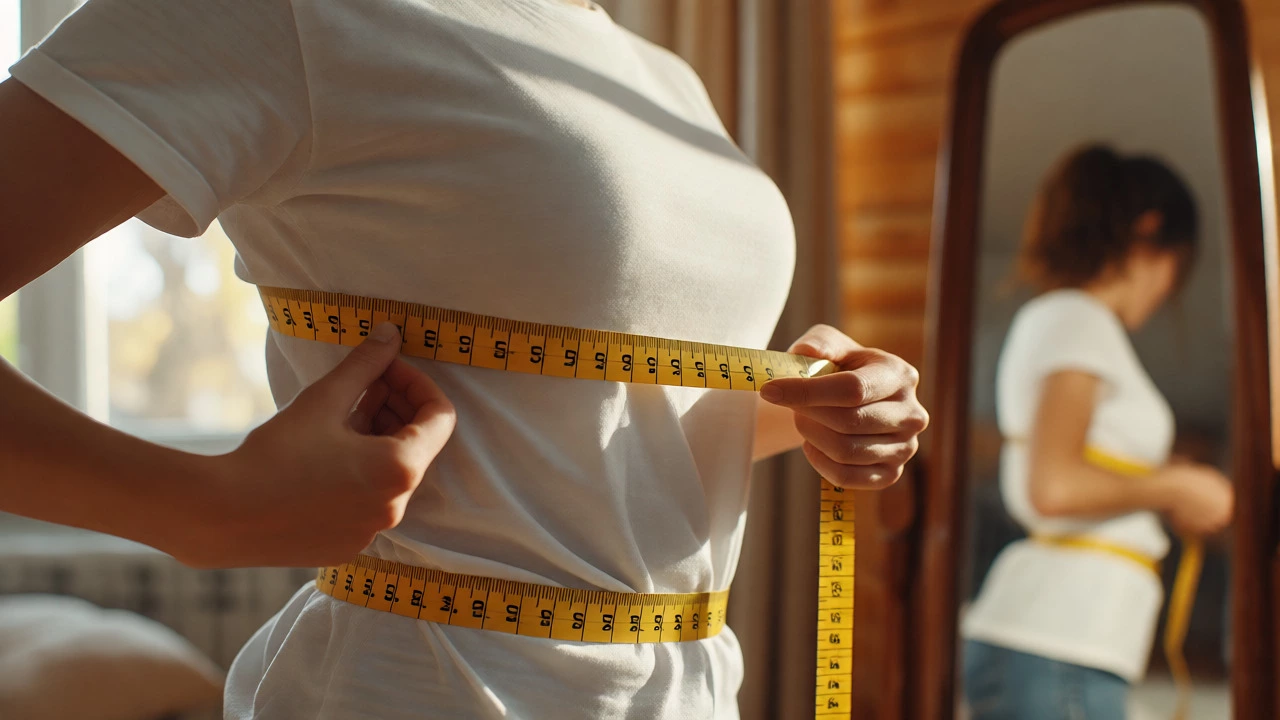
Stop guessing. Grab a soft tape measure. Stand naturally, not sucking in your stomach. Measure around the fullest part of your bust. Keep the tape parallel to the floor. Then, measure your natural waist-the narrowest part above your belly button. Finally, measure your hips at the widest point. Write these down in centimeters. Keep them in your phone notes.
When shopping online, compare these numbers to the brand’s specific chart, not the generic "S/M/L" labels. If your bust is 98cm, look for a garment listed with a bust measurement of 98-100cm. Remember to add ease. "Ease" is the extra space needed for comfort and movement. For a fitted tee, add 2-5cm. For a loose tee, add 10cm or more. This simple step prevents the awkwardness of a shirt pulling across the chest or riding up.
Cultural Context and Body Positivity
Fashion in Ireland has shifted significantly in recent years. There is less pressure to conform to a single "ideal" shape. Retailers are expanding their ranges, offering petite, tall, and plus-size options more consistently. Brands like Boohoo and PrettyLittleThing, widely used by younger Irish consumers, offer extensive size ranges, though quality can vary. Check reviews specifically mentioning fit before buying.
Moreover, sustainability is becoming a priority. Buying the right size the first time reduces waste. Returns contribute to carbon emissions, especially when items travel back and forth across borders. By taking five minutes to measure yourself and research the brand’s fit history, you save money, reduce environmental impact, and ensure you look good in your clothes. Confidence comes from comfort, not from squeezing into a label that doesn’t reflect your body.
What is the average women's dress size in Ireland?
While there is no official government statistic for average dress size, retail sales data suggests that UK sizes 12 to 16 represent the most commonly purchased range for women's apparel in Ireland. However, individual fit varies greatly depending on height and body shape, making personal measurements more reliable than general averages.
Do Irish sizes differ from UK sizes?
No, Ireland uses the same sizing standards as the United Kingdom. If you wear a UK size 12, you will typically wear a size 12 in Ireland. However, note that EU sizes (e.g., 40) are also commonly displayed, so always check the conversion chart if shopping from continental European brands.
Is US sizing bigger than Irish sizing?
Yes, generally speaking, US sizing runs larger than UK/Irish sizing. A US size 8 is roughly equivalent to a UK size 12. When shopping from American brands, it is often safer to size down, but always verify against the brand's specific measurement chart as cuts vary.
How do I know if a t-shirt is too big?
A t-shirt is too big if the shoulder seams fall significantly past your natural shoulder line, if the neck opening is wide enough to expose bra straps unintentionally, or if the hem hangs below mid-thigh when you intend it to be hip-length. Excess fabric bunching at the sides is another clear indicator.
Should I size up when buying cotton t-shirts?
It is advisable to size up if the t-shirt is 100% cotton and unpre-shrunk, as cotton tends to shrink 3-5% in the first hot wash. If the label states "pre-shrunk" or contains synthetic fibers like polyester or elastane, stick to your measured size for a consistent fit.