UGG Wear Decision Tool
Is It Safe to Wear Your UGGs Barefoot?
Answer a few simple questions to get personalized advice based on Irish conditions. This tool will help you decide if you should wear socks with your UGGs.
When you step out of a Dublin rainstorm and into your hallway, the last thing you want is cold, wet feet. That’s why, in Ireland, UGGs have become one of the most common slipper choices across homes-from Cork kitchens to Galway living rooms. But a question keeps popping up in Irish households: Are UGGs meant to be worn barefoot? The answer isn’t as simple as yes or no-and it depends on how you live, where you live, and what your feet are dealing with after a long day in Irish weather.
Why UGGs Took Root in Ireland
In Ireland’s climate, footwear isn’t just about style-it’s survival. With rain falling over 200 days a year in many parts of the country, and indoor heating often lagging behind, warmth and dryness matter more than looks. UGGs arrived here not as a fashion trend, but as a practical fix. Their sheepskin lining traps heat, wicks moisture, and cushions tired feet after hours on wet pavement. You’ll spot them in homes from Limerick to Donegal, often paired with a kettle on the boil and a copy of the Irish Times on the sofa.
Unlike in cities where UGGs were once a status symbol, here they’re a utility item. You don’t buy them for Instagram. You buy them because your toes were numb after walking from the bus stop to the post office in Clondalkin. They’re the Irish equivalent of a well-worn jumper-functional, unglamorous, and deeply trusted.
The Barefoot Debate: What the Experts Say
UGG Australia’s official stance is simple: wear them barefoot. The sheepskin is designed to mold to your foot, regulate temperature, and reduce friction. But in Ireland, where damp floors and muddy boots are part of daily life, many people wear thin cotton socks underneath. Why?
First, hygiene. Wet shoes mean wet liners. If you’ve ever stepped out of a shower in a Donegal cottage and slipped into UGGs without socks, you know how quickly the inside gets damp. In a country where washing machines are often run on low heat to save energy, drying sheepskin properly can take days. Socks act as a moisture barrier, keeping the lining cleaner and extending the life of the slipper.
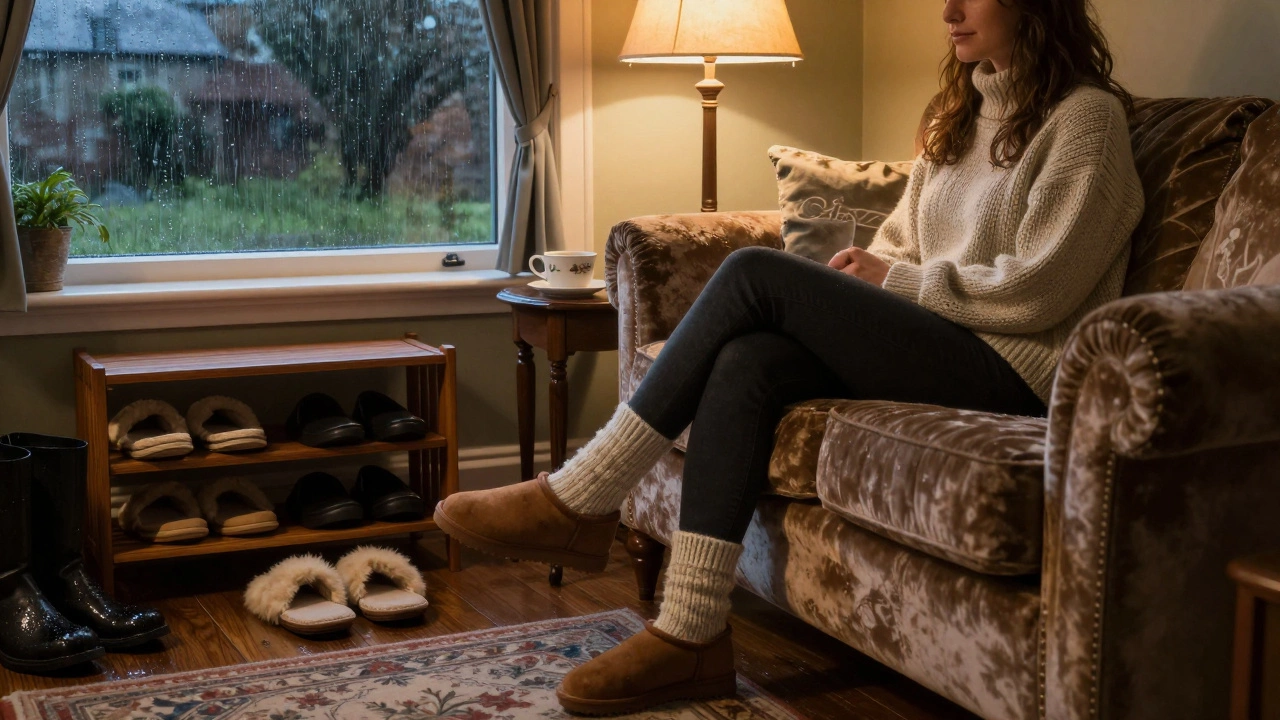
Second, comfort. Irish winters mean cold floors-especially in older homes with stone or uncarpeted tiles. A thin wool sock adds insulation without bulk. It’s not about fashion. It’s about not shivering while you make tea. Many Irish families swear by merino wool socks from brands like Wexford Wool or Clare Knits, which are breathable, warm, and don’t bunch up inside the UGGs.
Real-Life Irish Scenarios
Let’s look at two common Irish situations:
- Case 1: The Galway Teacher-After a day of walking around a 19th-century school with drafty windows, she slips into her UGGs. She wears a pair of ankle-length bamboo socks. Why? Because her feet sweat from standing all day, and the socks absorb moisture. She washes the socks daily. The UGGs? Only when they smell.
- Case 2: The Kerry Retiree-He’s 72, lives in a bungalow with a wood-burning stove. He wears UGGs barefoot. His floors are dry, the heating is steady, and he’s never had a fungal issue. His secret? He rotates three pairs and air-dries them by the fire every night. He says, “If it’s warm enough for the cat to sleep on the rug, it’s warm enough for bare feet.”
The difference? Environment. In Ireland, one size doesn’t fit all. What works in a modern Dublin apartment with underfloor heating might not work in a thatched cottage in Wicklow.

What About the Damp Factor?
Here’s the truth: UGGs aren’t waterproof. They’re water-resistant. In Ireland, that’s a problem. If you wear them barefoot after stepping in puddles or from a wet garden, you’re asking for trouble. The sheepskin absorbs moisture like a sponge-and once it’s wet, it takes forever to dry. In a damp climate, that means mildew, odor, and eventually, a ruined pair.
Many Irish shoppers now buy UGGs with a water-repellent spray. Brands like Granger’s and Nikwax are stocked in Dublin’s outdoor stores like Go Outdoors and Mountain Equipment. A quick spray before winter helps. But even then, wearing socks is the smarter move.
What the Irish Do Differently
Here’s what you won’t see in the UGG ads: Irish people don’t wear UGGs outside. Not even to the mailbox. They’re indoor-only footwear. You’ll rarely see them in a Tesco or at a local pub. That’s not snobbery-it’s practicality. The soles are too soft for wet cobbles or gravel driveways.
Instead, you’ll find them in:
- Front hallways, right by the shoe rack
- Bedrooms, next to the radiator
- Living rooms, paired with a blanket and a cup of tea
Some even keep a second pair in the bathroom for post-shower use. It’s a small luxury, but in Ireland, small luxuries matter.

Should You Wear UGGs Barefoot in Ireland?
The short answer? It depends.
If your home is well-insulated, your floors are dry, and you live in a modern house with central heating (like in Limerick or Dundalk), then going barefoot is fine. Your UGGs will last longer, feel more comfortable, and do exactly what they were designed for.
If you live in an older home, near the coast, or deal with damp floors (which is most of us), then wear thin socks. Wool or bamboo. Not cotton. Cotton holds moisture-and in Ireland, that’s a recipe for cold feet and mildew.
And if you’re unsure? Start with socks. You can always take them off later. But once your UGGs get soaked, you’re stuck waiting for them to dry-sometimes for a week in a wet Irish winter.
Final Tip: Rotate and Air Out
Irish households that swear by UGGs all have one thing in common: they rotate them. No one wears the same pair every day. Three pairs? Common. Four? Not unusual. Each pair gets 24-48 hours to air out near a window or by a radiator. Some even use silica gel packs-bought from Boots or SuperValu-to keep them dry.
And if they start to smell? A sprinkle of baking soda, left overnight, then brushed out. No harsh chemicals. Just simple, Irish home wisdom.