
Work Footwear Safety Checker
Select your work environment and shoe type to see if your choice meets general safety and professional standards for the Irish workplace.
✅ Likely Permitted
⚠️ Safety Risk / Likely Banned
Quick Summary: The Verdict on Crocs at Work
- Safety First: Most industrial and medical settings ban them due to a lack of impact protection.
- Slip Hazards: Standard Crocs don't provide the grip needed for wet Irish floors.
- Professionalism: Many corporate offices in Dublin or Cork view them as too casual.
- The Exception: "Work-specific" versions exist, but these aren't the same as the ones you wear to the beach.
The Health and Safety Reality
When we talk about footwear, the biggest hurdle is the Health and Safety Authority (HSA). In Ireland's national body responsible for occupational health and safety, the focus is on preventing workplace injuries. Most standard Crocs are made from a closed-cell resin called Croslite. While it's great for cushioning, it offers zero protection against falling objects. If you're working in a kitchen in Galway or a workshop in Limerick, a dropped knife or a heavy tool will go straight through that foam.
Then there is the issue of stability. Because Crocs have a loose fit and often a heel strap that isn't secure, they don't provide the ankle support required for those walking long distances on hard concrete floors. If you're moving pallets in a distribution centre near the M50, a slip or a twisted ankle is a real risk. The HSA emphasizes that footwear should be "suitable for the environment," and a hole-filled shoe rarely meets that criteria in a high-risk zone.
The Battle Against the Irish Rain
Let's be honest: the weather in the Emerald Isle is unpredictable. Whether you're commuting via the DART or walking into a shop in rainy Kilkenny, your footwear needs to handle moisture. While Crocs are waterproof, they are terrible for traction on wet, tiled, or greasy surfaces. Most professional kitchens and hospitals require "slip-resistant" soles. Standard foam clogs can actually act like skis on a wet floor, making them a liability in a fast-paced environment where spills are common.
Think about a typical rainy Tuesday in Dublin. The streets are slick, and the floors inside shops are damp from hundreds of umbrellas. If you're wearing shoes that don't grip the surface, you're not just risking your own safety, but potentially causing an accident for a colleague or a customer. This is why most Irish employers insist on shoes with a certified anti-slip sole.
Professionalism and the Irish Office Culture
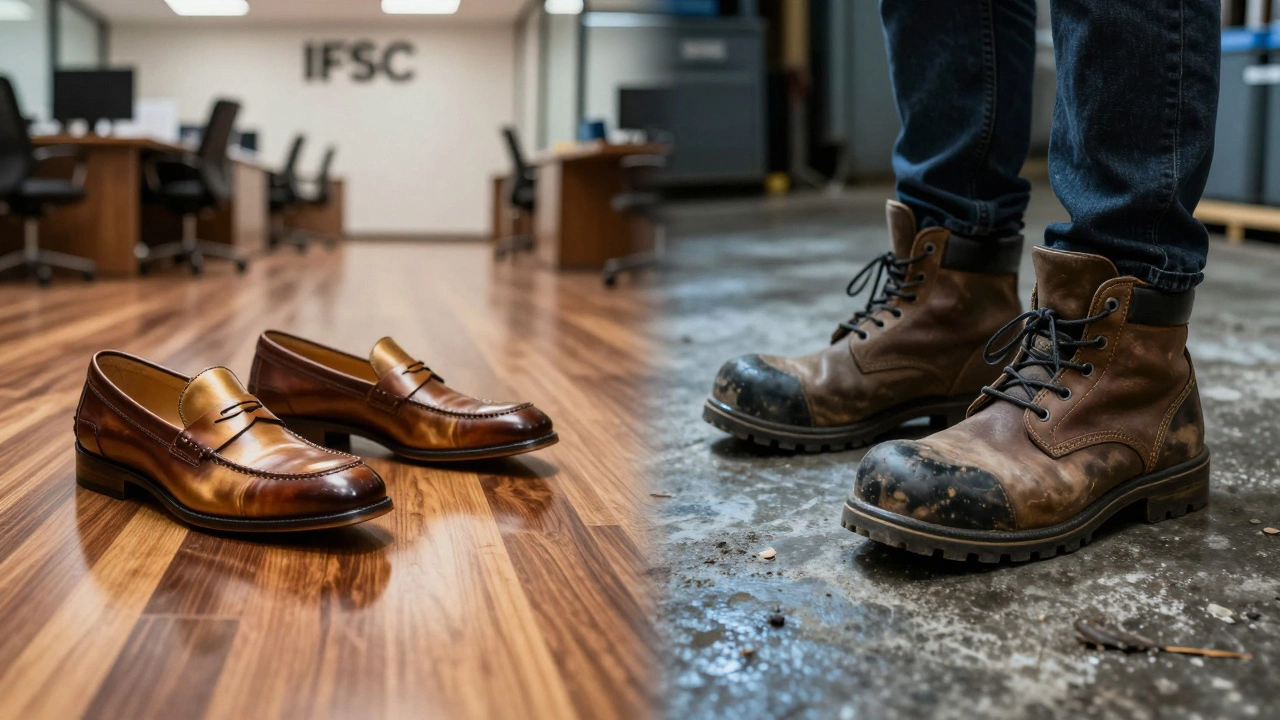
Beyond safety, there's the social aspect of the "dress code." In the tech hubs of the Silicon Docks, things are more relaxed, but in traditional law firms, accounting offices in the IFSC, or government buildings, the expectations are different. Wearing Crocs can be seen as a lack of professionalism. It sends a signal that you're in "home mode" rather than "work mode."
Even in a "business casual" environment, there is a hidden hierarchy of acceptable shoes. Loafers, smart sneakers, or flats are generally fine. However, the loud colors and bulky shape of clogs often clash with the image a company wants to project to its clients. If you're meeting a client who has traveled from abroad to visit your Dublin office, showing up in neon green foam shoes might not be the best way to establish authority.
Not All Crocs Are Created Equal
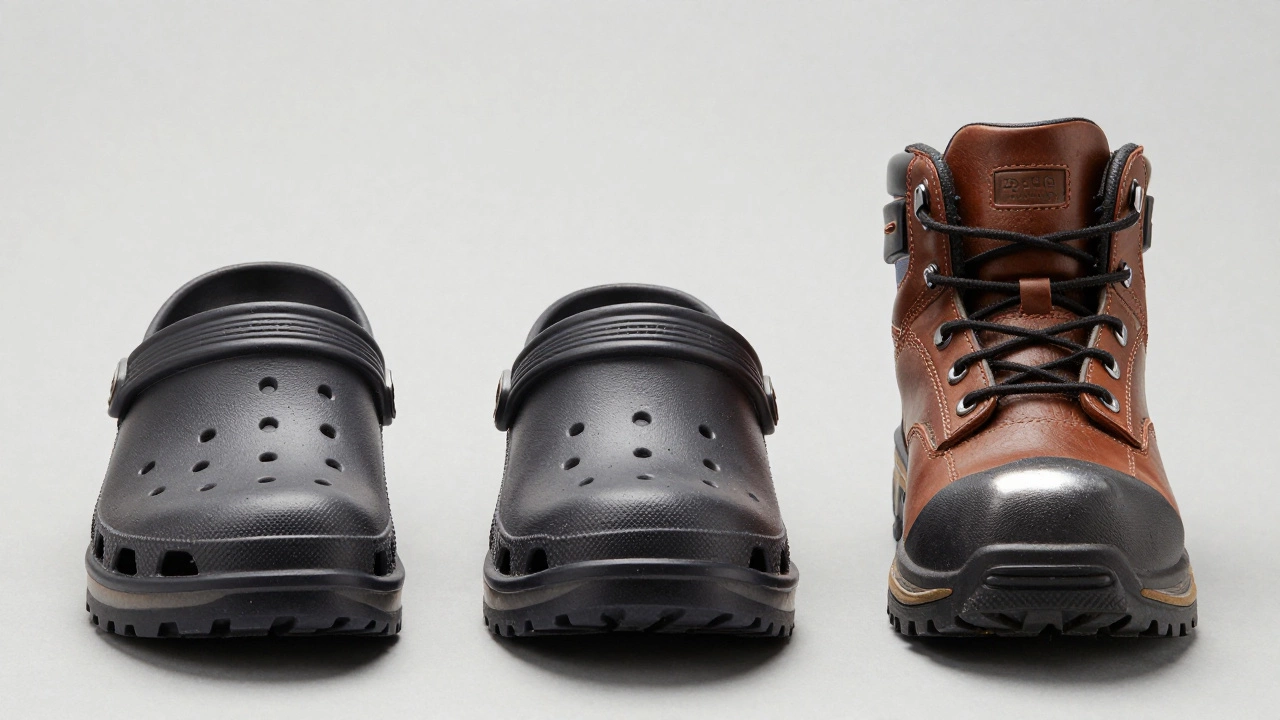
It is worth noting that the company has released a Crocs Work line. These are specifically designed for professional environments. Unlike the classic version, these often feature a closed toe (no holes) to prevent liquids or chemicals from splashing onto the skin. Some even come with reinforced toes.
| Feature | Classic Crocs | Professional Work Shoes | Steel Toe Boots |
|---|---|---|---|
| Impact Protection | None | Low/Medium | High |
| Fluid Resistance | Low (Holes) | High (Closed) | High |
| Grip/Traction | Basic | Anti-slip Certified | Industrial Grade |
| Professionalism | Casual | Acceptable (Medical/Kitchen) | Standard (Industrial) |
Better Alternatives for the Irish Worker
If you love the comfort of Crocs but can't wear them at work, there are plenty of alternatives available at stores across Ireland, from Penneys to specialized medical wear shops. For those in healthcare or hospitality, look for Skechers work lines or Birkenstock professional clogs. These offer similar arch support but use materials that meet safety standards.
For industrial roles, you simply cannot beat a proper pair of safety boots. Whether it's a brand like CAT or a more budget-friendly option, a shoe with a steel or composite toe is the only way to ensure you are compliant with HSA regulations. These are essential for anyone working on construction sites in the booming suburbs of Kildare or in manufacturing plants in the Mid-West.
How to Negotiate Your Footwear with Your Boss
If you feel your current shoes are unfairly banned, don't just show up in your clogs and hope for the best. Instead, approach the conversation with a focus on ergonomics. If you have a medical condition, such as plantar fasciitis, you might need specific support that standard work shoes don't provide.
- Check the Employee Handbook: See if there is a written policy on footwear. If it just says "appropriate shoes," you have room to negotiate.
- Present a Safety-First Option: Instead of the classic style, suggest a closed-toe, slip-resistant professional clog.
- Offer a Trial Period: Suggest wearing the professional version for a week to prove they don't interfere with your productivity or safety.
- Get a Doctor's Note: If you genuinely need the cushioning for health reasons, a note from your GP can often override a generic dress code.
Can I wear Crocs in a hospital in Ireland?
Generally, no. Most HSE hospitals discourage or ban classic Crocs because the holes allow needles, chemicals, or bodily fluids to reach the skin. However, closed-toe professional clogs specifically designed for healthcare workers are often permitted.
Are Crocs considered "closed-toe" shoes?
Technically, they cover the toes, but because of the ventilation holes, they do not provide a physical barrier. For safety regulations, "closed-toe" usually means a solid material that prevents objects or liquids from entering the shoe.
What happens if I ignore the footwear policy?
Depending on your contract, you could face a verbal or written warning. In high-risk environments (like warehouses), you might be sent home to change, which could lead to a loss of pay for those hours or be marked as an unauthorized absence.
Do I need steel toe boots for a light warehouse job?
If there is any risk of heavy items falling or being rolled over your feet, the HSA guidelines strongly suggest safety footwear. Even in "light" warehouses, the risk of a misplaced pallet or a falling box makes steel or composite toes a necessity.
Are there any Irish laws that protect my right to wear comfortable shoes?
While there are laws regarding reasonable accommodation for disabilities, there is no general law granting the right to wear specific casual footwear. Employers have a legal obligation to ensure safety, which usually overrides personal comfort preferences.
Next Steps for Your Footwear Choice
If you're currently in a role where you're unsure about your shoes, the best move is to check your contract or ask your supervisor directly. If you're starting a new job in an industrial or medical setting, don't wait until day one to find out your shoes aren't allowed. Invest in a pair of slip-resistant, closed-toe shoes that give you the comfort you crave without the risk of a safety violation. Whether you're working in a small shop in Kerry or a corporate tower in Dublin, the right pair of shoes keeps you safe and keeps your boss happy.